
The 2026 search for the best Induction Soup Pot begins with a practical question: what does “best” mean in different kitchens? A restaurant buyer in Singapore may prioritize rapid boiling, while a family in Germany may need precise simmering and quiet operation. Global demand is moving toward efficient electric cooking. The International Energy Agency’s Global Energy Review 2025 highlights continuing electrification across household energy use. Grand View Research also identifies induction cooking as a growing appliance segment, supported by energy awareness and modern kitchen upgrades. The figures vary by report. That matters.
ENERGY STAR explains that induction transfers roughly 85% of its heating energy to cookware, compared with about 75–80% for conventional electric cooking. Gas performs less efficiently at the cooking surface. Still, efficiency alone cannot select a reliable soup pot. Buyers must inspect base diameter, magnetic stainless-steel quality, wall thickness, handle security, lid fit, and stated capacity. A 6-liter pot should hold soup without splashing when vegetables, stock, and noodles move together. Check compatibility with 220–240V systems, regional plugs, and commercial induction limits. Small details decide large orders.
Our 2026 evaluation will compare heat distribution, simmer control, cleaning effort, corrosion resistance, packaging, warranty support, and supplier documentation. We will also consider test conditions, because a pot can perform differently on a 1,800-watt home hob and a 3,500-watt commercial unit. Some marketing claims remain vague. Buyers should challenge them. Independent testing, traceable materials, and clear safety instructions offer stronger evidence than polished product photos.
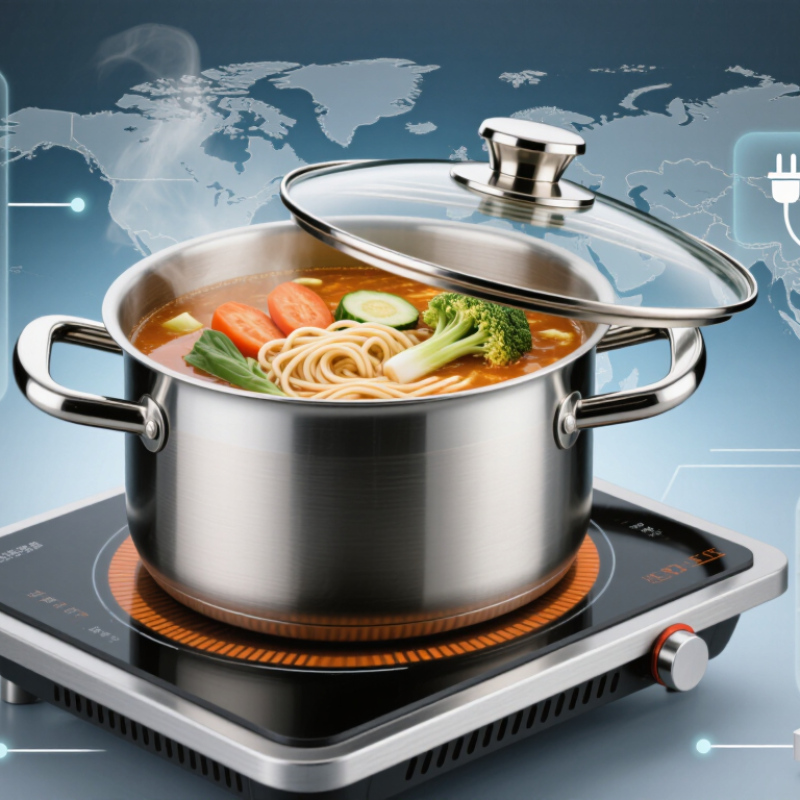
An induction soup pot is a deep cooking vessel designed for simmering broth, stews, noodles, and large meals on an induction cooktop. Unlike a conventional pot, it does not rely mainly on a gas flame or exposed electric coil. Its base must contain magnetic material, usually iron or magnetic stainless steel, so the cooktop can recognize it.
Here is how the process works. The induction surface creates a rapidly changing magnetic field beneath the pot. This field produces small electrical currents inside the magnetic base, generating heat directly in the metal. The hot base then transfers heat to water, stock, vegetables, or meat. The pot itself becomes the main heating surface. Very little heat escapes around the sides.
A good soup pot should have a flat, stable base and enough depth to reduce splashing. A tight lid can preserve moisture, while side handles make a full pot easier to move. In practical testing, a magnet is a simple compatibility check. If it sticks firmly to the base, the pot will usually work. Usually, not always. Some layered bases respond unevenly, creating a hotter center and slower edges. Stirring soup occasionally helps correct this issue. Buyers should also check base diameter, capacity, wall thickness, and whether the handle stays comfortable during long simmering. A lightweight pot may heat quickly, but it can feel less steady when filled.
An induction soup pot is a cooking pot designed with a magnetic, induction-compatible base. An induction cooktop creates a rapidly alternating magnetic field, which induces electrical currents in the pot base and produces heat directly in the cookware. The cooktop surface itself transfers comparatively little heat, so the pot base must contain a ferromagnetic material such as magnetic stainless steel or cast iron.
| Pot Type | Typical Capacity | Typical Diameter | Common Construction | Induction Compatibility | Best Soup Applications | Typical Heating Characteristics | Main Advantages | Important Limitations | Recommended Buyer Profile |
|---|---|---|---|---|---|---|---|---|---|
| Compact Stainless-Steel Soup Pot | 2–3 L | 16–18 cm | Stainless-steel body with an encapsulated magnetic base; often supplied with a glass lid | Usually compatible Confirm the induction symbol or test the base with a magnet | Single portions, sauces, oatmeal, small vegetable soups and reheating | Fast response because of the relatively small base; suitable for low-to-medium induction settings | Compact storage, lower filled weight and convenient for small households | Limited space for large ingredients; liquid can boil over if the pot is filled too close to the rim | Students, single-person households and buyers with compact kitchens |
| Everyday Stainless-Steel Soup Pot | 4–6 L | 20–24 cm | Multi-layer or encapsulated base with stainless-steel cooking surface | Usually compatible The base should be flat and magnetic | Family soup, noodles, stew, stock and batch cooking | Balanced heat distribution and good temperature control for everyday cooking | Durable, non-reactive with most foods and generally easy to maintain | Food may stick if the pot is overheated or insufficient liquid is used; stainless steel is not naturally non-stick | Most households seeking a versatile general-purpose pot |
| Deep Stock and Soup Pot | 7–12 L | 24–28 cm | Thick stainless steel or aluminum body with a magnetic stainless-steel base | Usually compatible Check that the induction zone supports the base diameter | Bone stock, hot pot, large family meals, catering and meal preparation | Large volumes require more time to heat; gentle simmering is important after boiling | High capacity and useful for batch cooking | Heavy when full; a base larger than the cooktop zone may heat less evenly | Large families, meal-prep users and small food-service operations |
| Cast-Iron Soup Pot | 3–6 L | 20–26 cm | Cast iron, either enamel-coated or traditionally seasoned | Naturally compatible Cast iron is strongly magnetic | Stews, braised soups, bean dishes and slow cooking | Slow to heat but retains heat well; responds slowly to power changes | Excellent heat retention and durability; suitable for stovetop-to-oven cooking when handles and lid permit | Heavy, may scratch glass cooktops if dragged, and bare cast iron requires seasoning and drying | Users who prioritize heat retention and long-term durability |
| Enameled Cast-Iron Soup Pot | 3.5–6.5 L | 22–28 cm | Cast-iron core with a glass-based enamel coating | Compatible The cast-iron core provides the magnetic response | Tomato soup, stew, braises, slow-simmered dishes and acidic recipes | Gradual heating with strong heat retention; works well at low simmering temperatures | Non-reactive enamel surface, attractive serving appearance and good moisture retention | Heavy and vulnerable to chipping from impact; thermal shock should be avoided | Home cooks who want slow-cooking performance and an easy-to-clean interior |
| Non-Stick Induction Soup Pot | 2.5–5 L | 18–24 cm | Aluminum body with a bonded magnetic plate and a non-stick interior coating | Base-dependent Aluminum alone is not induction-compatible; a magnetic plate is required | Milk-based soup, delicate vegetables, light sauces and low-fat cooking | Quick response and easy temperature adjustment; avoid prolonged high heat | Easy release, convenient cleaning and low-oil cooking | Coating can wear from overheating, metal utensils or abrasive cleaning; not ideal for browning at very high heat | Users who value easy cleanup and gentle cooking |
| Tri-Ply or Multi-Layer Soup Pot | 3–7 L | 20–26 cm | Stainless-steel interior, aluminum heat-spreading layer and magnetic stainless-steel exterior | Generally compatible Look for a full magnetic exterior or manufacturer induction marking | Soups, sauces, stock, pasta and temperature-sensitive cooking | More even heat distribution than single-layer stainless steel; responds faster than cast iron | Strong balance of durability, responsiveness and heat distribution | Usually heavier and more expensive than basic single-layer cookware | Frequent cooks who want one versatile, long-lasting pot |
| Induction-Compatible Hot Pot | 3–5 L | 24–30 cm | Stainless steel, divided stainless steel, or magnetic-base construction; may include a divider | Model-dependent Verify both the base material and minimum induction-zone diameter | Shared hot pot meals, broth, shabu-shabu, noodles and tabletop cooking | Designed for continuous simmering; divided designs may heat less uniformly near the divider | Supports communal cooking and different broths in one vessel | Large diameter may not suit small induction zones; handles and divider increase cleaning time | Families, restaurants and buyers who enjoy shared tabletop meals |