
2026 Top Azul Macaubas Quartzite Types for Global Buyers

Global buyers are looking beyond color when selecting Azul Macaubas Quartzite. They need verified quality, stable supply, and practical installation guidance.

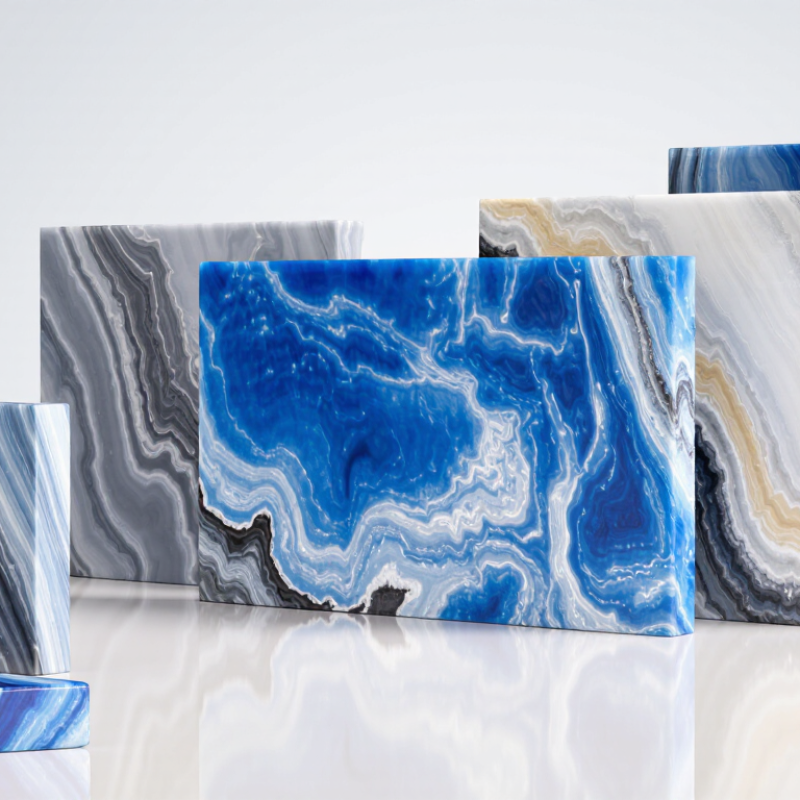
Market research from Grand View Research and Mordor Intelligence identifies construction, luxury interiors, and renovation as major drivers of natural stone demand. Their reports also highlight rising interest in distinctive materials with long service lives. Azul Macaubas Quartzite fits this movement through its blue background, white veining, and strong visual identity. Each slab can resemble a frozen river, yet no two pieces are identical.

That variation creates both value and risk. Some slabs show bright cobalt fields, while others contain softer gray, cream, or smoky movement. Buyers should request recent quarry photographs, slab numbers, thickness details, and resin-treatment information. Small samples may not represent a full three-meter slab. This is often underestimated.

Technical guidance from the Natural Stone Institute and ASTM standards supports careful testing, fabrication, sealing, and installation. Experienced importers should review water absorption, flexural strength, finish quality, and packaging before payment. Independent inspection can reveal cracks, filled fissures, edge damage, or inconsistent polishing. It costs time. It can also prevent expensive replacement claims.

This guide compares leading Azul Macaubas Quartzite types for international purchasing. It considers appearance, performance, application suitability, and sourcing reliability. However, grading terms differ among quarries and suppliers. “Premium” is not a universal technical classification. Buyers must judge documented evidence, not attractive marketing language.
2026 Top Azul Macaubas Quartzite Types for Global Buyers

Azul Macaubas Quartzite: Origin, Formation, and Core Characteristics

Azul Macaubas Quartzite comes mainly from Bahia, Brazil, where geological activity shaped its distinctive blue appearance. Its original sedimentary material changed under intense heat and pressure over millions of years. Quartz grains recrystallized, while mineral movement created white, gray, and occasional golden veining.

The stone is valued for its deep ocean-blue background and strong visual movement. Some slabs look calm and evenly colored; others contain dramatic waves, cloudy patches, or narrow mineral lines. This variation is natural, not a manufacturing defect. Quartzite is generally hard and resistant to scratching, but its performance still depends on the slab, finish, installation, and maintenance. Experienced fabricators should inspect edges and existing fissures carefully. I would not pretend every slab behaves identically.

Tips: Request photographs of the actual slabs, not only catalog images. View them under daylight and warm indoor lighting. Check for resin-filled fissures, thickness consistency, and surface flatness. A honed finish may soften the color, while polishing can intensify blue tones and highlight every vein. Sealing is often recommended, but the correct product should match the stone’s absorption rate. Sample testing matters. Small details can change the final result.


Key Azul Macaubas Quartzite Types Available in 2026

Azul Macaubas quartzite remains a strong choice for global buyers seeking dramatic natural stone in 2026. Its main types differ by background color, veining, movement, and slab consistency. Classic blue varieties show vivid sapphire tones with white, gray, or soft gold lines. Pale blue types create a quieter appearance for kitchens and bathrooms. Darker ocean-blue selections offer stronger contrast and a more luxurious visual effect.

Some slabs have broad, flowing veins. Others display thin lines and scattered mineral patterns. These differences come from natural formation, so exact matching is never guaranteed. Experienced buyers should inspect full slabs under neutral lighting, not rely only on small samples. Check resin treatment, thickness, surface finish, water absorption, and edge behavior before ordering. A beautiful slab can still perform poorly if fabrication quality is weak. That part is often underestimated.

Tips: Request recent photos and a physical sample. Confirm the quarry classification with the supplier. Compare several slabs from the same lot. Review the vein layout before cutting sinks or cooktops. For export projects, verify crating, moisture protection, inspection records, and replacement terms. Azul Macaubas quartzite is durable, but it still benefits from professional sealing and routine care. I would also allow extra material for bookmatching. Small color shifts may appear after installation, and that is a detail buyers sometimes regret ignoring.

How to Compare Color, Veining, Finish, and Slab Quality

Azul Macaubas Quartzite: How Global Buyers Should Compare Slabs

Color should be judged under daylight, not only showroom LEDs. Azul Macaubas may shift from pale blue to gray, with occasional warmer mineral patches. Compare full slabs together. Small samples can hide major movement. The 2024 Natural Stone Institute technical guidance stresses lot consistency, finish selection, and documented testing during stone evaluation.

Veining deserves practical attention. Long diagonal veins can create dramatic bookmatching, but they may increase cutting waste. Ask for slab dimensions, net usable area, and photographs from several angles. A 2025 USGS Mineral Commodity Summaries report separates dimension stone from aggregate materials, reminding buyers that broad stone statistics do not prove individual slab quality. Quarry-specific evidence matters more.

Finish changes both appearance and maintenance. Honed surfaces soften reflections, while polished finishes deepen blue tones and reveal surface irregularities. Leathered finishes can disguise fingerprints, but their texture may collect dust. Request the finish sample and inspect it under raking light. For quality, require recent ASTM C97 absorption and ASTM C170 strength results, plus ASTM C880 flexural data where available. These tests measure different risks; one result cannot replace the others. A low absorption figure is useful, not magical. I would also inspect resin repairs, edge chips, fissures, and thickness variation before approving a container. Mistakes happen when buyers compare price per slab instead of delivered usable square meter.

2026 Top Azul Macaubas Quartzite Types for Global Buyers

How to Compare Color, Veining, Finish, and Slab Quality

This 100-point comparison model reflects the practical priorities commonly used when evaluating natural quartzite slabs. Color and veining receive the highest weighting because Azul Macaubas is primarily selected for its blue tone, mineral movement, and visual consistency. Finish and slab quality cover surface treatment, resin or fissure management, thickness consistency, edge integrity, and usable slab area.

Global Buyer Guide to Sourcing, Pricing, and Supplier Verification

2026 Top Azul Macaubas Quartzite Types for Global Buyers

Global sourcing requires more than attractive blue movement. Azul Macaubas is a market classification, not a single standardized grade. Common selections include pale blue slabs, saturated blue material, white-blue backgrounds, and heavily veined lots. Color, crystal size, fissures, and slab thickness can change pricing sharply.

The USGS Mineral Commodity Summaries 2025 places quartzite within broader stone statistics, rather than reporting Azul Macaubas separately. Buyers should therefore treat supplier claims carefully. International Trade Centre Trade Map data under HS 6802 can help compare national stone trade patterns, but it cannot verify quarry quality. Request the quarry location, block photographs, extraction date, slab dimensions, and independent test results. Water absorption, flexural strength, and abrasion data matter more than polished showroom images.

Tips: Compare three written quotations using the same thickness and finish. Confirm whether packing, inland transport, inspection, and ocean freight are included. Ask for a live video showing slab faces, edges, and resin repairs. A low quote may hide weaker selection or higher breakage risk. I would also reserve the exact lot before approving production. One overlooked issue is shade variation; even nearby blocks may not match. Review a physical sample, although small samples can misrepresent the full slab. Supplier verification remains incomplete without checking export records, factory capacity, and recent customer references.

2026 Top Azul Macaubas Quartzite Types for Global Buyers — Global Buyer Guide to Sourcing, Pricing, and Supplier Verification
Trade Type Typical Appearance Mineral and Geological Characteristics Common Slab Formats and Thickness Recommended Applications Indicative 2026 Export Price
USD/m²
Availability and Yield Supplier Verification Checklist
Classic Blue Medium to deep blue background with broad white or pale-gray movement and moderate variation. Natural quartzite dominated by quartz, with feldspar and other accessory minerals creating blue, gray, and white patterns. Color and veining vary from block to block. Usually available in approximately 2 cm and 3 cm slabs. Typical commercial slab sizes are about 270–330 cm long and 150–210 cm wide, subject to quarry yield. Kitchen islands, vanity tops, feature walls, fireplace surrounds, reception counters, and low-to-medium traffic interior surfaces. US$140–260 Medium
More consistent than highly selected grades, but natural variation remains significant.
Request current block and slab photographs, slab numbers, quarry origin, thickness measurements, resin-treatment disclosure, and a signed commercial packing list.
Extra Blue Stronger saturated blue tones with high visual contrast and more dramatic movement than standard grades. Higher-value selection based mainly on color intensity, pattern continuity, and overall visual impact rather than a separate mineral species. Commonly supplied in 2 cm or 3 cm slabs. Bookmatched pairs may be available when slabs are cut from the same block. Luxury residential interiors, statement islands, hotel lobbies, premium wall panels, and carefully protected bathroom surfaces. US$220–420 Limited
Strong color and large continuous patterns reduce the usable yield of many blocks.
Verify that all selected slabs come from the same block, compare dry and wet photographs, inspect the back of each slab, and approve a physical sample before production.
Blue with Gold or Brown Veining Blue base with warm gold, tan, rust, or brown veins and mineral accents. Warm-colored mineral inclusions and veins are natural features. Their continuity, density, and direction can change substantially across one slab. Generally offered in 2 cm and 3 cm thicknesses. Large-format slabs require careful inspection for internal fissures and edge stability. Feature islands, bookmatched walls, fireplace panels, boutique hospitality interiors, and decorative furniture tops. US$180–360 Medium to Limited
Premium pricing is usually driven by balanced color distribution and attractive vein placement.
Confirm whether veins are open fissures or naturally filled features, request resin and reinforcement details, and use an approved fabricator for cutting and installation.
White-Blue Contrast Light blue, gray, or white field with pronounced blue ribbons, clouds, or linear movement. Visual contrast is created by variations in mineral composition and crystal structure. It is a natural stone pattern, not a printed or engineered finish. Most frequently available in 2 cm and 3 cm slabs. Slab matching should be planned before fabrication because adjacent pieces may not mirror one another. Bright contemporary kitchens, bathroom vanities, wall cladding, counters, and commercial reception areas with moderate use. US$150–300 Medium
Often easier to source than the deepest blue selections, but exact pattern matching is not guaranteed.
Request a full-slab digital layout, confirm the acceptable color range in writing, check calibration and surface flatness, and review the inspection standard before shipment.
Highly Veined or Dramatic Movement Large-scale sweeping veins, waves, clouds, or strongly directional movement across the slab. Natural structural and mineral variation can create striking patterns. Some visible lines may require filling or reinforcement and should not automatically be treated as defects. Usually selected in 3 cm for demanding countertop work, although 2 cm is also available for supported applications and wall panels. Bookmatched feature walls, large islands, luxury bathrooms, fireplace surrounds, and showcase commercial interiors. US$200–450+ Limited
Large uninterrupted patterns are difficult to obtain and may produce higher cutting waste.
Approve slab-by-slab photos with dimensions, identify all filled or reinforced areas, require a fabrication drawing, and confirm breakage responsibility and replacement terms.
Commercial Select Grade Blue-gray appearance with moderate movement, minor natural inclusions, and a practical balance between appearance and yield. Natural quartzite selected for usable dimensions and acceptable visual consistency rather than maximum color saturation or pattern drama. Typically supplied in standard 2 cm or 3 cm thickness. Smaller slabs or bundles may offer better yield for vanity and medium-size projects. Multi-unit residential projects, standard kitchens, bathroom programs, hospitality counters, and interior wall applications. US$110–210 Relatively Better
Usually offers the best balance of budget, availability, and usable slab area.
Confirm the exact grade definition, acceptable natural features, average usable area, bundle quantity, moisture protection, and packaging method.
Bookmatched Premium Selection Two or more slabs arranged as a mirrored visual composition, emphasizing continuous veins and movement. Bookmatching is a cutting and slab-selection method, not a separate geological type. Matching quality depends on block orientation and slab sequence. Usually selected in 3 cm for visual stability and fabrication flexibility. The total panel size depends on the original block and cutting plan. Feature walls, oversized islands, lobby panels, fireplace surrounds, luxury bathroom walls, and other focal installations. US$280–550+ Very Limited
Price includes selection, matching, additional handling, and higher risk of waste during fabrication.
Require sequential slab numbers, a full bookmatch layout, exact dimensions, high-resolution images taken under consistent lighting, and written approval of the final composition.
Buyer reference: Prices are indicative 2026 export-level ranges in USD per square meter for natural Azul Macaubas quartzite and are not firm quotations. Actual pricing depends on quarry block quality, slab size, thickness, finish, resin treatment, inspection terms, packaging, order volume, destination, freight, duties, and exchange rates. Azul Macaubas is a natural quartzite; color, veining, fissures, inclusions, and slab dimensions are expected to vary. Always approve the exact slabs before fabrication and confirm the applicable Incoterm, inspection point, payment schedule, and replacement policy in the purchase contract.

Installation, Maintenance, and Long-Term Performance Considerations

Azul Macaubas quartzite is available in blue-dominant, gray-blue, and strongly veined selections. Each slab can differ in movement, background tone, and mineral pattern. View full slabs in daylight before approving a layout. Color shifts matter. In practice, experienced stone professionals inspect fissures, resin-filled areas, and thickness variations before fabrication. A dramatic slab may look beautiful, yet its veins can complicate seam placement and edge detailing.

Installation requires accurate templating, strong cabinet support, and carefully leveled surfaces. Large slabs should be handled by trained fabricators because lifting stress can create hidden fractures. Seams should avoid highly visible veins when possible. Undermount sinks need reinforced cutouts, especially in busy kitchens. The installation team should also allow suitable clearance around walls and appliances. One missed measurement can affect the entire elevation. That happens.

Tips: Seal the surface according to the stone’s absorption rate, not an assumed schedule. Test the sealer on an offcut first. Clean spills promptly, particularly wine, oil, coffee, and acidic liquids. Use a pH-neutral cleaner and a soft cloth. Avoid abrasive powders, harsh bleach, and direct heat from hot cookware. Recheck vulnerable areas annually, including sink rims, seams, and exposed edges. Outdoor use requires additional review because ultraviolet exposure, temperature changes, and moisture can influence long-term appearance. I would not promise maintenance-free performance. Good stone remains durable, but careless use still leaves marks.

Request Quote

Sign Up