
Choosing the best Aluminum Lid made in China requires more than comparing prices or surface finishes. The right lid must fit accurately, seal consistently, and protect the product during storage, transport, and daily use. A lid that looks polished may still fail after repeated opening, temperature changes, or contact with acidic contents.
Tom Dobbins, former president and chief executive officer of The Aluminum Association, said, “Aluminum is infinitely recyclable and can be recycled again and again without losing its properties.” This principle matters when evaluating Chinese manufacturers. Responsible suppliers should explain their alloy selection, recycled content, coating system, and quality controls clearly.
A dependable Aluminum Lid often uses 3003 or 8011 aluminum, depending on strength, forming needs, and application. Its edge should feel smooth, not sharp. The liner should sit evenly, without wrinkles, gaps, or unpleasant odors. During supplier visits, buyers can inspect stamping presses, measure lid diameter, and review sealing tests under realistic conditions.
Small details matter.
However, no single lid is best for every product. A beverage cover, cosmetic closure, and food container require different designs. This is where many purchasing decisions become too simple. Low cost can hide weak coatings, inconsistent dimensions, or limited after-sales support. A stronger evaluation compares samples, production records, certifications, and long-term communication.
This guide examines how to identify the best Aluminum Lid made in China. It considers material quality, manufacturing experience, customization, testing, sustainability, and supplier reliability. Some conclusions may change after real-world trials. That is not a weakness. It is part of making a responsible packaging decision.
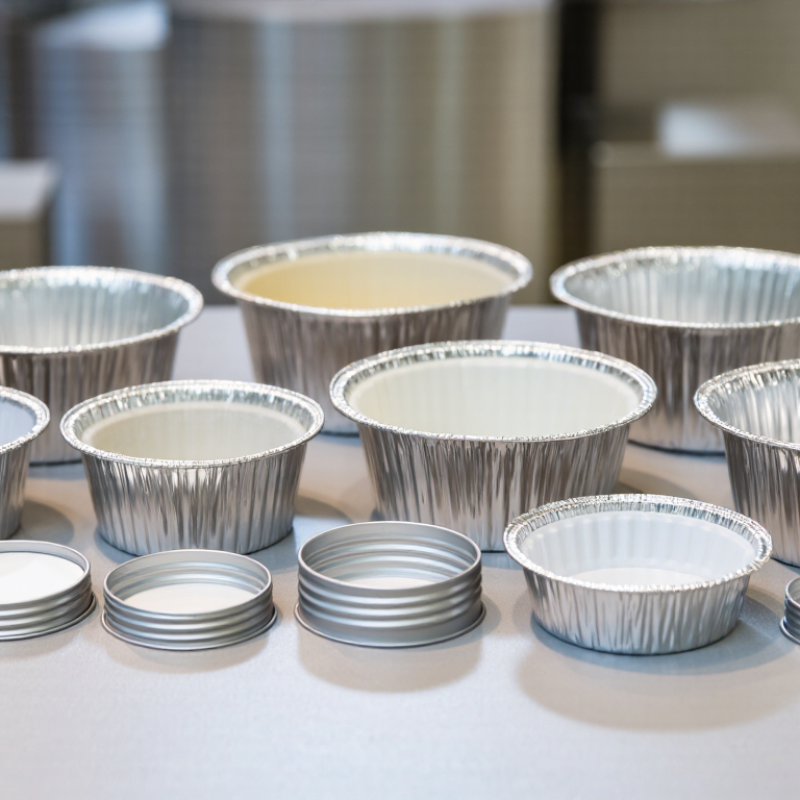
What Is the Best Aluminum Lid Made in China?
Types of Aluminum Lids Made in China
Chinese manufacturers produce several aluminum lid types for food, beverage, cosmetic, and household packaging. ROPP lids use rolled threads for a secure, tamper-evident closure. They suit glass bottles containing oils, sauces, and supplements. Easy-open aluminum lids use a scored panel and pull tab. They are common on beverage cans and portion containers. Foil-seal lids provide a thin barrier against moisture, oxygen, and contamination. They work well with cups, jars, and heat-sealed trays.
According to Mordor Intelligence’s 2024 aluminum caps and closures report, demand is supported by lightweight packaging and recyclable metal formats. The report projects steady market growth through 2029, although growth rates vary by region and application. Aluminum thickness usually ranges from 0.18 to 0.30 millimeters for many closure designs. That range is not universal. Lid diameter, alloy, sealing method, and filling temperature can change the specification.
Choosing the best type requires practical testing. Check thread fit, torque, liner compression, and leakage after transport. A lid can look excellent and still fail during temperature changes. I have seen minor liner wrinkles create slow leaks, especially on wide-mouth containers. This detail is easy to miss. Industry testing should also measure coating adhesion, opening force, and dimensional consistency. Reports from the International Aluminium Institute emphasize aluminum’s high recyclability, but recycling performance still depends on collection and separation systems.
| Lid Type | Typical Aluminum Alloy | Typical Thickness | Common Diameter Range | Primary Applications | Key Advantages | Best Selection Criteria |
|---|---|---|---|---|---|---|
| Easy-Open End (EOE) | Aluminum alloys commonly selected for deep drawing and scored-opening performance | Approximately 0.20–0.30 mm | Approximately 50–100 mm | Beverage cans, food cans, powdered products | Convenient opening, lightweight construction, high-volume production suitability | Score consistency, internal coating quality, seal integrity, and opening force |
| Pilfer-Proof Screw Cap | Aluminum alloys suitable for rolling, threading, and tamper-evident forming | Approximately 0.20–0.30 mm | Approximately 18–38 mm | Bottled water, wine, spirits, edible oils, pharmaceutical liquids | Tamper evidence, clean appearance, reliable resealing when used with compatible closures | Thread accuracy, liner compatibility, tamper-band performance, and torque requirements |
| Aluminum Foil Seal | Food- and pharmaceutical-contact aluminum foil grades | Approximately 0.020–0.100 mm | Approximately 20–120 mm | Yogurt cups, medicine containers, sauces, cosmetics, dry foods | Excellent barrier against light, oxygen, moisture, and aroma transfer | Heat-sealing temperature, peel strength, foil pinholes, and container material |
| Snap-On Aluminum Lid | Aluminum sheet grades formed for light rigidity and edge retention | Approximately 0.25–0.60 mm | Approximately 40–150 mm | Food containers, household storage, gift packaging, personal-care products | Fast application, low component count, attractive metallic finish | Fit tolerance, edge safety, lid rigidity, and resistance to accidental removal |
| Deep-Drawn Aluminum Lid | Deep-drawing grades with good ductility and surface quality | Approximately 0.40–1.20 mm | Approximately 50–250 mm | Cookware, laboratory containers, industrial vessels, reusable packaging | Higher structural strength, smooth one-piece construction, good dimensional stability | Drawing depth, corner radius, wall uniformity, and forming defect control |
| Heat-Seal Container Lid | Aluminum foil laminated with heat-sealable polymer layers | Approximately 0.030–0.150 mm aluminum layer | Approximately 30–180 mm | Dairy products, ready-to-eat meals, medical trays, pet food | Strong hermetic sealing, good barrier protection, and easy peel options | Seal-layer compatibility, seal window, peel behavior, and sterilization requirements |
| Pharmaceutical Blister Foil Lid | Hard-temper aluminum foil designed for printed and heat-sealed structures | Approximately 0.020–0.030 mm | Custom cavity or strip format | Tablets, capsules, medical devices, diagnostic products | High barrier protection, printable surface, and controlled push-through performance | Pinhole control, coating uniformity, print adhesion, and regulatory documentation |
| Ventilated Aluminum Lid | Perforated or expanded aluminum sheet selected for airflow and light strength | Approximately 0.30–1.00 mm | Approximately 50–300 mm | Food trays, horticultural containers, electronics, industrial enclosures | Air circulation, reduced condensation, low weight, and corrosion resistance | Open-area ratio, hole pattern, edge protection, and required mechanical strength |