
Choosing reliable rotorcomp air ends requires more than comparing catalogue prices. Global buyers must examine airflow, pressure stability, drive compatibility, lubrication design, cooling performance, and service access. A compact air end may look efficient on paper, yet poor alignment or unsuitable oil can shorten its working life.
Compressed-air specialist Hank Van Ormer often emphasizes, “You cannot improve what you do not measure.” That principle matters here. Buyers should verify actual flow at operating pressure, not rely only on headline capacity. They should also inspect test conditions, motor speed, ambient temperature, and expected duty cycle. Small details matter.
This guide reviews seven rotorcomp air ends for international purchasing decisions. It considers industrial reliability, replacement availability, installation flexibility, and long-term operating cost. Some models may suit continuous factory production. Others may fit smaller workshops, mobile systems, or package compressor upgrades.
Real-world experience can be less tidy than product literature. A technically excellent air end may still disappoint when local technicians lack training. Spare parts may also take longer than expected in distant markets. That deserves attention.
The best choice depends on the complete system. Not just the component.
We will compare practical strengths, possible weaknesses, and buyer concerns across different operating environments. The evaluation also considers energy consumption, maintenance intervals, noise control, and integration with existing compressor packages. No single model wins everywhere. That is worth remembering.
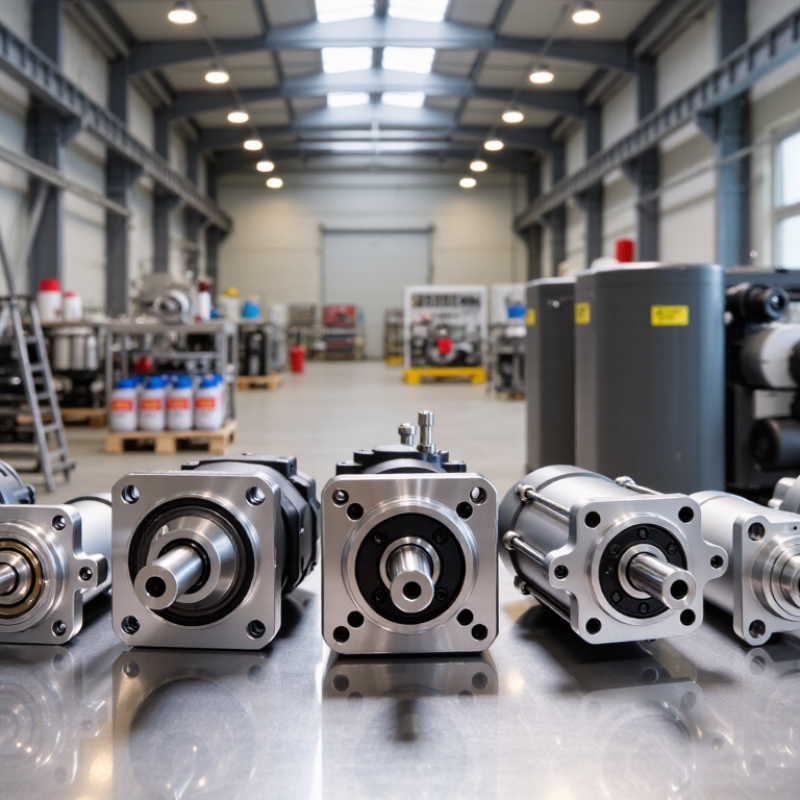
A rotary-screw air end is the compression core inside an industrial air compressor. It uses matched rotors to draw in air, compress it, and deliver a steady flow. Oil-injected designs also use oil for sealing, cooling, and bearing protection. Oil-free versions require tighter manufacturing and careful temperature control. The air end itself does not include every compressor component. Motors, filters, separators, controllers, and cooling systems complete the package.
Its applications range from factory assembly lines to mining workshops and remote construction sites. Selection depends on airflow, pressure, operating hours, ambient temperature, altitude, and motor speed. A small air end may suit intermittent workshop use, while continuous production needs stronger bearings and stable cooling. Field technicians often inspect vibration, outlet temperature, oil condition, and rotor noise. These details can reveal trouble before performance drops. Yet a clean specification sheet can still mislead. Actual site conditions deserve more attention.
Tips: Compare airflow at the stated pressure, not only the advertised maximum. Check shaft dimensions, rotation direction, lubrication requirements, and replacement-part availability. Ask for test data and service records when possible. Keep installation tolerances precise. A minor alignment error can create major vibration. Buyers should also confirm local electrical conditions and maintenance support. Cheap selection is tempting, but downtime may cost more.
The table below compares seven practical air-end configurations for global buyers. Performance figures are indicative selection ranges commonly used for oil-injected rotary screw compressor systems; final specifications depend on rotor profile, speed, cooling method, inlet conditions, motor, and control strategy.
| Profile | Typical Power Range | Common Working Pressure | Approximate Capacity Range | Cooling and Lubrication | Best-Fit Applications | Important Selection Factors |
|---|---|---|---|---|---|---|
| 1. Compact Fixed-Speed Air End | 5.5–22 kW | 7–13 bar(g) | 0.6–3.5 m³/min | Oil-injected; air-cooled or water-cooled options | Small workshops, service facilities, light manufacturing, and general plant air | Motor speed, inlet filter losses, mounting dimensions, and compatibility with the separator system |
| 2. Medium-Duty Fixed-Speed Air End | 30–75 kW | 7–13 bar(g) | 4.5–12 m³/min | Oil-injected; usually air-cooled, with water-cooled designs for demanding environments | Automotive parts, packaging, textile production, and food-processing utility air | Required free air delivery, discharge temperature, duty cycle, and service accessibility |
| 3. Variable-Speed Air End | 15–160 kW | 7–13 bar(g) | 1.5–27 m³/min | Oil-injected; inverter-driven motor with air or water cooling | Plants with fluctuating demand, multiple shifts, and energy-efficiency targets | Minimum stable speed, inverter operating limits, control range, and part-load efficiency |
| 4. High-Pressure Air End | 37–250 kW | 15–30 bar(g) | 2.5–25 m³/min | Oil-injected; enhanced cooling and pressure-rated separation components required | PET preform production, pressure testing, specialized pneumatic equipment, and high-pressure process air | Pressure ratio, discharge temperature, oil carryover, bearing load, and safety relief design |
| 5. Water-Cooled Industrial Air End | 75–315 kW | 7–13 bar(g) | 10–55 m³/min | Water-cooled oil circuit and aftercooler; suitable for controlled cooling-water systems | Large factories, power-related facilities, marine installations, and hot industrial environments | Cooling-water quality, flow rate, fouling protection, corrosion resistance, and installation footprint |
| 6. Low-Noise Package Air End | 11–55 kW | 7–10 bar(g) | 1.2–9 m³/min | Oil-injected; acoustic enclosure with air-cooled heat exchangers | Urban workshops, laboratories, dental facilities, and noise-sensitive production areas | Sound pressure level, ventilation path, enclosure service access, and vibration isolation |
| 7. Process-Oriented Oil-Free Air End | 30–250 kW | 5–10 bar(g) | 3–40 m³/min | Oil-free compression chamber; air or water cooling depending on design | Pharmaceutical, electronics, medical, beverage, and other contamination-sensitive processes | ISO 8573-1 air-quality class, moisture control, validation requirements, and total life-cycle cost |
Comparing seven air end models requires more than reading one pressure rating. Start with displacement, rated speed, and working pressure. These figures show whether a model suits a small workshop or continuous industrial duty. Check the oil-injection method and required oil volume carefully. Poor matching can increase heat and shorten bearing life.
Motor compatibility also matters. Compare shaft power, rotation direction, coupling size, and allowable operating speed. A model rated for 7.5 bar may not perform efficiently at 10 bar. Review inlet dimensions, outlet size, noise level, weight, and package footprint. During practical testing, record discharge temperature after several hours, not only during a short demonstration. That detail often exposes weak cooling capacity. Service access deserves attention too. A removable filter cover can reduce maintenance time. It seems minor, but technicians notice it quickly.
For reliability, examine bearing arrangements, sealing design, machining tolerances, and published performance curves. Request test conditions, because free-air delivery can change with ambient temperature and inlet pressure. Compare energy use at the same pressure, speed, and flow. The lowest purchase price is rarely the lowest operating cost. I would also verify spare-part availability and technical support in the target market. Documentation can be incomplete. That deserves careful questioning. A spreadsheet covering all seven models helps reveal trade-offs between efficiency, size, pressure range, serviceability, and expected operating life.
Buyers rarely need the same rotorcomp air end. Their best choice depends on pressure, duty cycle, space, and service access. The seven options below match different purchasing conditions.
For lower energy use, choose a variable-speed air end with efficient rotor geometry and stable performance across changing demand. A compact model suits workshops with limited floor space. It should still allow tool clearance and simple oil-line inspection. High-pressure applications need stronger bearings, reliable sealing, and a housing designed for continuous load. Do not judge capacity from pressure alone. Heat management matters too.
A low-noise air end fits indoor facilities near offices or production teams. For dusty environments, select a design with robust seals and effective filtration support. A retrofit-focused model helps buyers replace an aging compressor without rebuilding the entire package. Check shaft dimensions, coupling alignment, and control compatibility before ordering. Service-oriented buyers may prefer an air end with accessible bearings, common seals, and clear maintenance intervals. That can reduce downtime, even when the initial price is higher.
In my experience, specification sheets rarely show every operating weakness. A model may perform well in a laboratory but struggle in a hot, poorly ventilated room. Leave room for doubt. Verify airflow at actual pressure, not only at rated conditions. Also inspect local technical support and spare-part availability. The cheapest air end can become expensive after one delayed repair.
Selecting the right air end starts with the industry, not the catalog headline. A packaging plant may need stable flow, low vibration, and easy cleaning access. A metal workshop usually values peak pressure, impact resistance, and long duty cycles. Food processing demands suitable materials, cleanable surfaces, and carefully controlled lubricant separation. Medical applications require verified oil-free performance and documented quality controls. The requirements differ sharply.
Region changes the decision. In humid coastal areas, corrosion protection and effective moisture removal deserve close attention. High-altitude facilities may need derating because thinner air reduces cooling and compression performance. Cold regions require suitable lubricant viscosity and reliable starting procedures. Electrical frequency, local safety standards, spare-part access, and technician training also affect the practical choice.
Seven air-end profiles can cover many global needs: compact units for light workshops, high-pressure units for fabrication, efficient models for factories, corrosion-resistant designs for coastal sites, oil-free units for sensitive production, heavy-duty versions for continuous operation, and adaptable units for mixed loads. Yet selection tables can mislead. A model that performs well in a dry test room may struggle beside a dusty furnace. Check inlet temperature, operating hours, pressure range, cooling conditions, and maintenance records. Leave safety margin, but not excessive capacity. Oversizing often increases cost without improving production. A local service partner matters too. That detail is easy to overlook.
The best air end is not always the newest model. Global buyers should compare efficiency, shaft speed, displacement, service history, and replacement compatibility. The U.S. Department of Energy reports that compressed-air leaks can waste 20–30% of compressor output. Therefore, installation accuracy matters as much as purchase price. Check coupling alignment with a dial indicator, keep the inlet filter sealed, and confirm rotation before applying full load. Small errors become expensive quickly.
Use oil and separators approved for the specified operating temperature. Record discharge temperature, vibration, pressure, and running hours after commissioning. ISO 1217 provides performance-testing principles, while ISO 8573-1 defines compressed-air purity classes. These standards help buyers compare suppliers without trusting vague efficiency claims.
Maintenance should include leak testing, filter inspection, oil analysis, and torque checks. Keep spare seals and bearings available.
International purchasing requires more than a pro forma invoice. Confirm customs codes, packing dimensions, shaft tolerances, documentation, and local service capability. The World Bank’s Logistics Performance Index shows that border reliability and delivery predictability vary widely between markets. Plan for delays. A cheaper component may become costly after storage, re-machining, or unclear warranty terms. I would also question catalog data without test conditions. That is an uncomfortable but necessary check. Even experienced teams miss it.

Sign up for our mailing list to stay informed and up to date with our latest news and products!
(905) 832 – 0600
2175-A Teston Road
Maple, Ontario
L6A 1T3
(780) 451 – 0238
24790 – 117 Avenue
Acheson, Alberta
T7X 6C2
(604) 882 – 1564
9511 – 194A Street
Surrey, British Columbia
V4N 4G4
(306) 955 – 6005
3926 Arthur Rose Avenue Saskatoon, Saskatchewan
S7P 0C9
(450) 687 – 2721
2750 Rue Bernard-Lefebvre
Laval, Quebec
H7C 0A5