
Where to Buy the Best Stone Garden Sculptures in China? This question deserves more than a supplier list. China combines extensive stone resources, skilled carving communities, advanced export logistics, and wide production capacity. However, quality varies sharply between workshops. A polished photograph proves little.
Recent market research supports this growing opportunity. Grand View Research identifies rising demand for outdoor decorative products, driven by residential landscaping and hospitality development. The China Stone Material Association also highlights stronger processing capabilities and expanding international trade within China’s stone sector. These reports do not isolate Stone Garden Sculptures as a single category, which is an important limitation. Buyers should avoid treating broad market figures as exact sculpture-sales data.
David Harber, a recognized British garden sculptor, has said, “A sculpture should belong to its setting.” That principle matters when comparing Chinese suppliers. Examine the stone’s density, grain direction, frost resistance, drainage design, and hand-finished details. Ask for quarry origin, production photographs, dimensional drawings, packing specifications, and independent inspection records. A reputable factory should explain how it prevents hairline cracks during carving and transport.
Look closely at the base.
My own sourcing experience suggests that factory visits reveal details online catalogs hide: uneven chisel marks, weak joints, and inconsistent sealing. Still, even an inspection cannot remove every risk. Natural stone contains variation. Minor color differences are normal, while unstable cracking is not. The best buying decision balances artistic character, engineering evidence, documented experience, and responsive communication. This guide will compare reliable Chinese production regions, supplier credentials, customization options, pricing factors, and practical questions before placing an order.
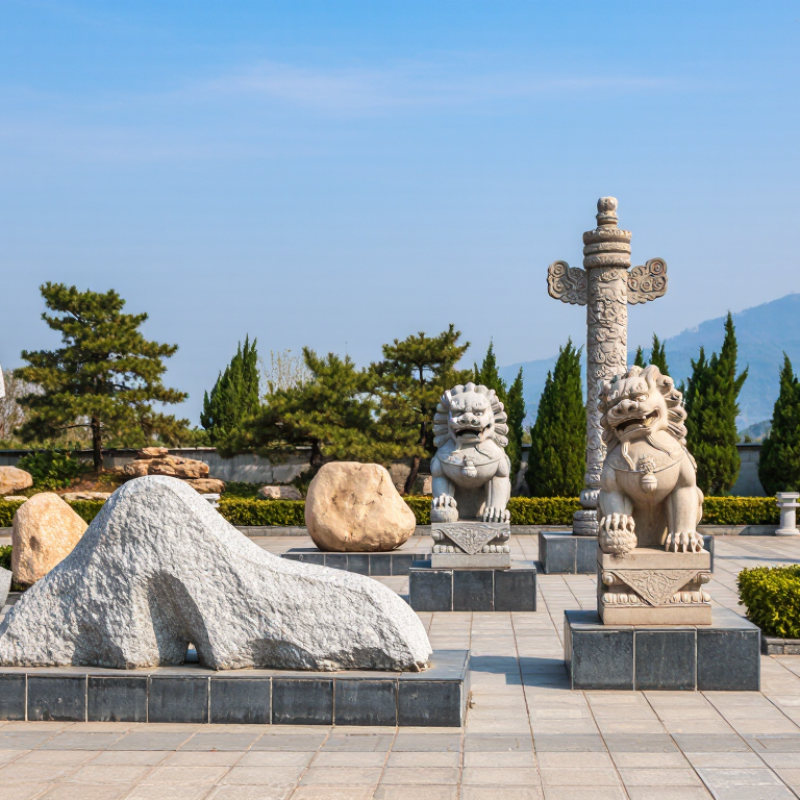
Where to Buy the Best Stone Garden Sculptures in China?
China offers a wide range of stone garden sculptures for courtyards, hotels, parks, and private gardens. Popular choices include granite animals, marble figures, sandstone fountains, and limestone planters. Basalt works well for modern designs because of its dark color and strong texture.
Classical sculptures often show lions, birds, angels, or human figures. Abstract pieces use simple curves and rough surfaces. Water features add movement, but they require careful drainage and stable installation. I have found that hand-carved surfaces usually look more natural than overly polished ones. However, small carving differences can affect the final appearance. This detail is easy to underestimate.
Buyers can explore stone markets, sculpture workshops, and custom manufacturing areas in China. Ask for recent photographs, stone samples, carving measurements, and packaging details. A professional supplier should explain the stone’s origin, density, maintenance needs, and expected color changes. Outdoor samples are especially useful because indoor lighting can hide surface flaws.
Tips: Match the stone to your local climate. Marble may stain in damp areas, while granite usually handles weather better. Check the sculpture’s base before ordering. A narrow base can create installation problems. Request a detailed drawing for custom work. Do not choose only by price; carving quality, stone thickness, and safe transport matter more. Sometimes, a slightly imperfect texture gives the sculpture more character.
China offers a wide range of outdoor stone sculptures, including granite animal sculptures, marble figurative statues, limestone reliefs, sandstone landscape pieces, and basalt abstract forms. The chart compares their typical stone density, which can help buyers evaluate durability, transportation weight, and suitability for large outdoor installations. Values are representative midpoints of commonly published natural-stone density ranges; actual quarry material may vary.
Where to Buy the Best Stone Garden Sculptures in China?
China’s leading production regions serve different sculpture needs. Fujian, especially Quanzhou and Huian, is known for detailed carving and large religious or landscape figures. Local workshops commonly use granite, sandstone, and marble. Shandong’s Laizhou area offers durable granite sculptures, often suited to courtyards, hotels, and public gardens. Hebei’s Quyang is recognized for traditional carving skills and precise hand-finished details.
Guangdong’s Yunfu combines stone processing with efficient export logistics. It is practical for projects requiring repeated sizes or coordinated landscaping pieces. China Customs and UN Comtrade data for 2023 place China’s HS 6802 stone exports above US$4 billion. This category includes architectural stone, not garden sculptures alone. Therefore, the figure indicates industrial strength, rather than exact sculpture sales.
Buyers should inspect quarry origin, stone density, water absorption, and repair methods. A supplier’s workshop visit can reveal more than polished catalog photographs. Ask for close images of tool marks and drainage holes. Weathering is rarely discussed enough. Even durable granite can stain when installed without proper drainage. Certification and packing records also matter, especially for large outdoor pieces. My practical concern is simple: regional reputation helps, but quality still varies between workshops. A careful sample inspection remains necessary.
When buying stone garden sculptures in China, begin with the material, not the showroom finish. Granite suits exposed gardens because it resists abrasion and weathering. Marble offers richer veining but may stain or erode faster. Limestone and sandstone provide warm textures, yet they usually need stronger water protection. The USGS Mineral Commodity Summaries 2024 valued United States dimension-stone sales at about 359 million dollars in 2023. That figure shows why material testing matters, even for one custom sculpture.
Request the stone’s quarry location, absorption rate, bulk density, and compressive strength. Ask for test documents using ASTM C97/C97M or equivalent Chinese standards. For freezing climates, demand freeze-thaw results. A low-absorption stone is not automatically the best choice. Its grain, hidden cracks, and repair history also matter. Inspect a wet sample; water can reveal veins and filled cavities that polished surfaces hide.
Craftsmanship deserves a physical inspection. Check whether facial features remain sharp, curves feel balanced, and tool marks follow the intended form. Look beneath the base. Drainage holes, stainless-steel pins, and a level mounting surface reduce installation problems. Ask for close photographs before packing, plus the final sculpture’s measurements and weight. A perfect showroom sample proves little.
I have seen buyers trust catalog images too much.
Even careful inspections can miss a weak joint, so an independent pre-shipment inspection is worth considering.
Where to Buy the Best Stone Garden Sculptures in China?
Reliable suppliers are usually found near established stone-carving centers, where workshops have skilled artisans and stable material access. However, location alone does not prove quality. A dependable supplier should explain the stone type, quarry origin, carving process, and outdoor performance clearly.
Ask for recent workshop photographs and detailed videos. Look for clean carving lines, balanced proportions, and smooth transitions around facial features. Request a physical sample when possible. Digital images can hide small cracks, uneven polishing, or color differences. I once underestimated these details. That mistake made the final piece harder to inspect.
A professional supplier should provide precise drawings, dimensions, weight, packing plans, and production stages. Confirm whether the sculpture suits freezing weather, heavy rain, or strong sunlight. Granite, marble, limestone, and sandstone perform differently outdoors. The supplier should also discuss sealing, drainage, and safe lifting points. These details matter during installation.
Check business documents and export experience before placing an order. Ask for references from similar projects, not only general testimonials. A written contract should cover stone selection, color tolerance, carving standards, delivery terms, and inspection procedures. Independent inspection can reduce uncertainty before shipment. Do not rush.
Some workshops communicate well but document poorly. Others produce beautiful samples yet miss deadlines. That contradiction deserves attention. Reliable cooperation depends on both craftsmanship and consistent project management. Photos of completed gardens, packing methods, and previous inspection records offer stronger evidence than promises.
Buying the best stone garden sculptures in China starts with a precise project brief. Specify stone type, height, finish, drainage, and viewing distance. Request recent workshop photos, material certificates, and a scale drawing. Custom work needs a signed sample approval. Color variation is natural, but “natural” should not excuse poor carving. In my project experience, unclear dimensions caused the most expensive mistake.
Shipping deserves equal attention. UNCTAD’s Review of Maritime Transport 2024 states that over 80% of global merchandise trade moves by sea. Large sculptures therefore need reinforced crates, moisture barriers, corner protection, and internal bracing. Ask for the packed dimensions and gross weight before payment. Confirm the Incoterm, port charges, insurance, and unloading equipment. Wooden packaging should follow ISPM 15 requirements. A forklift may be necessary. Site access is often forgotten.
Tips: Use a pre-shipment inspection with measured photos. Check the crate after arrival, before signing delivery documents. Plan a level base, drainage layer, and lifting points with a qualified installer. For heavy pieces, an engineer should verify ground capacity and wind exposure. Do not rely only on digital images; polished stone can appear darker on screen. I still find this difficult. Suppliers may answer quickly, yet small details remain uncertain. A written checklist reduces that risk.
| Purchasing Consideration | Typical Options in China | Recommended Stone | Typical Lead Time | Key Customization Details | Practical Buying and Project Notes |
|---|---|---|---|---|---|
| Sourcing Region | Stone-carving workshops, wholesale markets, export-oriented manufacturers, and custom sculpture studios. | Choose the stone according to local availability, climate, color, and required carving detail. | Ready-made pieces may be available immediately; custom projects generally require several weeks. | Request workshop photographs, carving samples, material certificates, and a scale drawing before ordering. | Compare at least three quotations using the same dimensions, stone type, finish, packing method, and delivery terms. |
| Common Garden Forms | Statues, animal figures, fountains, planters, columns, balustrades, benches, arches, and decorative reliefs. | Granite is suitable for heavy outdoor use; limestone and marble are often selected for softer classical details. | Approximately 3–8 weeks for standard products, depending on availability and order quantity. | Specify overall height, width, depth, posture, ornamentation, base design, and whether the sculpture is solid or assembled. | Confirm the finished dimensions, total weight, center of gravity, and whether the base is included in the quotation. |
| Material Selection | Granite, marble, limestone, sandstone, soapstone, and other natural building stones. | Granite generally offers high weather resistance; marble provides strong visual veining; limestone allows relatively easy carving. | Material availability can add approximately 1–4 weeks to the production schedule. | Approve a physical or high-resolution stone sample covering color, grain, veining, pores, and acceptable natural variation. | Natural stone varies from block to block, so color matching should be defined as an acceptable range rather than an identical guarantee. |
| Design Customization | Standard catalog adaptation, hand-carved reproduction, CAD-based development, and fully bespoke sculpture design. | Fine-grained marble or limestone is often preferred for intricate facial features and ornamental carving. | Design approval typically takes 1–3 weeks; production may take 6–16 weeks for complex pieces. | Provide reference images, sketches, measurements, profile views, surface finish, inscription text, and required tolerances. | Use a drawing or 3D rendering with written approval procedures. Ask whether a clay, foam, or digital prototype is included. |
| Surface Finish | Polished, honed, flamed, brushed, sandblasted, chiseled, natural split, or artificially aged finishes. | Textured finishes can improve visual depth and may reduce the visibility of minor surface marks outdoors. | Usually adds several days to the normal production period. | Define finish separately for each area, including face, clothing, pedestal, inscriptions, edges, and concealed surfaces. | Request close-up photographs under natural light because polished and textured finishes can appear different in studio lighting. |
| Quality Inspection | Factory inspection, independent pre-shipment inspection, video inspection, and inspection after crating. | Inspect for cracks, filled defects, excessive resin repair, unstable joints, chipped edges, and inconsistent finishing. | Inspection is normally arranged 3–7 days before shipment. | Agree on acceptable natural characteristics, repair standards, dimensional tolerances, and photographic inspection points. | For valuable or complex work, use an independent inspector and retain the final balance until the agreed inspection stage. |
| Packaging | Export-grade wooden crates, reinforced frames, foam protection, moisture barriers, and shock-resistant interior packing. | Large stone elements should be separated and supported to prevent movement, edge impact, and point loading. | Crating generally requires 2–7 days after final inspection. | Specify crate dimensions, lifting points, moisture protection, internal bracing, labeling, and unpacking instructions. | Ask for crate photographs and the packed dimensions and weight before booking transport or preparing site equipment. |
| International Shipping | Sea freight is common for heavy sculptures; air freight is used mainly for smaller, high-value, time-sensitive items. | Shipping calculations depend on actual weight, volume, packing dimensions, destination port, and handling requirements. | Ocean transit commonly takes several weeks, excluding customs clearance and inland delivery. | Confirm the agreed Incoterm, shipping documents, export packing, insurance coverage, port charges, and delivery destination. | Obtain a freight quotation based on the final packed measurements. Clarify who pays customs duties, taxes, unloading, and local transport. |
| Site Preparation | Concrete pad, reinforced foundation, concealed steel support, drainage layer, or prepared plinth. | The foundation must suit the sculpture's weight, height, wind exposure, soil condition, and local building requirements. | Site preparation should be completed before the sculpture arrives. | Request installation drawings showing anchor locations, base dimensions, center of gravity, and allowable support points. | Have a local structural professional verify the foundation, particularly for tall, narrow, cantilevered, or publicly accessible sculptures. |
| Installation | Customer-arranged contractor, local stone installer, or specialist rigging and sculpture installation team. | Heavy pieces may require a crane, forklift, lifting straps, mechanical anchors, grout, or stainless-steel pins. | Small installations may take one day; large multi-part projects may require several days. | Confirm lifting plans, assembly sequence, joint treatment, anchor materials, grout color, and final site finishing. | Check access roads, crane clearance, ground bearing capacity, overhead obstructions, weather conditions, and public safety controls. |
| Payment and Contract | Deposit plus balance after inspection, staged payments for large commissions, or payment through a protected trade platform. | Payment terms should reflect design approval, material procurement, production, inspection, and shipment milestones. | Contract timing should include approval delays, holidays, rework, shipping, customs, and installation contingencies. | Include exact specifications, drawings, stone samples, finish standards, warranty terms, delay procedures, and dispute resolution. | Avoid relying only on verbal promises. Ensure the commercial invoice and final contract match the approved design and quantity. |
| Maintenance Planning | Routine cleaning, periodic inspection, water management, joint review, and professional restoration when necessary. | Maintenance requirements vary with stone porosity, finish, pollution, freeze-thaw exposure, salt, and irrigation conditions. | Inspect after installation and at least annually, with more frequent checks in harsh environments. | Specify cleaning methods, approved products, protective treatment, drainage details, and restoration responsibilities. | Avoid acidic cleaners and untested sealers. Keep irrigation away from the sculpture where standing water or mineral deposits may occur. |
Planning ranges are typical project estimates rather than guarantees. Final costs and schedules depend on stone availability, design complexity, order volume, destination, customs procedures, and site conditions.

Sign up for our mailing list to stay informed and up to date with our latest news and products!
(905) 832 – 0600
2175-A Teston Road
Maple, Ontario
L6A 1T3
(780) 451 – 0238
24790 – 117 Avenue
Acheson, Alberta
T7X 6C2
(604) 882 – 1564
9511 – 194A Street
Surrey, British Columbia
V4N 4G4
(306) 955 – 6005
3926 Arthur Rose Avenue Saskatoon, Saskatchewan
S7P 0C9
(450) 687 – 2721
2750 Rue Bernard-Lefebvre
Laval, Quebec
H7C 0A5