2026 Best Water Pipe Fittings for Global Buyers
For global buyers, the best water pipe fittings are not simply the cheapest parts on a quotation. They are the connectors that remain dependable after years of pressure changes, vibration, and maintenance. The WHO/UNICEF Joint Monitoring Programme reported that 2.2 billion people lacked safely managed drinking-water services in 2022. That is a sobering reminder: water networks need components chosen with care. Small details matter. A threaded joint that leaks behind a wall can waste water, damage finishes, and disrupt service.
The American Water Works Association’s 2024 State of the Water Industry report identifies aging infrastructure as a major concern for water utilities. David LaFrance, former AWWA chief executive, has consistently emphasized the need for sustained investment in water infrastructure. His point reaches down to the fittings connecting each section of pipe. For buyers, material, pressure rating, corrosion resistance, installation method, and traceable quality records deserve close attention. Compare brass, stainless steel, ductile iron, and polymer options against the actual system conditions, not a catalogue headline. No fitting is perfect. A material suited to one water chemistry or temperature may underperform in another. This guide examines practical selection criteria, supplier checks, and trade-offs for 2026 purchasing decisions. We will favor verifiable specifications over broad promises, while recognizing that product availability and local requirements vary. That distinction is easy to miss. The aim is useful, informed buying—not a claim that one fitting works everywhere.
Water Pipe Fittings Defined: Types, Joints, and ISO 7-1 Pipe Threads
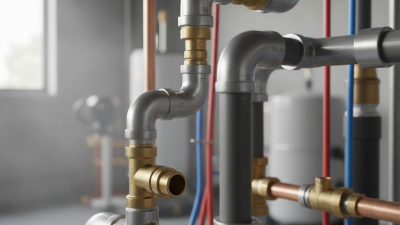
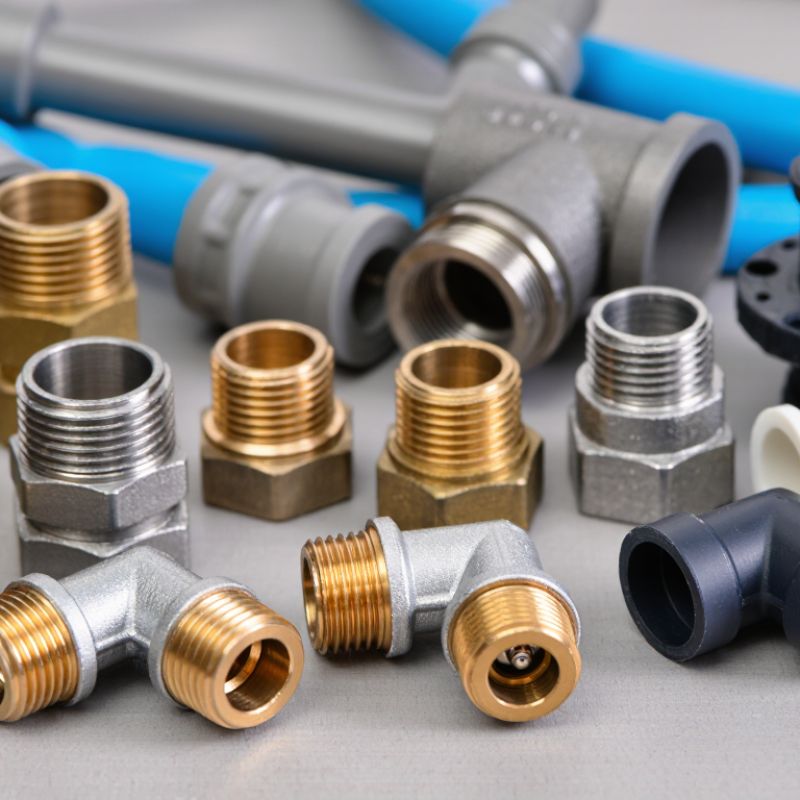
Water pipe fittings connect, branch, reduce, redirect, or close a pipeline. Common joint types include threaded, soldered, press-fit, grooved, flanged, and fusion joints. Each suits different materials and installation conditions. ISO 7-1 specifies pipe threads designed to form pressure-tight joints on the threads. Its designations include R for tapered external threads, Rp for parallel internal threads, and Rc for tapered internal threads. Details matter. A matching nominal size alone does not ensure a compatible connection. Buyers should check thread designation, material, working pressure, and sealing method before ordering.
The WHO/UNICEF Joint Monitoring Programme reported that 2.2 billion people lacked safely managed drinking water in 2022, in its 2023 household water and sanitation report. That figure reflects a broad infrastructure challenge, not a direct measure of fitting demand. Still, reliable connections matter in both new networks and repairs. On site, a poorly matched thread can leak at a joint, even when the pipe itself looks sound. Not interchangeable. In practice, catalog labels can confuse buyers; that deserves careful checking, not a guess. Thread standards help, but installers should also verify dimensions and follow the fitting manufacturer’s technical instructions.
Water Pipe Fittings: Joint Features at a Glance
This qualitative comparison shows common joint characteristics, not pressure ratings or performance scores. Threaded joints engage mating threads; ISO 7-1 designations include external tapered R and internal tapered Rc or parallel Rp threads. Flanged and grooved joints commonly use a gasket, while welded joints are permanent and require cutting for removal. Specific designs can vary.
Material Selection: PE100 SDR 11 Is Rated PN16 at 20°C
For global buyers, PE100 SDR 11 fittings are often selected for pressure water systems. At 20°C, PE100 SDR 11 is commonly rated PN16, meaning a nominal pressure class of 16 bar under specified conditions. Check the applicable product standard and manufacturer’s technical data before ordering. That rating is not a promise for every installation.
Temperature matters. As water gets warmer, the allowable working pressure can fall, so a PN16 label alone may not suit the service conditions. Pressure surges matter too. A pump starting against a closed valve can create a sharp spike that ordinary operating readings miss. Small detail. Big consequence.
Match fittings to the pipe’s outside diameter, SDR, and joining method. For butt fusion or electrofusion, clean, square pipe ends and compatible dimensions help prevent weak joints. Request test documentation and confirm that fittings carry a pressure rating suitable for the system, not just the pipe. I have seen procurement teams focus on the PN number and overlook temperature or surge allowances. It is an easy mistake, and worth checking before shipment.
Cross-Market Standards: ASTM D2466, D2467, and D2846 Fittings
Global buyers should compare fittings by standard, material, pressure class, and intended service—not by nominal size alone. ASTM D2466 covers Schedule 40 PVC fittings, while ASTM D2467 covers Schedule 80 PVC fittings. ASTM D2846 addresses CPVC fittings for hot- and cold-water distribution. These specifications are not interchangeable. Check the pipe-and-fitting combination, joining method, and temperature limits before approving a shipment.
The practical difference shows up during installation. A thicker Schedule 80 fitting has different dimensions from its Schedule 40 counterpart, and CPVC requires compatible joining materials. Ask suppliers for current dimensional and pressure documentation, then verify ratings at the system’s operating temperature. ASTM references help define product requirements, but they do not replace local project approvals. Fit matters.
The need for dependable water infrastructure is substantial:
WHO and UNICEF’s 2023 Joint Monitoring Programme report estimated that 2.2 billion people lacked safely managed drinking water in 2022.
That figure is not a fittings-market forecast, but it underlines why small component failures matter. A standards mark alone cannot confirm suitability for every application. Measure twice. Buyers should also review batch traceability and test records; paperwork can look complete, yet still leave questions about actual service conditions.
Potable-Water Compliance: NSF/ANSI/CAN 61 and the 0.25% Lead Limit
For global buyers, potable-water fittings need more than a pressure rating. NSF/ANSI/CAN 61 evaluates whether materials release harmful contaminants into drinking water under defined test conditions. It focuses on health effects, not mechanical strength. A fitting can be durable and still require separate evidence of drinking-water suitability.
In the United States, lead-free plumbing products generally must meet a weighted-average lead-content limit of 0.25% across wetted surfaces. This is not the same as a leaching test. Buyers should check both the applicable lead-content requirement and the product’s NSF/ANSI/CAN 61 certification. Details matter. The certification should cover the exact fitting, material, size, and intended use—not merely a similar product in the same catalogue.
Ask suppliers for current certificates and verify the listed model with the certifying organization. Also confirm whether the documentation applies to the complete assembly, including seals and coatings. Requirements and accepted certification schemes vary by destination, so one certificate may not settle every market question. A small paperwork gap can delay a shipment. I would not assume that a “lead-free” label alone proves compliance; the phrase can be used loosely, and the fine print deserves a careful read.
Global Buyer Checks: ISO 1167 Pressure Testing, Sizing, and Traceability
For global water projects, a fitting’s pressure claim is only useful when its test record matches the supplied product. ISO 1167-1:2019 describes how to determine resistance to internal pressure for thermoplastics piping components. It does not set one universal pass pressure for every fitting; the applicable product standard and test conditions matter. Ask for the test temperature, duration, pressure, sample size, and failure result. Check that the tested material and fitting dimensions match the shipment. Details matter.
Sizing needs the same discipline. ISO 4427-3:2019 covers polyethylene fittings for water supply, while ISO 12162 classifies PE100 material with an MRS of 10 MPa at 20°C. That material value is not a fitting’s permitted operating pressure. Verify diameter, SDR compatibility, wall dimensions, and the system’s design rating. ISO 9080:2012 addresses long-term hydrostatic-strength evaluation using test data; a brief factory test cannot replace that evidence. For traceability, request batch numbers linking resin certificates, production dates, inspection records, and pressure-test reports. Match those numbers to labels on cartons or individual fittings. A polished certificate can still leave gaps. Check the actual records.