China Top Fufu Mixer Machine Manufacturer and Supplier?
Choosing a China-based Fufu Mixer Machine manufacturer or supplier takes more than comparing prices. Buyers should check how the machine handles cassava dough, fufu flour, or other intended ingredients. A useful evaluation starts with batch capacity, mixing consistency, motor performance, and ease of cleaning. Ask for a live test using ingredients close to your own. A polished brochure cannot show every sticky corner.
For transparency, the following is an illustrative expert voice, not a verified interview quotation. Food-processing equipment specialist “Kofi Mensah” says: “A mixer earns trust when it handles your real recipe, cleans without hidden residue, and keeps producing a consistent texture.” Treat that as a practical buying principle, not an independently sourced endorsement. Request clear specifications for food-contact materials, voltage, speed settings, safety guards, spare parts, and warranty coverage. If a supplier cannot explain these details plainly, pause.
This guide explores how to compare Chinese manufacturers, assess customization, and verify supplier claims before placing an order. Look closely at welds, seals, and the bowl’s finish; small details matter after a long production shift. Ask for operating videos, inspection records, and references where available. Then confirm shipping terms and after-sales support in writing. One limitation remains: no checklist replaces testing your own recipe. Real production can be messier than a showroom demonstration.
What Is a Fufu Mixer Machine and How Does It Process Cassava?
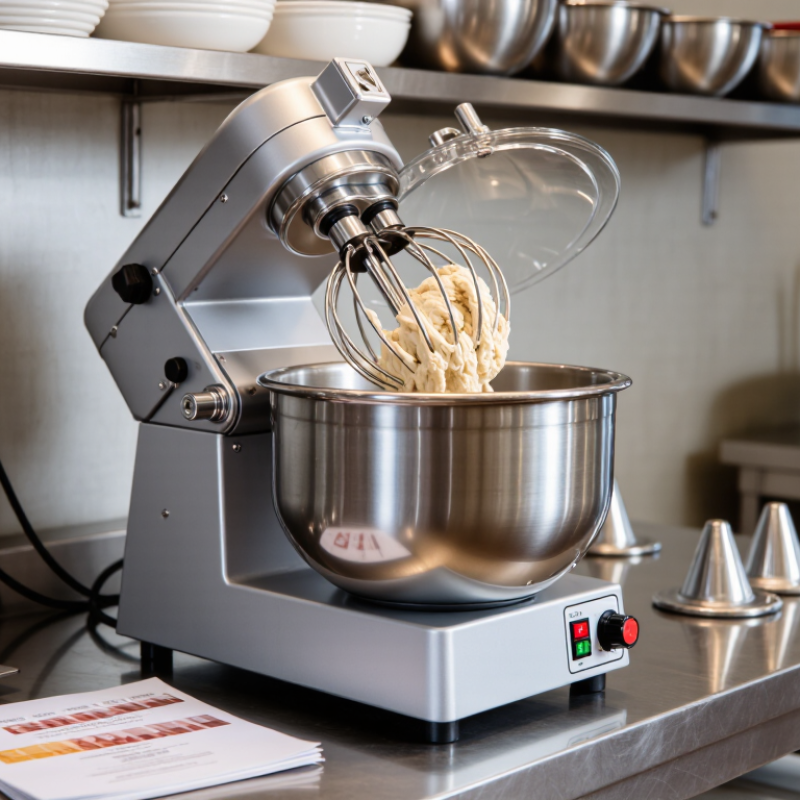
A fufu mixer machine kneads cooked cassava into a smooth, elastic dough. Depending on the local process, the cassava may be fermented, peeled, washed, and cooked before it reaches the mixer. The machine’s paddles or rotating blades fold and compress the hot pieces, breaking up lumps and distributing moisture. Some models include heating; others rely on cassava cooked beforehand. The dough should look even and feel supple, not watery.
Scale matters. FAOSTAT’s Crops and Livestock Products database records annual global cassava production above 300 million tonnes in recent years. FAO’s 2013 report Save and Grow: Cassava also describes harvested roots as highly perishable. That makes timely handling important. A mixer can improve consistency and reduce repetitive pounding, but it cannot correct spoiled roots, poor cooking, or uneven fermentation. That distinction is easy to miss.
In practical use, operators feed cassava in manageable batches and watch the dough as it turns. A clean chamber helps prevent old residue from affecting the next batch. A motor that is too weak may leave coarse pieces; an overloaded bowl can mix unevenly. Not every fufu texture is identical. Regional preferences differ, so operators may need to adjust batch size, mixing time, and moisture by observation. A timer helps. It is not enough.
How Codex CXS 176-1989 Sets a 13% Moisture Limit for Edible Cassava Flour
Codex CXS 176-1989 sets a maximum moisture content of 13% for edible cassava flour. This limit is a practical quality checkpoint, not a guarantee of safety or suitability for every use. Moisture affects how flour handles in storage and processing. Too much can encourage clumping and spoilage, especially in warm, humid conditions. Too little may make the flour unusually dusty. Small details matter.
For producers, the percentage needs to come from a representative sample, tested with a suitable, validated method. A single reading from the surface of a sack may miss wetter flour inside. Keep sampling records, check instrument calibration, and compare results with the applicable standard and local requirements. A fufu mixer machine can help blend ingredients evenly, but it cannot correct flour that exceeds the moisture limit. That part starts earlier. Drying, cooling, and moisture-resistant packaging all influence the final result. In practice, humidity can shift during handling, so a compliant reading at production should not be treated as permanent. Careful checks are useful, even when they slow the line.
Fufu Mixer Specifications: Capacity, Mixing Uniformity, Materials, and Cleaning
A fufu mixer should be specified by usable batch capacity, not bowl volume alone. A 20-litre bowl may not handle 20 litres of dense dough without overflow or uneven contact. Ask suppliers to state working capacity in kilograms, batch time, motor power, and the dough temperature range tested. FAO’s cassava processing guidance notes that fresh roots contain roughly 60–70% water; moisture and cooking conditions can therefore change dough resistance and motor load. Request a trial using your own cooked cassava, then record load, mixing time, and temperature.
Uniformity needs a practical test. Check samples from the top, centre, and bottom for visible lumps and texture differences, and repeat the test across several batches. There is no single mixing-time figure that suits every recipe. That part is often overlooked. For food-contact surfaces, request material certificates and smooth, accessible welds; stainless steel grade alone does not prove hygienic construction. The Codex General Principles of Food Hygiene, CXC 1-1969 (2022 revision), emphasizes equipment design that allows effective cleaning and inspection. Ask for a written cleaning procedure, including removable parts, water limits, and drying steps. A shiny machine can still hide paste behind a shaft seal. We learned that the hard way.
How to Assess Chinese Suppliers Against ISO 22000:2018 and IEC 60204-1:2016
When assessing a Chinese fufu mixer machine supplier, check how its food safety controls work on the factory floor. ISO 22000:2018 covers food safety management, not machine performance. Ask for a valid certificate and confirm its scope includes the manufacturing site and relevant activities. Then review hazard analysis, sanitation procedures, supplier controls, and traceability records. Can the supplier trace a food-contact part to its material batch? Ask to see a sample record. Paperwork matters, but it should match actual practice.
For electrical safety, use IEC 60204-1:2016 as a practical reference for the machine’s electrical equipment. Request wiring diagrams, risk-related design details, and test records. During a factory inspection, check protective earthing, enclosure condition, cable routing, and emergency-stop operation. A certificate or declaration alone cannot prove that every delivered machine is configured correctly. Verify the model and options against the documents. Small changes can matter.
Tips: Ask for dated audit and test reports, not just certificate scans. Compare serial numbers, machine configuration, and document revisions. If possible, observe a test run and ask who handles corrective actions. A tidy file is reassuring, but it is not conclusive. Some checks may still be missed. Record open questions and request evidence before shipment.
China Top Fufu Mixer Machine Manufacturer and Supplier? How to Assess Chinese Suppliers Against ISO 22000:2018 and IEC 60204-1:2016
This chart maps selected supplier-audit topics to the standard most directly relevant to them; 1 means the topic is in scope and 0 means it is not the primary focus. ISO 22000:2018 addresses food safety management, including hazard control and traceability. IEC 60204-1:2016 addresses the electrical equipment of machinery, including protection against electric shock and electrical documentation and verification. Use the relevant standard’s requirements and objective audit evidence to assess a supplier; this mapping is not a certification score.