Why Choose Die Casting Mold for Your Manufacturing Needs?
Die Casting Mold has become essential for modern manufacturing due to its efficiency and precision. According to a report by Research and Markets, the global die casting market size is projected to reach $20 billion by 2026. This growth highlights the value of die casting mold in reducing production costs while improving product quality. Industries such as automotive, aerospace, and electronics increasingly rely on these molds to meet stringent specifications.
The key advantages of die casting mold include exceptional dimensional accuracy and a smooth surface finish. Companies benefit from high production rates, allowing for rapid scaling of manufacturing processes. In fact, die casting can produce thousands of parts in a day. However, the initial investment in high-quality molds may be high. This factor can deter small businesses. Investing in die casting technology can lead to long-term savings.
Furthermore, selecting the right die casting mold is crucial. Molds must be designed to suit specific applications and materials. The lack of experience in mold selection can lead to production delays. As the industry evolves, staying informed about the latest advancements and best practices is vital. Knowledgeable manufacturers who adapt their strategies will likely outperform their competitors.
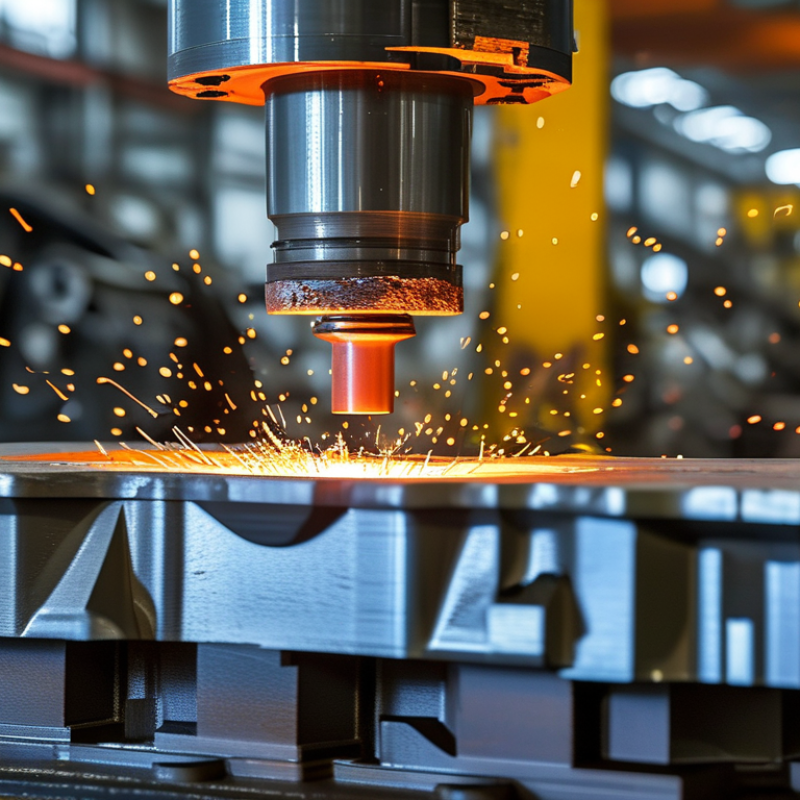
Benefits of Using Die Casting Molds in Manufacturing Processes
Die casting molds are increasingly becoming a preferred choice in manufacturing due to their numerous benefits. This method allows for high-volume production of complex shapes with tight tolerances. According to the Die Casting Designers Association, die casting can achieve dimensional tolerances as close as ±0.1 mm. This precision makes it ideal for industries requiring exact specifications, such as automotive and aerospace.
Moreover, using die casting molds significantly enhances material efficiency. Reports indicate that nearly 90% of the metal can be utilized in the production process. This efficiency not only reduces costs but also minimizes environmental impact. The ability to produce lightweight yet strong components is crucial in today’s manufacturing landscape, where demand for sustainability is rising.
However, challenges still exist. Initial investment in die casting molds can be high. The tooling process can take time, leading some manufacturers to hesitate. Despite this, the long-term benefits often outweigh these initial hurdles. The durability of die casting molds results in a reduced number of failures and reworks, which can be costly. As processes evolve, the need for reliable and effective manufacturing solutions becomes paramount.
Common Applications of Die Casting in Various Industries
Die casting is a versatile manufacturing process widely used across various industries. It creates precise, complex shapes with smooth surfaces, making it ideal for automotive, aerospace, and consumer goods. In the automotive sector, for instance, die casting is critical in producing engine blocks and transmission cases. These components require strength and durability, which die casting provides effectively.
In electronics, die cast parts are essential for housings and brackets. The ability to create intricate designs allows manufacturers to effectively manage heat dissipation. In the medical industry, precision is paramount. Die casting delivers components for devices like surgical instruments, ensuring reliability and performance.
It’s important to assess the complexities of your design. Simple designs might be easy to produce, but intricate ones can be challenging and costly. Always consider the trade-offs between detail and manufacturability. Stay informed about the latest advancements in die casting processes. This can enhance your understanding and help in making informed decisions about your production needs.
Common Applications of Die Casting in Various Industries
Factors to Consider When Choosing Die Casting Molds
Choosing the right die casting mold is crucial for any manufacturing process. Several key factors can impact the efficiency and effectiveness of your production. One vital aspect is the material of the mold. Typically, steel is favored for its durability, particularly for high-volume production. According to industry reports, steel molds can last up to five times longer than aluminum molds, making them a reliable investment.
Another consideration is the design complexity. A well-designed mold reduces production time and enhances product quality. For intricate designs, CNC machining and advanced simulation techniques are essential. These technologies can predict potential issues and allow for timely adjustments, ultimately saving time and costs in the long run.
Tips: Investigate the thermal properties of the mold material. Effective heat transfer can improve the cycle time and reduce defects. Always assess your production volume needs. A mold that fits your specific production goals can drastically improve efficiency. Remember, a poorly chosen mold wastes time and resources, so careful consideration is key in the manufacturing process.
Why Choose Die Casting Mold for Your Manufacturing Needs? - Factors to Consider When Choosing Die Casting Molds
| Factor | Description | Importance |
| Material Compatibility | Ensures the mold can handle specific alloys used in casting. | High |
| Mold Design Complexity | The intricacy of the part design influences mold manufacturing costs and time. | Medium |
| Production Volume | The number of pieces needed affects mold choice and cost-effectiveness. | High |
| Cost of Mold | Initial investment for the mold versus long-term production savings. | High |
| Lead Time | Time taken from mold design to production commencement. | Medium |
| Durability and Maintenance | Mold longevity and upkeep needs impact long-term costs. | High |
| Surface Finish | Quality of finish required impacts mold design and process. | Medium |
Comparative Analysis: Die Casting vs Other Manufacturing Methods
Die casting offers unique advantages compared to other manufacturing methods. One key benefit is precision. This process can produce complex shapes with high accuracy, often reducing the need for further machining. Materials such as aluminum and zinc are commonly used, enhancing durability and reducing weight. The speed of die casting is impressive; it allows for rapid production runs. However, the initial setup costs for molds can be high, which is a point of consideration for manufacturers.
In contrast, injection molding provides similar benefits in terms of detail and finish. Yet, it typically focuses on thermoplastic materials. This can limit its applications compared to die casting, which supports a wider material range. CNC machining can achieve high precision but at a slower rate. It also often results in more material waste, making it less efficient.
Each method has its drawbacks. Die casting might not be the best choice for low-volume production. The upfront costs may deter some businesses. Understanding the intended production volume and material requirements will help guide the decision. The choice ultimately depends on balancing precision, speed, and cost effectively.
Cost Efficiency and Time Savings with Die Casting Techniques
Die casting is an efficient method for producing complex shapes with remarkable precision. The process allows manufacturers to achieve significant cost efficiency. It reduces waste, making it a sustainable choice. By reusing materials, businesses can lower expenses. This can be especially beneficial for high-volume production runs.
Time savings are another major advantage of die casting. The ability to produce parts quickly means shorter lead times. Components can be created in high detail and delivered faster to market. This not only speeds up production but also enables a quicker response to market demand. Using advanced technologies further enhances time efficiency in this process.
For companies looking to optimize their production, understanding the nuances of die casting is crucial. A thorough analysis of designs and materials can reveal opportunities for efficiency gains. However, some designs may not be compatible with die casting, requiring careful evaluation. Stay informed and consider how die casting can fit into your manufacturing strategy.