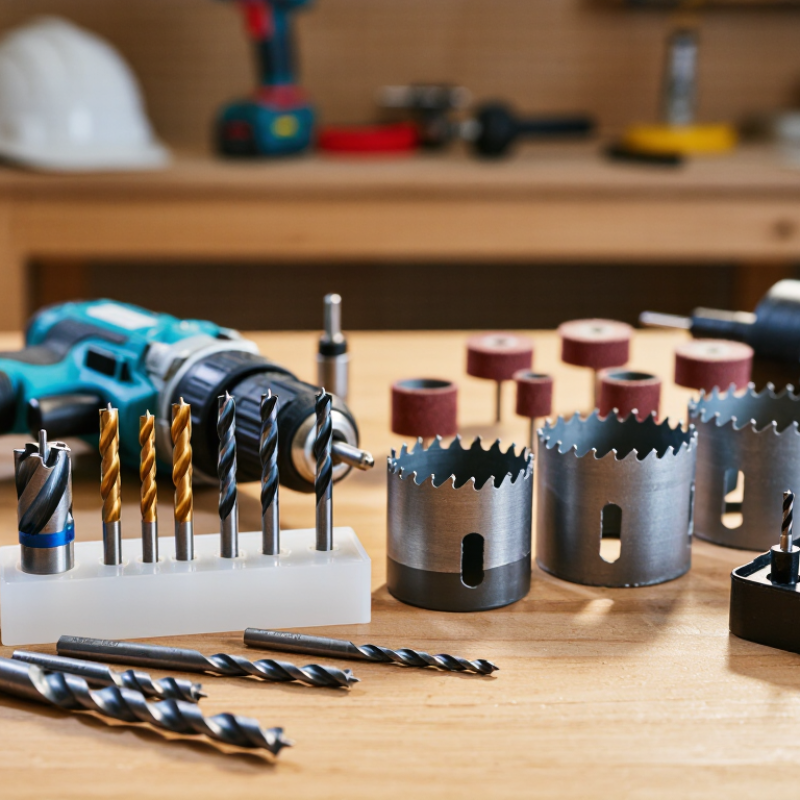
How to Choose the Best Drill Accessories in 2026?

Choosing the best Drill Accessories in 2026 requires more than comparing prices or counting pieces in a kit. The correct bit must match the material, drill speed, torque, and expected workload. A masonry bit for concrete behaves very differently from a cobalt bit cutting stainless steel. Small mismatches can create heat, wandering holes, damaged surfaces, and wasted time.

Market evidence supports closer selection. Grand View Research reports continued growth in the global power tools market through 2030, driven by construction, manufacturing, renovation, and cordless equipment. Allied Market Research also identifies rising demand for professional-grade tools and compatible accessories. These reports focus mainly on power tools, not every accessory category. That limitation matters. Accessory-specific forecasts often use different definitions, making direct comparisons imperfect.

Kenny Koehler, editor-in-chief of Pro Tool Reviews, offers a useful practical warning: “The accessory determines how much of the tool’s potential reaches the material.” His point is easy to test. A sharp bit produces a clean entry, controlled chips, and less pressure at the handle. A poor bit may squeal, smoke, or leave a rough hole within seconds. This guide examines Drill Accessories through performance, material compatibility, durability, safety, and total cost per job. It will compare drill bits, hole saws, drivers, sanding attachments, and specialty sets. Not every premium accessory is worthwhile. Sometimes, a modest set performs better because it matches the user’s actual tasks. That is where careful judgment begins.

How to Choose the Best Drill Accessories in 2026?

Identify Your Drilling Needs and Project Requirements

Choosing drill accessories starts with the material, not the tool drawer. A pilot hole in pine needs different geometry than a hole in brick, tile, or stainless steel. Identify the substrate, hole diameter, depth, and expected quantity before buying anything. For concrete, masonry bits with carbide tips handle mineral surfaces better. For metal, use bits designed for heat control and cutting pressure. For tile, a spear-shaped tip can reduce surface chipping.

Project scale matters too. The U.S. Geological Survey reported approximately 4.1 billion metric tons of cement produced worldwide in 2023. That figure reflects the huge volume of masonry and concrete work requiring suitable drilling accessories. However, construction volume does not justify choosing the most aggressive bit. A small repair may need only one precise hole. A renovation may require dust control, extension shafts, and several diameter options. Measure twice.

Match the accessory to the drilling conditions. Check the chuck type, maximum speed, torque, cooling method, and access angle. Long bits can reach awkward cavities, but they may flex and wander. Shorter bits often provide better control. In metal, excessive pressure can create heat, dulling the cutting edge quickly. In tile, rushing is a common mistake. Slow speed and steady alignment usually matter more than force. The U.S. Department of Energy’s Industrial Decarbonization Roadmap notes that industry consumes about 30% of U.S. energy, so efficient drilling also deserves attention. I would still test one hole first; material density can defeat even a carefully chosen accessory.

Compare Drill Accessory Types and Their Core Functions

How to Choose the Best Drill Accessories in 2026?

Drill accessories differ by material, cutting action, and fastening purpose. Twist bits suit wood, plastic, and general metal drilling. Masonry bits use a reinforced tip for brick and concrete. Spade bits remove wood quickly, while hole saws create larger, cleaner openings. For driving screws, select impact-rated bits when the tool delivers repeated torque. They resist twisting better than ordinary driver bits. Small detail, big difference.

Market data supports this expanding choice. Grand View Research reports that the global power tools market could grow at a 7.4% compound annual growth rate from 2023 to 2030. The Freedonia Group also identifies cordless equipment and accessory demand as major growth influences. These figures do not prove every new accessory is useful. They show why buyers should compare function, durability, and compatibility instead of following product volume.

Material thickness should guide accessory selection. A 6 mm metal bit needs cutting fluid and steady pressure to limit heat. In softwood, a brad-point bit can reduce wandering around a visible hole. For tile, a carbide-grit bit works slowly with light pressure and cooling. Sanding drums shape edges, wire wheels remove surface rust, and socket adapters handle fasteners. I still see users choosing accessories by appearance alone. That is a weak method. Check the shank size, speed rating, working material, and storage condition before drilling. Some performance claims remain difficult to compare because test methods differ between reports.

How to Choose the Best Drill Accessories in 2026? — Compare Drill Accessory Types and Their Core Functions
Accessory Type Core Function Typical Materials Best For Key Selection Factors Typical Shank or Interface Recommended Speed Guidance Important Usage Note
Twist Drill Bits Creates round holes by cutting and evacuating material through helical flutes. High-speed steel, cobalt alloy steel, or carbide. General-purpose drilling in wood, plastic, and metal. Match the bit material and point angle to the workpiece; use a split point to reduce wandering on metal. Round shank; some models use a hex shank. Use lower speeds for larger diameters and harder metals; follow the bit manufacturer’s rating. Use cutting fluid when drilling many metals to reduce heat and extend bit life.
Brad-Point Wood Bits Produces clean, accurately positioned holes in wood using a center point and cutting spurs. Hardened steel or high-speed steel. Furniture, cabinetry, softwood, hardwood, and engineered wood. Choose the diameter, flute length, and bit quality; a sharp center point is important for accurate starts. Usually round shank. Moderate to high speed, adjusted for diameter and wood density. Do not use as a primary choice for steel or masonry.
Spade Bits Rapidly bores relatively large holes through wood with a flat cutting blade. Carbon steel or hardened tool steel. Fast rough holes for wiring, plumbing, and construction work. Select the required diameter and a length suitable for the material thickness. Usually hex shank for better chuck grip. Medium to high speed; reduce pressure near breakthrough. The exit side may splinter, so support the workpiece or drill from both sides.
Forstner Bits Cuts flat-bottomed, clean-sided holes and overlapping holes in wood. High-speed steel or carbide-tipped steel. Hinges, recessed fittings, overlapping bores, and precision woodworking. Consider diameter, cutting-edge design, drilling depth, and whether a flat bottom is required. Round shank. Lower speed than small twist bits, especially for large diameters. Requires a stable drill setup because large sizes generate significant torque.
Masonry Bits Uses a carbide-tipped cutting head to fracture and remove brick, block, concrete, or stone. Steel body with tungsten-carbide cutting tip. Mineral-based building materials and anchor holes. Choose the diameter, length, carbide-tip quality, and compatibility with rotary or hammer drilling. Round or SDS-type shank, depending on the tool. Use the tool’s masonry setting and moderate pressure; avoid excessive speed when specified. Use hammer action only when both the drill and bit are rated for it.
Tile and Glass Bits Creates holes in brittle, hard surfaces with a spear-point or diamond-coated cutting area. Carbide or diamond abrasive coating. Ceramic tile, porcelain tile, glass, and some stone surfaces. Match the bit to the surface hardness and hole diameter; diamond versions are preferred for harder materials. Usually round or hex shank. Low speed with light pressure; cooling is often required. Disable hammer action and prevent the bit from overheating or sliding.
Hole Saws Cuts large-diameter circular openings using a toothed or abrasive cylindrical cup. Bi-metal steel, carbon steel, carbide grit, or diamond grit. Large openings for pipes, cables, lights, and hardware. Choose the cutting diameter, cutting depth, material compatibility, and arbor system. Arbor with pilot drill; some systems use quick-change interfaces. Generally lower speed as diameter increases; use the recommended rating. Clear chips regularly and avoid forcing the saw when it binds.
Step Drill Bits Creates multiple hole diameters with one conical bit containing graduated steps. High-speed steel, often with a wear-resistant coating. Thin sheet metal, plastic, electrical boxes, and deburring light-gauge holes. Check the step-size range, maximum material thickness, and coating for the intended material. Usually hex shank. Moderate speed with cutting fluid for metal; avoid excessive feed pressure. Best for thin stock; thick material can wear the individual steps quickly.
Countersink Bits Creates a conical recess so a flat-head screw can sit flush with or below the surface. High-speed steel or carbide. Wood, plastic, and metal screw-hole finishing. Match the countersink angle and diameter to the screw head and material. Round or hex shank; some include an integrated pilot drill. Low to moderate speed with light pressure. Remove only enough material to seat the fastener without weakening the surface.
Screwdriver Bits Drives screws and fasteners using a shaped tip that matches the fastener recess. Heat-treated steel, chrome-vanadium steel, or impact-rated alloy steel. Assembly, installation, repair, and repetitive fastening. Select the exact tip profile and size; use impact-rated bits for impact drivers. Commonly 1/4-inch hex shank. Controlled speed and torque reduce cam-out and fastener damage. A magnetic holder can improve alignment but does not replace the correct bit size.
Nut Setters Drives hex-head screws, bolts, and nuts with a tubular socket-style head. Heat-treated alloy steel or impact-rated steel. Sheet-metal screws, roofing fasteners, and hex-head hardware. Match the socket size and select an impact-rated version for high-torque tools. Commonly 1/4-inch hex shank. Use controlled speed to prevent stripping or over-tightening. Verify the fastener size before use; metric and inch sizes are not interchangeable.
Wire Brushes Removes rust, scale, paint, burrs, and surface contamination through abrasive wire contact. Carbon steel, stainless steel, or brass-coated wire. Surface cleaning, weld preparation, and light deburring. Choose wire material, brush shape, stiffness, and compatibility with the workpiece. Shank-mounted wheels, cups, or end brushes. Stay within the brush’s maximum rated speed. Wear eye and face protection because wires and debris can be ejected during operation.
Sanding Drums and Discs Removes material, smooths surfaces, and prepares edges using abrasive media. Aluminum oxide, silicon carbide, zirconia, or diamond abrasive. Wood shaping, paint removal, plastic finishing, and selected metal work. Choose abrasive type, grit size, diameter, and backing style for the material and finish. Mandrel-mounted drums or backing-pad systems. Use the abrasive’s rated speed; lower speeds help limit heat on plastic and finishes. Keep the accessory moving to avoid grooves, overheating, or uneven surfaces.
Flexible Extension Shafts Transfers rotary motion to a bit in confined or difficult-to-reach spaces. Flexible steel shaft with protective polymer housing. Light-duty fastening and drilling where a straight tool cannot fit. Check torque capacity, bend radius, length, and compatibility with the bit interface. Usually 1/4-inch hex input and output. Use low to moderate speed and avoid sharp bends. Not suitable for high-torque applications unless specifically rated for them.

Choose Compatible Sizes, Materials, and Shank Designs

How to Choose the Best Drill Accessories in 2026?

Choose accessories by matching size, material, and shank design to your drill and workpiece. Check the chuck’s accepted diameter before buying. A bit that is too wide may not lock securely. A bit that is too narrow can slip under pressure. Measure the required hole depth, too. Extra length sounds useful, but it often reduces control.

Material choice affects heat, cutting speed, and service life. High-speed steel suits wood, plastic, and many general metal tasks. Carbide-tipped accessories handle masonry and abrasive surfaces more effectively. For stainless steel, choose a heat-resistant cutting design and use steady pressure. Do not judge quality by appearance alone. Inspect the cutting edges, flute shape, and stated application.

Shank design matters as much as the cutting head. Round shanks fit many standard chucks and support flexible use. Hex shanks usually change faster and resist slipping in compatible holders. Slotted systems require a matching drive mechanism.

I once used the wrong shank size during a repair. The bit looked correct, but it vibrated badly. That mistake taught me to test fit before drilling. Place the accessory in the chuck, tighten it firmly, and check for visible wobble. A brief low-speed test can reveal poor alignment. Specifications remain useful, but real fit may still require careful judgment.

Evaluate Durability, Safety Features, and Performance

In 2026, drill accessories should be judged by durability, safety, and measurable performance. Grand View Research’s 2024 power-tools analysis estimates that cordless tools represented more than 60% of market revenue in 2023. That shift increases pressure on batteries, chucks, and bits. Choose heat-treated steel bits with clear size markings and reinforced shanks. Check the cutting edges under bright light. Uneven edges often signal poor manufacturing.

Safety deserves more attention than packaging claims. The U.S. Bureau of Labor Statistics reported 2.6 million nonfatal workplace injuries in 2023. These figures cover all industries, not drills alone, but they show why accessory selection matters. Look for guards, depth stops, anti-slip surfaces, and accessories rated for the drill’s speed. A loose bit can wobble like a bent bicycle wheel. Stop using it. Do not rely on gloves to compensate for unstable equipment.

Performance testing should match the actual material. Compare drilling speed, heat buildup, vibration, and edge wear across several holes. A bit that performs well once may fail after repeated use. I still keep one worn bit because it feels familiar. That habit is hard to defend. Record the number of holes completed before replacement, then compare results with the manufacturer’s technical data. Independent testing is preferable, yet laboratory results may not reflect dusty workshops or uneven pressure. Evaluate both. A safer accessory is not always the fastest, and the fastest option may create unnecessary heat.

Build a Practical Drill Accessory Set for Different Tasks

A practical drill accessory set starts with the material, not the tool drawer. For wood, keep brad-point bits in common sizes; their center tips reduce wandering on pine and plywood. For metal, use cobalt-alloy or high-speed steel bits, cutting oil, and slower pressure. Masonry requires carbide-tipped bits and a hammer setting only when the drill supports it. Match the shank to your chuck. A loose fit wastes power and can damage the chuck.

Add driver bits for screws, nut drivers for bolts, and a magnetic holder for quick changes. A compact set should include Phillips, slotted, square, and star-shaped profiles, because damaged screw heads often begin with poor fit. For repeated holes, a depth stop helps protect cabinets and hidden pipes. A countersink creates a cleaner finish in softwood. For light shaping, sanding drums and flap wheels can extend the drill’s usefulness, but they need firm control. They can grab suddenly.

In my workshop, I label bits by material and inspect edges before every demanding job. A blunt bit creates heat, rough holes, and false confidence. I also keep spare bits, since one broken tip can interrupt an otherwise simple repair. Check each accessory’s speed rating and diameter against the drill manual; published limits are more dependable than guesswork. Wear eye protection, clamp the workpiece, and clear loose clothing from rotating parts. My own mistake was buying a large mixed kit before measuring the tasks I actually performed. Half of it stayed untouched. Build slowly, record what works, and replace weak pieces instead of collecting duplicates.

Request Quote

Sign Up