
How to Choose the Right Air Conditioning System?

Choosing the right Air Conditioning system is more than comparing cooling capacity and purchase prices. It requires a careful look at room size, insulation, window direction, occupancy, and local climate. A system that works well in a shaded bedroom may struggle in a glass-fronted living room. During professional assessments, technicians often notice overlooked details, such as blocked airflow, aging electrical circuits, or poorly sealed doors.

Small details matter.

This guide explains how to compare split, portable, window, and central systems with practical judgment. It considers energy efficiency, installation requirements, sound levels, maintenance access, and long-term operating costs. Manufacturer specifications provide useful evidence, but they should not replace an on-site evaluation. Real performance can differ because of building design, humidity, and user habits. Even an efficient unit may waste energy when filters remain dirty or the thermostat is set too low.

There is no perfect choice for every property. Some recommendations may change after a professional inspection. That uncertainty deserves attention, not concealment. Reliable decisions should balance expert advice, certified performance data, warranty terms, and realistic household needs. A cheaper unit can become expensive when repairs are frequent. Conversely, an advanced system may offer features that a small apartment never needs. By examining these trade-offs carefully, homeowners can select cooling equipment that feels comfortable, operates responsibly, and remains practical for years.
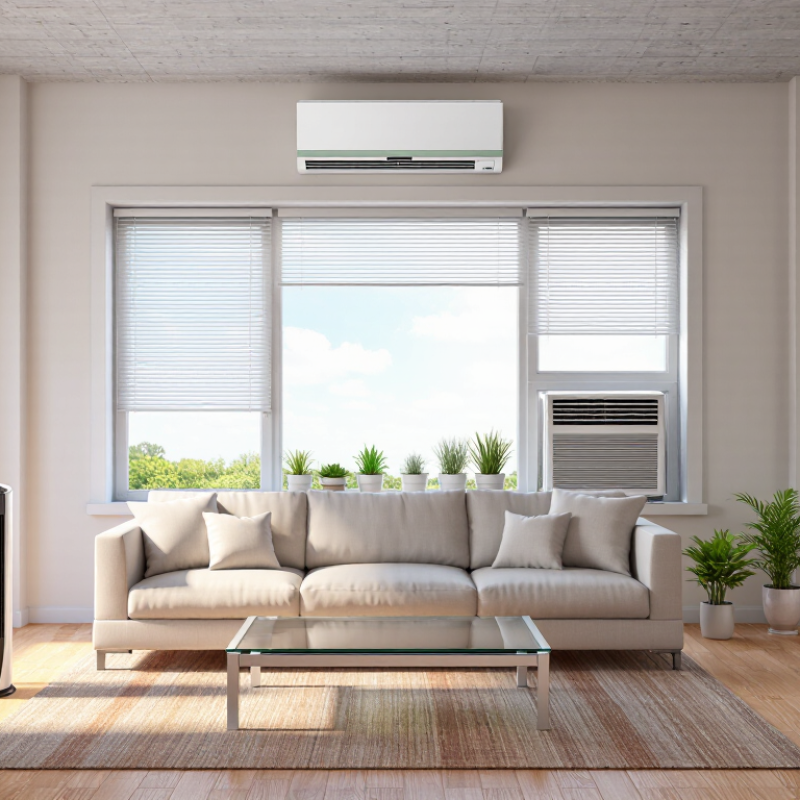
How to Choose the Right Air Conditioning System?

Assess Your Space, Climate, and Air Conditioning Requirements

How to Choose the Right Air Conditioning System?

Assess the space before comparing equipment.

Measure floor area, ceiling height, window direction, insulation, and occupancy. A sunlit room with west-facing glass needs more cooling than a shaded office. Check airflow paths, too. Furniture and partitions can create uncomfortable hot spots.

Climate changes the decision.

The International Energy Agency reports that space cooling uses about 10% of global electricity. Its Future of Cooling report also warns that cooling demand could triple by 2050.

In humid regions, prioritize moisture removal, not just lower temperature.

In dry climates, efficient sensible cooling may matter more. Local summer design temperatures provide a better guide than average weather data.

Your requirements should include noise, operating hours, indoor air quality, and maintenance access.

ASHRAE guidance supports evaluating thermal comfort alongside temperature, humidity, and air movement. For a small bedroom, a modest system may be enough. A crowded retail space needs stronger airflow control and fresh-air planning.

Oversizing is tempting, but it can cause short cycling and leave humidity behind. That mistake is easy to make.

Review the load calculation with a qualified HVAC professional.

Ask what assumptions were used. A tidy calculation can still miss afternoon solar gain or future room changes. Choose efficiency, but judge it under your actual climate and usage pattern.


Compare the Main Types of Air Conditioning Systems

Choosing the right air conditioning system starts with comparing how each type works in your space. A split system suits homes with several rooms and permanent installation. It offers quieter indoor operation and efficient temperature control. A window unit costs less upfront, but it cools one room and may block daylight. Portable units are flexible, although their exhaust hose can reduce efficiency.

Central air conditioning provides even cooling through ducts. However, poor duct sealing can waste substantial energy.

The U.S. Department of Energy reports that duct losses may exceed 30% of cooling energy in some homes.

Ductless mini-split systems avoid much of this loss and support room-by-room control. They can be practical for older buildings. Still, installation quality matters more than many buyers expect.

Tips: Measure the room, insulation, sun exposure, and ceiling height before selecting capacity. An oversized system may cool quickly but remove less humidity. An undersized system can run continuously. Check seasonal efficiency ratings, noise levels, filter access, and repair availability.

The International Energy Agency’s The Future of Cooling reports that global space-cooling energy demand could more than triple by 2050 without stronger efficiency measures.

That figure deserves attention, but household savings will vary.

I would not choose equipment from the rating alone. A lower-rated system with careful sizing may perform better than a highly rated system installed poorly. Think about maintenance, too. Dirty filters quietly change the result.

Calculate the Correct Cooling Capacity for Your Space

Choosing capacity starts with measurements, not floor area alone.

Measure the room’s length, width, and ceiling height. Multiply them to find the room volume. A 5 m by 4 m room with a 2.8 m ceiling holds 56 cubic metres.

Note window direction, glass area, insulation, and air leakage. A west-facing window can add strong afternoon heat. Occupants and appliances matter too. Two adults, a computer, lights, and cooking equipment may raise the cooling load.

Start with the room. Do not guess.

Cooling capacity should broadly match the calculated heat gain.

A 3.5 kW capacity equals about 12,000 BTU/h. A basic area-based estimate can provide a starting point, adjusted for climate, ceiling height, sunlight, and insulation. It remains a screening tool.

A qualified technician should complete a room-by-room heat-load assessment for open-plan spaces.

Oversizing is not harmless.

The system may cool quickly but stop before removing enough humidity, leaving the room cold and clammy. An undersized system may run continuously during a 35°C afternoon.

Check electrical supply, airflow, and outdoor unit placement. No estimate is perfect. A sunroom or poorly sealed door can defeat an otherwise careful calculation.

Recheck those assumptions after installation.

Evaluate Energy Efficiency, Features, and Operating Costs

How to Choose the Right Air Conditioning System?

Choosing an air conditioning system starts with energy efficiency, not attractive features. Check the seasonal efficiency rating and estimated annual electricity use. A higher rating often reduces monthly bills, especially during long, hot summers. However, efficiency figures can be misleading if the system is poorly sized. An oversized unit may cool a room quickly, then switch off repeatedly. This can leave the air damp and uncomfortable. Ask a qualified technician to assess room size, insulation, window direction, and local climate. These details affect real performance.

Tips: Compare purchase price, installation fees, maintenance, and expected electricity costs. Request written estimates. Inspect the filter location before buying. A difficult filter wastes time and may reduce airflow. Smart controls can improve comfort, but only when people use them correctly. Avoid paying for features that nobody in the household needs.

Operating costs also depend on noise, airflow, and daily habits. Variable-speed operation may maintain steadier temperatures than basic fixed-speed equipment. Timers and temperature sensors can prevent unnecessary cooling in empty rooms. Review the warranty terms and service requirements carefully. Reliable installation matters as much as the equipment itself. In practice, energy estimates are never perfect. Door opening, sunlight, and changing electricity prices can alter the final bill. I would leave room for that uncertainty when comparing systems. A slightly cheaper model may become expensive if it needs frequent repairs or consumes more power than expected.

Plan Installation, Maintenance, and Long-Term Performance

How to Choose the Right Air Conditioning System?

Plan installation before comparing equipment. A cooling system should match the building’s heat load, not just its floor area. Ask a qualified designer to assess insulation, window exposure, occupancy, ventilation, and local humidity. Oversizing seems safe, but it can cause short cycling, uneven temperatures, and poor moisture control. The U.S. Department of Energy recommends professional sizing and installation practices for efficient performance. A small error here can become a daily cost.

Installation quality matters greatly. Check refrigerant lines, airflow, electrical capacity, drainage, and equipment access before work begins. The International Energy Agency reported that space cooling used about 10% of global electricity in 2018. Poor installation can increase that burden. Leave clearance around outdoor units. Seal duct leaks. Test supply and return airflow. These details are easy to overlook.

Maintenance should be scheduled, not improvised. Clean filters regularly, inspect coils, clear condensate drains, and verify refrigerant performance through qualified service personnel. ASHRAE Standard 180 provides structured inspection and maintenance guidance for commercial HVAC systems. Keep service records with dates, measurements, and repairs. The plan will not be perfect. Occupancy may change, and extreme weather may expose weak assumptions. Review performance each season, especially when rooms feel clammy, airflow drops, or energy use rises unexpectedly. Sources: International Energy Agency, The Future of Cooling, 2018; U.S. Department of Energy; ASHRAE Standard 180.

How to Choose the Right Air Conditioning System?

Plan installation, maintenance, and long-term performance by comparing the typical service life of common air conditioning systems. Actual results depend on climate, installation quality, operating hours, and maintenance.

Typical planning benchmarks: central split systems and packaged systems commonly last about 15 years, ductless mini-split systems about 20 years, and window units about 10 years. Schedule professional inspections at least annually, keep filters clean, and select a properly sized system for better long-term efficiency.

Request Quote

Sign Up