How to Choose a Wheel Cover Injection Molding Supplier?
Choosing a supplier for wheel covers involves more than comparing quoted prices. Wheel Cover Injection Molding depends on careful tooling, stable production conditions, and materials suited to the vehicle’s use. A small mismatch in fit or surface finish can become obvious once the cover is installed. Details matter.
A reliable supplier should explain its process in practical terms. Ask how it checks mold dimensions, manages material consistency, and inspects parts during production. Request samples or clear records from comparable projects, rather than relying on broad claims. If possible, review a sample under natural light and check its edges, clips, color, and fit. These details reveal more than a polished presentation. They are not the whole story, though.
Capacity and communication matter too. Confirm expected lead times, tooling ownership terms, minimum order quantities, and how design changes are handled. Ask who will respond when a trial part needs adjustment. A capable team should describe the issue, propose a correction, and document the next sample. Clear answers build confidence. Vague promises do not.
Price still deserves attention, but the lowest quote may leave out important costs, such as mold maintenance or shipping protection. Compare offers line by line. Then consider how well each supplier supports testing, production scaling, and quality follow-up. No checklist can remove every risk; even experienced teams can overlook a detail. A thoughtful supplier selection process helps you spot concerns early and choose a partner whose skills match your wheel cover design, volume, and quality expectations.
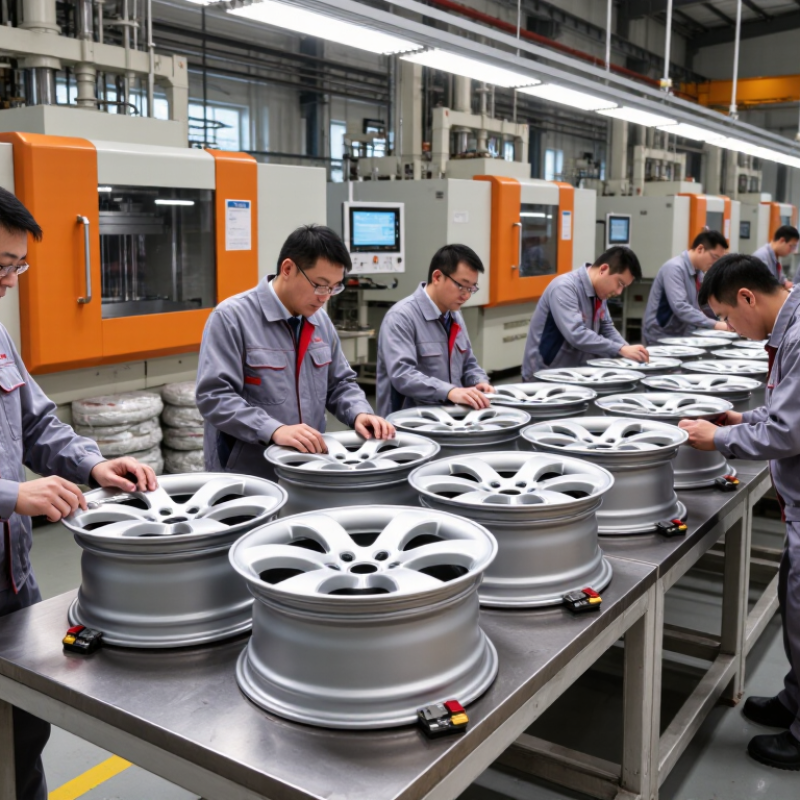
Define Wheel Cover Requirements and Project Specifications
Before requesting quotes, define the wheel cover’s purpose and operating conditions. Record the wheel diameter, cover depth, attachment method, and clearance around the valve stem. Specify the vehicle type, expected temperature range, exposure to road salt, and likely impact or vibration. Small details matter. A cover used on a daily commuter may need different retention strength from one fitted to a display vehicle. Share a dimensioned drawing or physical sample, and identify which measurements are critical.
Set measurable requirements for material, appearance, and production. State the preferred resin, or ask the supplier to recommend one based on impact resistance, heat, and surface finish. Note the color, gloss level, texture, and acceptable variation between molded parts. Define target production volume, tooling life, prototype schedule, and inspection criteria. Ask how the supplier will check fit, clip retention, warpage, and visible defects. If the design is still changing, say so. An early specification can be useful without pretending every detail is final. That part is easy to overlook.
Tips: Include tolerance ranges for key dimensions, not just nominal measurements. Provide photos of the wheel and mounting area, plus samples of any preferred finish. Request a first-article review before approving full production. Keep unresolved assumptions visible, such as long-term clip fatigue, and agree on how to test them.
Assess the Supplier’s Injection Molding Capabilities
Assess whether the supplier’s presses can handle the wheel cover’s projected area, shot volume, and mold dimensions. Ask for the press range, tie-bar spacing, maximum mold size, and documented shot-weight limits. A press that barely fits may leave little room for stable process control. Ask how the supplier validates filling, packing, cooling, and ejection, especially around ribs, clips, and thin outer edges.
Review actual trial records, not just a capability sheet. Request sample-part measurements, process settings, and inspection results from a comparable molded component. The Plastics Industry Association’s 2023 Size and Impact report estimated U.S. plastics shipments at $519.1 billion in 2022, reflecting a broad, technically varied sector—not proof that any one supplier is qualified. Check whether the supplier can control resin drying, color consistency, and dimensional variation across shifts. A tiny gap can rattle. Confirm that measuring tools are calibrated and that the supplier tracks rejects and corrective actions. ISO 20457 provides a framework for tolerances in molded plastic parts; agree on critical fit features before tooling begins. I would not treat a polished presentation as evidence. A real mold trial may still reveal details the drawings missed.
Review Material Selection, Tooling, and Quality Control
Choosing a wheel cover injection molding supplier starts with material evidence, not a low quote. PlasticsEurope’s Plastics – the Fast Facts 2024 reports 413.8 million tonnes of plastics were produced worldwide in 2023. That scale makes grade selection more important, not less. Ask suppliers to compare polypropylene and ABS against impact resistance, heat exposure, UV aging, and paint or texture requirements. Request test results for the actual grade and color; a generic resin datasheet cannot predict a finished cover’s performance.
Tooling deserves a close review. Ask how the mold handles cooling, venting, ejection, and shrinkage across the cover’s spokes and rim. A supplier should explain how it will control warpage and keep clip positions consistent. See the first tool trial yourself, if possible. Small defects matter.
Quality control should connect drawings to measurable checks. ISO 20457:2018 provides tolerances for molded plastic parts, but the supplier still needs a practical inspection plan. Look for documented checks on critical diameters, clip fit, surface finish, and part weight, plus traceable material lots. PlasticsEurope’s production figure is broad context, not proof of quality. Ask for sample inspection records and repeatability data from multiple runs. One uncomfortable question helps: what happens when a part passes visual inspection but fails on the wheel?
Compare Production Capacity, Lead Times, and Costs
Choosing a wheel-cover injection molding supplier starts with usable capacity, not the largest machine list. Ask for monthly available press hours, mold-change time, validated cycle time, and current utilization for your part and resin. A 900-ton press may sound impressive, but it is irrelevant if the wheel cover needs different clamping force or shot capacity. Request trial-run records, cavity-balance results, and defect rates for a comparable cosmetic part. Numbers need context. Grand View Research valued the global injection molding market at USD 270.1 billion in 2023 and projected 4.7% annual growth through 2030. That forecast signals market demand, not a supplier’s actual output.
Break lead time into tooling, sampling, approval, and production; ask for dates and contingency plans for each stage. Check whether the quoted schedule assumes uninterrupted production. Deloitte and The Manufacturing Institute estimated that 2.1 million U.S. manufacturing jobs could go unfilled by 2030, a broad workforce forecast worth considering when assessing staffing resilience. Compare total landed cost, not just unit price: include tooling, resin, scrap, packaging, freight, and any inspection charges. Ask how resin-price changes affect the quote. A neat spreadsheet can still mislead. Confirm assumptions in writing, then compare them against a small production trial.
Verify Compliance, Communication, and Ongoing Support
A wheel cover may look simple, but its fit, finish, and durability depend on controlled molding and dependable supplier support. Ask for current quality certificates, material traceability records, and inspection results for dimensions, color, and surface defects. Confirm that documented controls match your product and end-market requirements; a certificate alone does not prove consistent production. Ask for evidence. During a site review, check how operators record resin batches, manage mold changes, and isolate rejected parts. A polished audit binder is useful, but it cannot reveal every shift-level problem.
Communication matters when a tool needs repair or a batch shows sink marks, flash, or inconsistent gloss. Agree on response times, named technical contacts, escalation steps, and written approval for process changes. McKinsey’s 2020 survey of 60 senior supply-chain executives found that 93% planned to make supply chains more resilient. For a molding supplier, resilience should include preventive mold maintenance, spare-part planning, and a realistic recovery schedule. Plans matter. Ask how the supplier will share production status and corrective-action updates, not just promise quick replies. One detail worth revisiting: response targets can sound reassuring until a real defect tests them. Check support with a sample issue log or a recent corrective-action record, with sensitive customer details removed.