Finding a reliable pvc shop in 2026 requires more than comparing prices on a search page. A trustworthy supplier should explain resin grades, product dimensions, additives, and intended applications clearly. Ask for current technical data sheets, batch information, and independent test reports when performance matters. Look closely at the samples. A clean cut, consistent thickness, smooth edges, and accurate color can reveal careful production. For pipes, sheets, fittings, or custom profiles, the right shop should discuss pressure, temperature, chemical exposure, and installation conditions. Vague promises are warning signs. An experienced buyer should also check factory capacity, inspection procedures, packaging quality, recognized standards, and delivery records. Photos help, but they are not proof.
In practice, reliability appears during small conversations. Does the sales team answer technical questions without rushing? Can it provide a sample before a large order? Are certificates current and traceable to the actual product? A dependable pvc shop will describe tolerances honestly, including limits that may affect your project. It should also state warranty terms, replacement procedures, payment conditions, and realistic lead times. Independent reviews can help, although some may be outdated, incomplete, or overly generous. Contact recent customers if the purchase carries significant cost or safety responsibility. Do not ignore communication. A missed reply today can become a delayed shipment tomorrow. I have learned that the cheapest quote often hides packaging, testing, or after-sales gaps. Still, price alone does not prove quality. Compare evidence, not slogans, and keep written records of every specification. The best choice may not feel perfect. It should feel transparent, verifiable, and sensible for the work ahead.
A reliable PVC shop should understand your product before discussing price. Define the intended use, dimensions, thickness, color, surface finish, and required quantity. Include operating conditions, such as heat, pressure, moisture, sunlight, or chemical exposure. These details prevent unsuitable material recommendations and costly revisions.
Set measurable quality standards. Specify dimensional tolerances, hardness, flexibility, weight, and acceptable visual defects. Ask for material specifications, inspection records, and relevant test reports. A professional supplier should explain how batches are checked and how production variations are controlled. Request physical samples when possible. A sample can reveal surface marks, odor, stiffness, and color differences that photographs hide. No checklist is perfect.
Tips: Prepare a one-page requirement sheet. Include drawings, tolerances, packaging needs, and delivery expectations. Ask the shop to confirm every point in writing. Compare its answers, not only its quotation. If the supplier avoids technical questions, consider that a warning sign.
A dependable shop should also provide traceability. Batch numbers, inspection dates, and clear documentation support consistent purchasing. Review the sample under realistic conditions, not only under bright showroom lighting. This step is often underestimated. Recheck your standards after receiving feedback from production staff, because practical handling may expose requirements you initially missed.
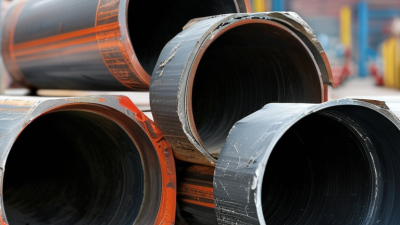
How to Find a Reliable PVC Shop in 2026?
A reliable PVC shop should show practical experience, not only attractive product photos. Ask how long the team has handled PVC pipes, sheets, profiles, or fittings. Request batch records, product specifications, and recent project references. A serious supplier can explain temperature limits, pressure ratings, storage conditions, and common installation failures.
Certifications add confidence, but they are not automatic proof of quality. The ISO Survey 2023 recorded more than 1.26 million ISO 9001 certificates worldwide. That number shows the value of quality systems, yet a certificate may cover administration rather than every product. Check its scope, issuing body, validity, and audit date. Also compare test reports with relevant ASTM, EN, or local standards. Reports should identify the material grade and testing laboratory. Some shops provide impressive files, but the details remain unclear.
Tips: Visit the warehouse if possible. Inspect sealed packaging, labels, and stock rotation. Contact two previous customers and ask about delivery accuracy, technical support, and complaint handling. Search for repeated reviews, not one perfect comment. Industry data matters too: PlasticsEurope’s Plastics—The Fast Facts 2024 reports global plastics production reached 413.8 million tonnes in 2023. Such scale makes traceability more important, especially when recycled content or mixed batches are involved. I would still request a small sample before a large order. It feels slower, but rushed choices often cost more.
Use this 100-point screening framework to compare PVC shops through verifiable experience, certifications, reputation, quality-control evidence, and communication.
Certifications and quality-control documentation receive the highest weighting because they provide measurable evidence of process consistency. Experience and reputation should be verified through project records, references, and recent customer feedback.
A reliable PVC shop should be judged by material control, not attractive samples alone. Grand View Research estimates the global PVC market reached about USD 45 billion in 2023, with continued growth through 2030. That scale creates pressure for cheaper formulations. Ask whether the shop uses PVC resin with documented grades, controlled plasticizers, stabilizers, and recycled content. Request test results for tensile strength, impact resistance, dimensional stability, and aging. A glossy surface proves very little.
Manufacturing capability matters more than a long equipment list. Check whether the shop performs extrusion, injection molding, calendaring, or only assembly. Review tooling accuracy, batch traceability, color consistency, and in-process inspection records. ISO 9001 procedures can help, but a certificate cannot replace production evidence. Ask for a recent sample from normal production, not a specially polished piece. That difference is easy to miss.
Price comparisons must use the same specification. Compare resin grade, wall thickness, tolerance, packaging, tooling fees, testing, and shipping terms. A low unit price may hide unstable dimensions or high rejection rates. For lead times, request separate dates for tooling, first samples, approval, and mass production. Industry purchasing benchmarks commonly place standard PVC production near four to eight weeks, while custom tooling may add several weeks. Treat those figures as planning ranges, not promises. Capacity data from supplier reports often looks precise, yet small orders can wait behind larger contracts. Build a buffer. It may feel inefficient, but one missed shipment can cost more than a modestly higher quote.
| Shop Profile | Recommended PVC Materials | Typical Product Range | Manufacturing Capabilities | Quality and Compliance Evidence | Indicative Price Range | Typical Lead Time | Minimum Order Quantity | Best Fit | Reliability Indicator |
|---|---|---|---|---|---|---|---|---|---|
| Profile A Standard Extrusion Shop |
Rigid PVC Shore D: approximately 75–85 Typical density: 1.35–1.45 g/cm³ |
Pipes, profiles, trims, channels, edge strips, and simple panels |
Single-screw extrusion Basic sizing and cutting Standard drilling and punching Limited color matching |
In-house dimensional checks Basic batch records Request samples and test reports before approval |
US$1.80–4.50/kg | 15–25 working days after sample approval | 500–1,000 kg per profile or color | Standard parts with stable dimensions and moderate annual volume | ★★★☆☆ Suitable after sample and process verification |
| Profile B Custom Compound and Extrusion Shop |
Rigid PVC, flexible PVC, impact-modified PVC, and weather-resistant PVC Plasticizer level can be adjusted for flexible grades |
Custom profiles, seals, gaskets, cable ducts, protective edging, and technical tubing |
Twin-screw compounding Co-extrusion Embossing, printing, and cut-to-length services Custom tooling support |
Melt-flow and hardness testing Tensile and elongation testing for flexible grades Dimensional inspection reports available |
US$2.20–6.80/kg | 25–40 working days for new tooling and first production | 300–800 kg per specification | Buyers needing customized hardness, color, surface finish, or performance | ★★★★☆ Strong choice when technical documentation is available |
| Profile C High-Precision Technical Shop |
High-impact rigid PVC, low-temperature PVC, flame-retardant PVC, and UV-stabilized PVC | Tight-tolerance industrial profiles, medical-related non-sterile components, appliance parts, and precision tubes |
Precision extrusion Multi-layer co-extrusion Online diameter and thickness monitoring CNC secondary machining and automated cutting |
Lot traceability Statistical process control Calibration records Material certificates and controlled inspection plans |
US$4.50–10.00/kg | 35–55 working days for complex tooling or validation | 1,000–2,000 kg per specification | Applications where dimensional consistency, traceability, and repeatability are critical | ★★★★★ Preferred for regulated or high-consequence applications |
| Profile D Flexible PVC Dipping and Molding Shop |
Flexible PVC compounds Typical hardness: Shore A 60–90 Available with UV, flame-retardant, or low-temperature additives |
Soft sleeves, caps, grips, molded covers, flexible tubing, and protective components |
Dip molding Compression molding Injection molding Simple overmolding and trimming |
Hardness, tensile, elongation, and visual inspection Verify plasticizer type and restricted-substance declarations |
US$2.80–8.50/kg | 20–35 working days after mold approval | 5,000–20,000 pieces depending on part size | Soft-touch products and protective molded parts with moderate complexity | ★★★★☆ Reliable when compound composition and mold control are documented |
| Profile E Recycled-Content PVC Shop |
Recycled rigid PVC blends and recycled-content flexible PVC Properties vary according to recycled feedstock and blend ratio |
Construction profiles, packaging-related components, utility ducts, and non-critical industrial parts |
Regrind preparation Extrusion and pelletizing Color blending Standard cutting and drilling |
Recycled-content declaration Batch sampling Require contaminant, odor, color, and mechanical-property checks |
US$1.20–3.80/kg | 18–30 working days for standard products | 1,000–3,000 kg per specification | Cost-sensitive, non-critical products where recycled content is a priority | ★★★☆☆ Confirm consistency between batches before long-term purchasing |
| Profile F Integrated Export-Oriented Shop |
Rigid and flexible PVC grades Virgin, recycled-content, impact-modified, UV-stabilized, and flame-retardant options |
Profiles, tubes, molded parts, custom assemblies, and mixed-product orders |
Extrusion and injection molding Tool design coordination Packaging, labeling, export documentation, and consolidated shipping |
Formal quality system Pre-shipment inspection Batch traceability Third-party testing can be arranged when specified in the purchase order |
US$2.50–9.00/kg | 25–45 working days, excluding international transit | Usually 500–1,500 kg or 5,000 pieces | International buyers seeking one supplier for several PVC product types | ★★★★☆ Assess production capacity, export history, and response time |
| Purchasing reference: Price ranges are indicative 2026 planning estimates in USD and may vary with resin grade, additives, profile weight, tooling, order volume, packaging, testing, destination, and freight terms. Lead times normally begin after technical approval, tooling confirmation, deposit receipt, and final artwork or specifications. Before placing an order, request a material datasheet, sample, dimensional inspection report, restricted-substance declaration, production schedule, packaging specification, and written acceptance criteria. | |||||||||
A reliable PVC shop should send physical samples before discussing a large order. Check the surface, color consistency, thickness, flexibility, and edge finish under natural light. Ask whether the sample came from regular production, not a specially prepared piece.
PlasticsEurope reported global plastics production reached 400.3 million tonnes in 2022. This scale creates wide differences in quality control. A sample alone is never enough.
Request recent testing reports with batch numbers, test dates, laboratory details, and clear results. For rigid PVC compounds, ASTM D1784 provides useful classification guidance. For pressure pipes, ASTM D2241 and related hydrostatic tests may apply. Match the report to your intended use.
An ISO 9001 certificate can support process control, but the ISO Survey 2023 recorded over 1.2 million certificates worldwide. Certification is not proof of every product’s quality. Verify the certificate independently.
Communication reveals practical experience. Ask for tolerances, production limits, packaging details, and replacement procedures in writing. Good suppliers answer specific questions without hiding behind vague promises. Test their response time with a small technical request. Slow replies may become serious after payment.
Customer support should explain defects with photos, inspection records, and corrective actions. I would also ask for customer references, although references can be selective. That limitation matters.
Keep every drawing, approval, and agreed specification in one dated file. Small omissions often become expensive misunderstandings.
A reliable PVC shop should provide a clear contract before requesting full payment. Check material grade, dimensions, color tolerance, quantity, and acceptable defect rates. These details should match your drawings and approved samples. Ask whether production records and batch numbers will be available. Small omissions can create expensive disputes later. I have seen buyers focus on price while ignoring inspection rights. That mistake is easy to repeat.
Shipping terms deserve equal attention. Confirm the delivery location, insurance responsibility, customs documents, and risk transfer point. Use precise trade terms, not casual promises like “shipping included.” Request a packing plan with pallet size, moisture protection, labeling, and loading photographs. Agree on what happens when production is delayed. A realistic lead time is more valuable than an attractive estimate. Still, forecasts can fail. Leave room for seasonal delays and port congestion.
Warranty coverage should explain the claim process, response time, and available remedies. Check whether the warranty covers cracking, discoloration, dimensional changes, or premature failure. Ask which conditions may void it, including improper storage or installation. A dependable supplier keeps technical staff available after delivery. Test a small order before signing a long-term agreement. Compare actual quality against the promised sample. That evidence often reveals more than polished sales documents. Long-term reliability grows from repeated performance, transparent communication, and records that can be checked.

Sign up for our mailing list to stay informed and up to date with our latest news and products!
(905) 832 – 0600
2175-A Teston Road
Maple, Ontario
L6A 1T3
(780) 451 – 0238
24790 – 117 Avenue
Acheson, Alberta
T7X 6C2
(604) 882 – 1564
9511 – 194A Street
Surrey, British Columbia
V4N 4G4
(306) 955 – 6005
3926 Arthur Rose Avenue Saskatoon, Saskatchewan
S7P 0C9
(450) 687 – 2721
2750 Rue Bernard-Lefebvre
Laval, Quebec
H7C 0A5