
Clean water begins with practical control of suspended particles. Sediment Filter systems help capture sand, rust, silt, and pipe scale before they damage pumps, valves, membranes, or household appliances. The need is substantial. The WHO and UNICEF Joint Monitoring Programme reported that 2.2 billion people lacked safely managed drinking water services in 2022. That figure does not make every filter suitable, but it highlights the importance of dependable pretreatment and local water-quality knowledge.
This guide examines leading Sediment Filter manufacturers serving international buyers. It considers melt-blown, string-wound, pleated, spun-bonded, and reusable designs. Product evaluation includes micron ratings, flow capacity, pressure-drop behavior, housing compatibility, material traceability, and replacement availability. NSF/ANSI standards can support safer component selection, while the U.S. Environmental Protection Agency emphasizes that treatment performance depends on tested claims, installation, and maintenance. A filter that looks impressive on a datasheet may perform poorly with heavy clay or irregular water pressure.
Manufacturing experience matters. So does honest documentation. Reliable suppliers should provide test methods, batch controls, technical drawings, and clear operating limits. Buyers should also review certifications for the destination market, because requirements differ across regions. This is where rankings become imperfect. A premium industrial producer may not suit a rural distributor needing low-cost cartridges. Therefore, the “top” manufacturer is not universal; it depends on application, water conditions, logistics, and after-sales support. Careful comparison remains essential.
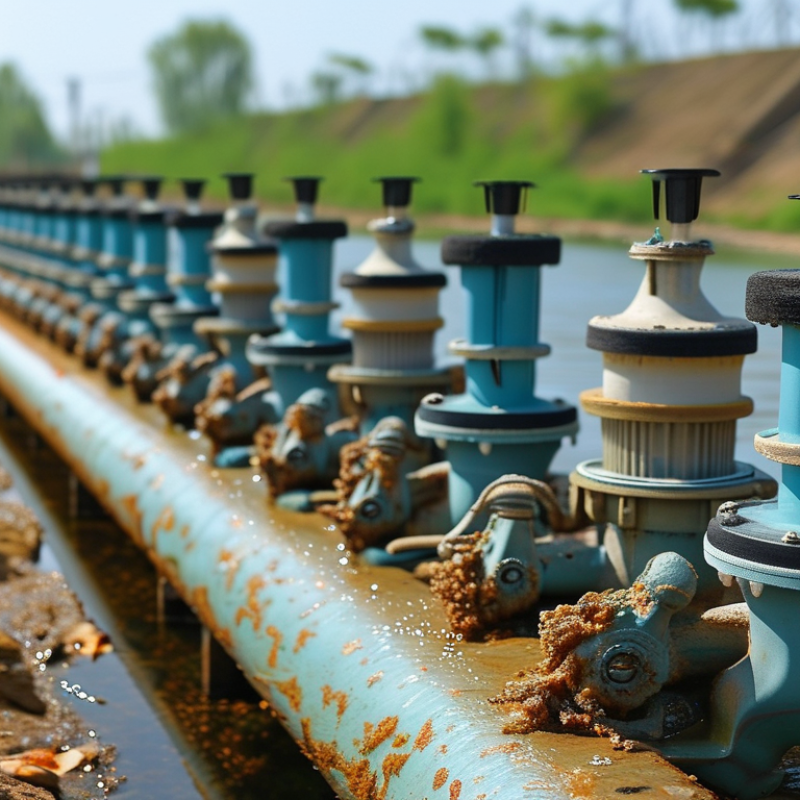
Sediment filters protect pumps, valves, and drinking-water equipment from suspended particles. Their micron rating describes the approximate particle size they can retain. A 1 μm filter targets very fine material, while a 100 μm filter handles visible grit. The rating alone can mislead. Nominal ratings capture a percentage of particles. Absolute ratings offer tighter control under defined test conditions. Global buyers should request the test method, flow rate, and pressure-drop data before comparing products.
In field installations, the right choice depends on water quality and equipment sensitivity. Well water may carry sand, rust, or clay after heavy rain. A 50–100 μm prefilter can reduce this load without restricting flow too quickly. Finer stages, such as 5 or 1 μm, usually belong downstream. They protect membranes, sensors, and precision valves. However, finer media clog faster. A filter that looks efficient on paper may become costly when replacement intervals are ignored. Measure inlet pressure, outlet pressure, turbidity, and service hours. These details create a more reliable selection record.
Tips: Start with a coarse test filter, then step down gradually. Do not choose 1 μm automatically. Compare clean and loaded pressure loss. Check housing compatibility, temperature limits, and cartridge availability. Ask suppliers for independent performance data, not only marketing claims. If water conditions change seasonally, keep two ratings available. This small adjustment can prevent unnecessary shutdowns. One overlooked detail is disposal planning; used cartridges may retain residue, so follow local handling requirements.
Reliable sediment filter manufacturers test more than a catalog flow rate. They connect each filter to a calibrated pump, then record flow under controlled pressure. Water temperature matters because viscosity changes with heat. A typical test begins at a clean pressure drop, often measured with gauges before and after the filter. Technicians increase flow gradually and record pressure loss at each stage.
The test continues with water containing measured particles, such as sand or standardized test dust. Sensors track when the pressure drop rises sharply. This point helps define practical dirt-holding capacity. Some laboratories stop at a specified pressure increase, while others test until flow becomes unsuitable. Results can differ between methods. That detail deserves attention. A filter claiming high capacity may use a different endpoint than another supplier.
Tips: Ask for the test fluid, particle size, temperature, starting pressure, and endpoint pressure. Request actual flow-versus-pressure data, not only one headline number.
Check whether the housing, gasket, and cartridge were tested together. Small changes matter. A loose seal can create misleading results. Manufacturers with strong quality systems repeat tests across several samples and keep calibration records. Still, laboratory performance may not match a dusty jobsite, especially when sediment is irregular or oily. Experienced buyers should compare test conditions with their own water source before selecting a production filter.
When comparing top sediment filter manufacturers, global buyers should examine standards, not only micron ratings. NSF/ANSI 42 mainly addresses aesthetic effects, such as sediment reduction, chlorine taste, and odor. It does not automatically prove complete contaminant removal. Ask for the exact tested model, replacement cartridge, and rated flow rate.
NSF/ANSI 61 focuses on materials that contact drinking water. This matters when water passes through plastic housings, adhesives, seals, or filter media. A supplier should provide current certification details and identify every approved component. Check the certificate scope carefully. A housing may comply while an internal gasket does not.
ISO 16889 evaluates filtration performance through a multipass test using a defined contaminant and beta rating. This method helps buyers compare particle removal under controlled conditions. However, field water is less predictable. A cartridge rated at five microns may clog quickly in water carrying fine clay or rust. That difference is easy to miss.
Look for test reports showing pressure loss, capacity, temperature, and test dust. Also review batch controls and traceability records. Experienced manufacturers explain how production changes affect performance. Some suppliers provide impressive numbers but limited testing context. That should invite questions, not immediate trust. Certification is valuable, yet installation practices and maintenance still influence real-world results.
| Evaluation Dimension | NSF/ANSI 42 | NSF/ANSI/CAN 61 | ISO 16889 | Global Buyer Relevance |
|---|---|---|---|---|
| Primary purpose | Evaluates reduction of specified aesthetic contaminants and performance claims in drinking-water treatment units. | Evaluates whether materials and components may adversely affect drinking water through chemical contaminants. | Defines a multi-pass test method for determining particulate-contamination removal performance of hydraulic-fluid filters. | Use the standard that matches the end-use application; these standards are not interchangeable. |
| Most relevant filter applications | Point-of-use and point-of-entry drinking-water filters, including sediment and particulate-reduction products when the applicable claim is tested. | Filter housings, cartridges, seals, membranes, adhesives, coatings, and other components in drinking-water systems. | Industrial hydraulic, lubrication, and other liquid-filtration elements tested under controlled multi-pass conditions. | Confirm whether the supplier is offering potable-water filtration or industrial process filtration. |
| Typical performance information | Claim-specific reduction results, rated service conditions, installation requirements, and replacement guidance. | Material formulation, extraction or leaching evaluation, and compliance documentation for wetted components. | Beta ratio, particle-size test data, pressure drop, flow rate, contaminant capacity, and test-fluid conditions. | Request the complete test report rather than relying only on a nominal micron rating. |
| Particle-removal interpretation | Particle-reduction claims depend on the specific product category, claim, test protocol, and rated conditions. | Does not establish a filter's particle-removal efficiency or dirt-holding capacity. | Uses a multi-pass efficiency approach; beta ratios can be used to calculate single-pass efficiency for the tested conditions. | Compare removal efficiency, pressure drop, and capacity together; do not compare micron labels alone. |
| Potable-water safety | May support drinking-water treatment claims when the product is certified and listed for the relevant claim. | Directly addresses health effects of materials that contact drinking water. | Not a potable-water materials-safety standard. | For drinking-water projects, verify both performance evidence and wetted-material safety. |
| Common evidence to request | Current certification or listing, certified claim, model number, rated conditions, and installation instructions. | Component-level certification or evaluation, materials list, formulation controls, and change-notification procedure. | Laboratory test report showing test rig, fluid, contaminant, particle distribution, flow, pressure, and beta-ratio results. | Match the documentation to the exact model, material, and operating range being purchased. |
| Key limitation | A certification does not automatically validate every contaminant-reduction claim or every operating condition. | Material-safety compliance does not prove filtration efficiency, flow capacity, or service life. | Results apply to the specified test conditions and should not be treated as universal field performance. | Use application-specific validation, pilot testing, and lifecycle calculations for critical systems. |
| Best use in supplier comparison | Screen suppliers serving residential, commercial, and institutional drinking-water markets. | Screen suppliers that provide potable-water-contact cartridges, housings, or assemblies. | Screen industrial suppliers that publish repeatable efficiency and pressure-drop data. | Build a weighted scorecard based on compliance, performance, documentation, capacity, and total cost. |
| Recommended buyer check | Verify the exact certified claim and model listing in the relevant certification directory. | Verify all wetted materials, including elastomers, adhesives, media binders, and housing components. | Verify particle-size distribution, beta ratio, flow rate, terminal pressure drop, and test-fluid viscosity. | Select suppliers whose test evidence corresponds to the actual water quality, fluid, flow, and regulatory market. |
Regional compliance can determine whether a sediment filter reaches the market. In the United States, buyers should verify FDA requirements for food-contact materials and drinking-water use. A filter may meet material rules but still lack complete performance evidence. Check migration data, pressure testing, and production traceability. These details matter.
For European sales, review Regulation (EU) 2020/2184 and the destination country’s implementation rules. Requirements can differ between countries. Materials touching drinking water may need approved composition records and independent testing. Ask for test reports covering lead release, chemical migration, taste, odor, and microbial safety. A general laboratory certificate is not always enough. That distinction is easy to miss.
Tips: Request documents before placing a purchase order. Match the certificate to the exact filter model, media, housing, and manufacturing site. Confirm the tested micron rating under realistic flow conditions. Keep batch numbers and declarations of conformity. Do not rely on a logo alone. I have seen purchasing teams accept an old report, then discover a changed filter medium. Recheck expiry dates and revision numbers. A small paperwork gap can delay customs clearance or installation. Certification is valuable, but it should support real quality controls, not replace them.
A strong buyer scorecard should measure service life under real water conditions, not catalogue claims. The U.S. Environmental Protection Agency’s 2023 Drinking Water Infrastructure Needs Survey estimates a US$625 billion investment need over 20 years. That pressure makes avoidable replacement waste difficult to ignore. Record inlet turbidity, flow rate, pressure drop, and operating hours for every test batch. A filter lasting six months at 2 bar may fail in eight weeks where construction sediment is heavy. Small details matter.
Replacement cost includes cartridges, labor, freight, disposal, and production downtime.
Use certified performance data, such as retention ratings tested under recognized filtration standards. Do not compare “five-micron” claims without checking test methods. A 2022 World Health Organization report emphasizes that water quality risks vary by source and distribution conditions. That makes local sampling essential. Cheap units can become expensive quickly. Very quickly.
For five- to ten-year total cost of ownership, apply the life-cycle costing approach described in the U.S. Department of Energy’s Federal Energy Management Program guidance. Model purchase price, expected replacements, energy for pressure loss, inventory, and technician time. Include inflation and currency exposure. Then test pessimistic assumptions.
I would not trust a scorecard built from one clean-water trial. It is too neat. Seasonal sediment spikes, delayed shipments, and premature clogging should receive separate cost penalties. Service documentation, warranty response times, and available regional support deserve measurable scores, not vague promises.

Sign up for our mailing list to stay informed and up to date with our latest news and products!
(905) 832 – 0600
2175-A Teston Road
Maple, Ontario
L6A 1T3
(780) 451 – 0238
24790 – 117 Avenue
Acheson, Alberta
T7X 6C2
(604) 882 – 1564
9511 – 194A Street
Surrey, British Columbia
V4N 4G4
(306) 955 – 6005
3926 Arthur Rose Avenue Saskatoon, Saskatchewan
S7P 0C9
(450) 687 – 2721
2750 Rue Bernard-Lefebvre
Laval, Quebec
H7C 0A5