
Aluminum Precision Parts are essential wherever low weight, tight tolerances, and repeatable performance matter. They appear in electric vehicles, aircraft assemblies, medical equipment, and industrial automation. A machined housing may look simple, yet its fit can depend on alloy choice, toolpath control, and careful inspection.
The scale of the aluminum industry provides useful context. The U.S. Geological Survey’s Mineral Commodity Summaries 2024 estimates global primary aluminum production at about 70 million metric tons in 2023. That figure describes raw metal, not precision components. Still, it shows the breadth of the supply chain behind manufacturers competing for quality and dependable delivery. Industry capability must be judged beyond production volume.
This guide to China Top 10 Aluminum Precision Parts Manufacturers offers a starting point for comparing suppliers. It considers machining expertise, equipment, quality systems, material traceability, and experience serving export markets. A polished website is not proof of process control. Ask for inspection records, sample parts, and details about dimensional tolerances before making a decision. Small details matter.
No ranking can fit every project. A supplier suited to large-volume automotive brackets may not be right for a low-volume aerospace component. Buyers should verify certifications and capabilities directly, since facilities and product ranges can change. This comparison is useful, but it is not a substitute for an audit. The imperfect part: publicly available information rarely reveals how consistently a factory handles difficult orders.
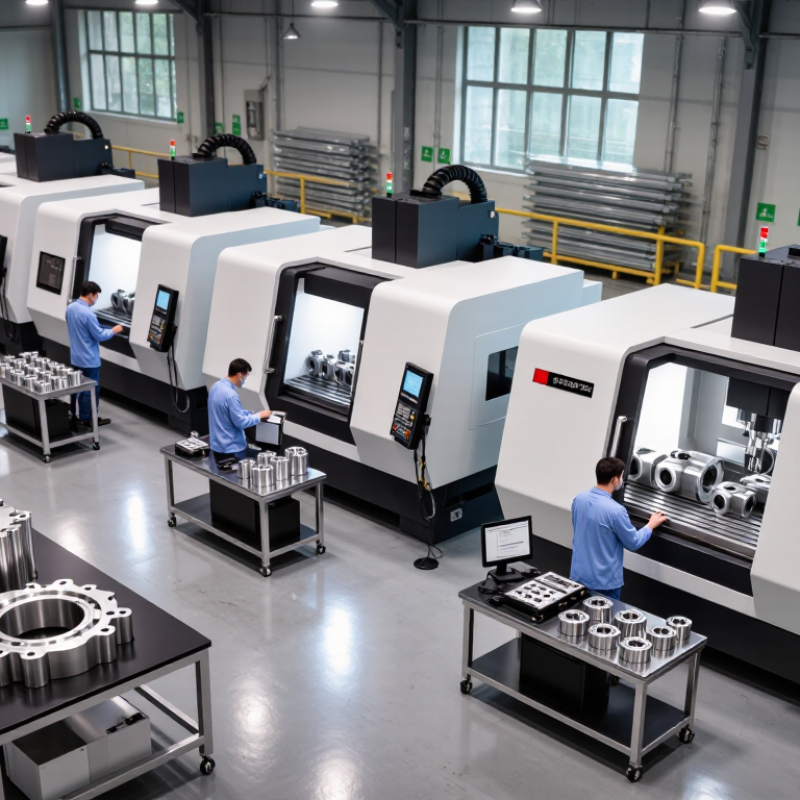
China’s aluminum precision-parts industry is supported by a vast domestic supply of primary metal and processed stock. The National Bureau of Statistics reported 41.59 million tonnes of primary aluminum production in 2023, up 3.9% from 2022. This figure describes upstream output, not precision components, but it helps explain the scale of material availability for machining, casting, and extrusion. The distinction matters.
Across manufacturing hubs, suppliers turn aluminum billets, plates, and castings into lightweight housings, brackets, heat sinks, and structural parts. CNC machining can hold tight dimensions, yet performance also depends on alloy selection, tool wear, clamping, and finishing. A clean-looking part is not automatically a consistent one. That is where process records and inspection plans count. Buyers should check drawings, tolerances, material certificates, and measurement methods before comparing quotations. The cheapest quote may omit useful detail.
The Ministry of Industry and Information Technology’s annual industry updates offer broader context on China’s nonferrous-metal production and manufacturing, but they do not provide a dedicated count of precision-parts makers. That data gap makes supplier-level verification important. Ask how suppliers control batch variation, surface treatment, and first-article approval. Inspect real samples. Even capable factories can struggle when designs change late or tolerances lack clear datums. The sector is large, but quality still depends on specific people, equipment, and controls.
Designing aluminum precision parts begins with function, not the machine. Engineers set loads, tolerances, surface requirements, and production volume before choosing an alloy and process. A thin-walled housing may need ribs to resist flexing, while a sealing face may require tighter flatness than the surrounding surfaces. These choices affect machining time and inspection effort. Overly tight tolerances can add cost without improving how a part works. That trade-off is easy to miss.
Manufacturing often starts with billet, casting, or extrusion, followed by CNC milling or turning. Tool paths must control heat and chip removal; aluminum cuts readily, but thin sections can vibrate or distort. Shops check critical dimensions with calibrated gauges or coordinate-measuring machines, then review results against the drawing. Small adjustments matter. The International Aluminium Institute reports that recycled aluminum production uses about 5% of the energy required for primary production. That makes recycled feedstock worth evaluating, though alloy consistency and traceability still need attention. A 2024 Aluminum Association lifecycle report likewise highlights the energy advantage of recycling. It does not guarantee every recycled input suits every precision application. Designers and manufacturers should verify material properties, machining behavior, and inspection plans together. Sometimes the drawing needs another look.
| No. | Design or Manufacturing Dimension | What to Evaluate | Relevant Materials or Processes | Why It Matters |
|---|---|---|---|---|
| 1 | Application and requirement definition | Confirm the part’s function, loads, operating temperature, environment, service life, and applicable industry requirements before selecting a process. | Product specifications; engineering drawings; functional and environmental requirements | Clear requirements guide material selection, tolerances, inspection plans, and production methods. |
| 2 | Aluminum alloy selection | Compare strength, machinability, corrosion resistance, formability, weldability, and availability for the intended application. | 6061 is commonly used for machined structural parts; 5052 is commonly used for formed sheet parts; 7075 is used where high strength is required. | Alloy and temper affect mechanical properties, machining behavior, finishing response, and cost. |
| 3 | Design for CNC machining | Consider tool access, internal corner radii, wall thickness, clamping surfaces, chip removal, and the number of setups. | CNC milling; CNC turning; drilling; tapping | Accessible features and practical radii can reduce machining time and help avoid tool interference or vibration. |
| 4 | Design for sheet-metal fabrication | Specify bend direction, inside bend radius, hole-to-bend spacing, reliefs, and flat-pattern requirements. | Laser cutting; punching; press-brake bending; sheet grades such as 5052 | Accounting for bend allowance and material behavior helps parts meet dimensional and assembly requirements. |
| 5 | Design for casting | Review draft angles, wall transitions, parting lines, fillets, and machining allowances on critical surfaces. | High-pressure die casting; gravity casting; permanent-mold casting | Castability features support metal flow, mold release, and more consistent production; critical dimensions may require secondary machining. |
| 6 | Tolerance and datum planning | Apply tighter tolerances only to features that affect fit, function, or measurement; define datums and geometric controls where needed. | Engineering drawings; GD&T; coordinate measuring machines | Realistic tolerances improve manufacturability and inspection clarity. Achievable limits depend on geometry, alloy, process, and part size. |
| 7 | Joining and assembly | Assess joint strength, distortion, access, sealing needs, and compatibility with the selected alloy and finish. | TIG or MIG welding; mechanical fastening; inserts; adhesive bonding | Joining choices can affect strength, appearance, heat distortion, corrosion behavior, and the need for post-process machining. |
| 8 | Surface finishing | Specify appearance, corrosion protection, wear resistance, surface texture, and masking requirements. | Anodizing; chemical conversion coating; powder coating; mechanical polishing | Finishes serve different purposes and may change dimensions, surface properties, or the appearance of the alloy. |
| 9 | Quality inspection | Set inspection methods and acceptance criteria for dimensions, surface condition, material, and functional features. | Calipers; micrometers; height gauges; CMM inspection; material certificates where specified | A defined control plan links drawing requirements to repeatable measurements throughout production. |
| 10 | Supplier and production capability review | Review relevant process experience, equipment capability, traceability, documentation, sample approval, and change control. | Process capability records; first-article inspection; production samples; inspection reports | Evaluating evidence against the part’s requirements is more useful than relying on a general ranking or a single machine specification. |
| Note: This table summarizes general design and manufacturing considerations; it is not a verified ranking of individual manufacturers. Material grades, tolerances, finishes, and inspection requirements should be confirmed against the part drawing and supplier process capability. | ||||
A credible ranking should compare more than price and production volume. It should examine machining capability, dimensional control, material traceability, and delivery performance. For aluminum parts, reviewers can check sample components with calipers or a coordinate measuring machine, then compare results with the drawing. Details matter. A supplier’s inspection records should show measurement methods, acceptance limits, and how defects are handled. Claims alone are not enough.
Tips: Request a recent inspection report and a sample part made to your specifications. Ask how the manufacturer controls burrs, surface finish, and variation between production batches. Ask for proof. Clear answers are useful, though a polished presentation does not guarantee consistent output.
Ranking criteria should also consider engineering support and communication. Can the team identify thin walls, tight tolerances, or machining features that may increase cost? Do they explain trade-offs before production begins? Consistent lead times and documented corrective actions can indicate a reliable process. Still, no single score captures every project. A supplier suited to simple brackets may not fit complex housings, and my own assessment can miss details without an on-site audit. Buyers should match the evidence to their part requirements.
China’s aluminum precision-parts sector serves electronics, transport, machinery, and other industries. The International Aluminium Institute reported about 70.6 million tonnes of global primary aluminum production in 2023. That scale makes process control essential: small differences in alloy composition, heat treatment, or cutting can affect a part’s fit and strength.
These ten profiles distinguish manufacturers by practical capabilities rather than unsupported rankings. One focuses on CNC-milled housings; another pairs extrusion with precision finishing. Other profiles examine die-cast components, thin-wall enclosures, heat sinks, and custom brackets. Several suppliers may offer anodizing or inspection in-house, while others rely on partners. That difference matters. Ask how each maker controls tolerances, checks surface defects, and documents material batches.
A useful comparison also looks at equipment and evidence. Request sample drawings, inspection records, and details on machining capacity before judging a supplier. A polished brochure is not enough. The profiles consider production flexibility, quality systems, export experience, and communication. Yet public information can be uneven, and stated capabilities do not guarantee consistent results. A factory visit or a small trial order can reveal gaps that a profile cannot.
China’s aluminum precision parts manufacturers serve transport, electronics, energy, medical equipment, and industrial automation. Their components include machined housings, heat sinks, brackets, valve bodies, and lightweight structural fittings. In workshops, engineers often adjust tool paths to control burrs and distortion. Small details matter.
Transport demand is changing quickly. The International Energy Agency’s Global EV Outlook 2024 reports nearly 14 million electric cars sold worldwide in 2023, about 18% of new car sales. That shift increases demand for battery enclosures, motor housings, and thermal-management parts. Yet aluminum alone does not guarantee lower vehicle weight; design, joining methods, and service life also count. A missed tolerance can become expensive.
Electronics and energy applications place different demands on suppliers. Heat sinks need consistent fin geometry, while solar and power equipment may require corrosion-resistant frames and connectors. The International Energy Agency reported that global solar photovoltaic capacity additions reached about 420 gigawatts in 2023. This growth creates opportunities for accurately machined mounting and electrical components. Medical-device parts require clean finishes and reliable dimensions, though specifications vary widely by use. Buyers should check material certificates, inspection records, and process controls—not just a sample part. Samples can mislead. Industry descriptions sometimes sound more certain than production reality.
U.S. aluminum shipments by market sector illustrate the industries that commonly use aluminum components, including precision-machined parts. Shares are rounded and may vary by year.
Source: The Aluminum Association, U.S. aluminum industry market-sector distribution. Applications include vehicle components, packaging equipment, building systems, electrical enclosures, consumer products, and industrial machinery.

Sign up for our mailing list to stay informed and up to date with our latest news and products!
(905) 832 – 0600
2175-A Teston Road
Maple, Ontario
L6A 1T3
(780) 451 – 0238
24790 – 117 Avenue
Acheson, Alberta
T7X 6C2
(604) 882 – 1564
9511 – 194A Street
Surrey, British Columbia
V4N 4G4
(306) 955 – 6005
3926 Arthur Rose Avenue Saskatoon, Saskatchewan
S7P 0C9
(450) 687 – 2721
2750 Rue Bernard-Lefebvre
Laval, Quebec
H7C 0A5