
Top 10 Powerline Transformer Manufacturers Worldwide

Powerline Transformers keep electricity moving from generating stations to substations and communities. Their work is easy to overlook. A failure is not.

This guide examines ten leading Powerline Transformer manufacturers worldwide and the capabilities that distinguish them. It considers engineering experience, product range, manufacturing quality, testing practices, service networks, and support for changing grid needs. These details matter. A transformer may stand outdoors for decades, facing heat, rain, electrical stress, and fluctuating demand. Buyers should look beyond catalog ratings and compare specifications with actual operating conditions.

John J. Winders, author of Power Transformers: Principles and Applications, provides a useful engineering perspective. The following is a paraphrase, not a verbatim quotation: “Reliability begins with sound design and depends on disciplined maintenance.” That principle helps frame the comparisons ahead. Still, no manufacturer is best for every project. A utility upgrading a crowded urban substation may value compact design and installation support. A rural network may prioritize delivery schedules, repair access, and long-term spare-parts availability.

Rankings have limits. Public information varies, and regional performance can differ. This overview offers a practical starting point, not a substitute for technical due diligence. Readers should verify current product data, certifications, warranties, and project references directly with manufacturers before making procurement decisions.
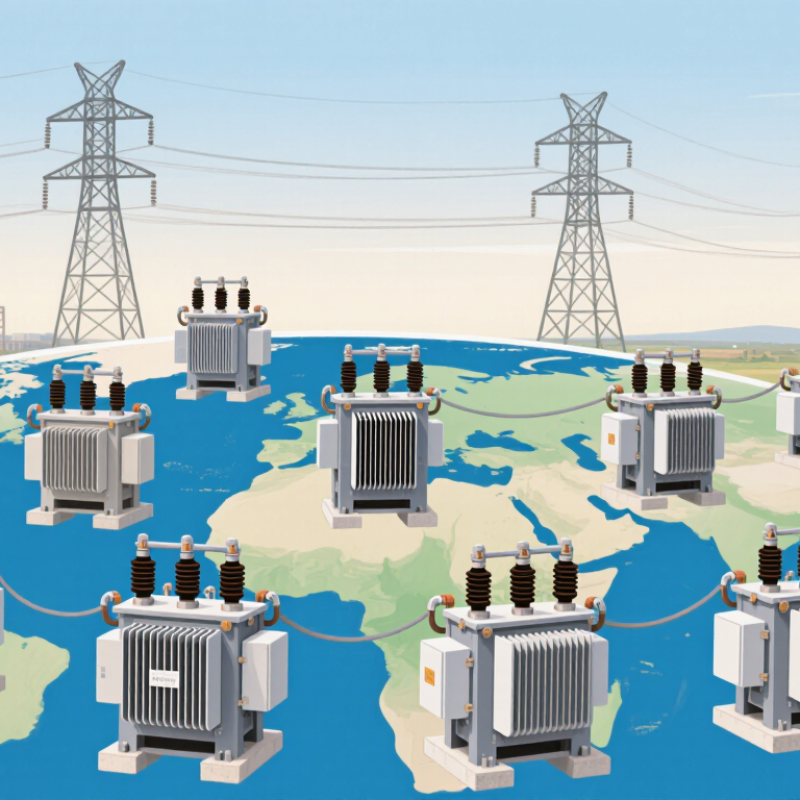
Top 10 Powerline Transformer Manufacturers Worldwide

Powerline Transformers Defined: IEC 60076, 50/60 Hz, and MVA Ratings

Powerline transformers transfer electrical energy between voltage levels in transmission and substation networks. They are designed for continuous operation, not just a brief peak. Their construction and testing are commonly guided by IEC 60076, a family of standards covering power transformers. The relevant parts depend on the transformer type and application. Standards matter.

Frequency is a key design condition. A unit intended for 50 Hz should not automatically be treated as suitable for 60 Hz service; magnetic design and operating limits must be checked against its nameplate and documentation. Engineers also review insulation levels, temperature rise, cooling method, impedance, and tap range. These details affect real performance, especially when load conditions change.

Capacity is usually stated in MVA, or megavolt-amperes, which describes apparent power rather than useful output alone. A 100 MVA rating does not mean the same thing under every operating condition. Ambient temperature, cooling stages, altitude, and permitted temperature rise can influence available capacity. A careful specification states the applicable rating conditions. On site, verify the nameplate. Even experienced teams can overlook a cooling-stage assumption, and that is worth questioning before comparing equipment or planning a load increase.


Ranking the Top 10: Voltage Classes, Capacity, and Global Reach

A useful Top 10 ranking compares more than factory size. Voltage class shows whether a manufacturer serves regional networks or cross-border transmission. Capacity, measured in MVA, indicates how much power a unit can handle under specified conditions. For a practical comparison, group products into sub-100 MVA, 100–500 MVA, and above-500 MVA ranges. These are comparison bands, not universal industry standards.

Global reach matters when projects need installation support, spare parts, and repairs. The International Energy Agency’s Electricity Grids and Secure Energy Transitions (2023) says annual grid investment must exceed $600 billion by 2030, up from about $300 billion today. That expansion increases demand for grid equipment, including transformers. The U.S. Department of Energy’s National Transformer Supply Chain study (2024) also documents supply-chain constraints. A broad service network can help, but it does not guarantee short delivery times. A neat ranking can still mislead.

Tip: Compare like with like. Check rated voltage, MVA, cooling method, and test requirements in published specifications. Ask whether stated capacity reflects one unit or total factory output. Look for operating references in the same voltage class and climate. Small details matter. Published data can be uneven, so note gaps rather than treating estimates as verified facts.

Top 10 Powerline Transformer Manufacturers Worldwide – Ranking the Top 10: Voltage Classes, Capacity, and Global Reach

Note: Company identities are intentionally omitted. This is an editorial comparison, not a verified market-share ranking. Voltage and capacity figures are indicative product-capability bands; actual ratings vary by design, cooling, and project specification.
Rank Anonymous manufacturer profile Representative voltage classes Indicative large-unit capacity Global reach Typical project strengths
1 Manufacturer 1 Up to 765 kV AC; high-voltage DC converter applications Approximately 500–1,200 MVA Projects and service coverage across multiple continents Interconnected grids, bulk transmission, and large substations
2 Manufacturer 2 Up to 765 kV AC; converter-transformer applications Approximately 400–1,200 MVA International manufacturing, project delivery, and field-service network Utility transmission and cross-border grid connections
3 Manufacturer 3 Up to 765 kV AC Approximately 300–1,000 MVA Broad export activity with regional service support Transmission substations and generation step-up
4 Manufacturer 4 Up to 1,000 kV AC in specialized UHV applications; HVDC converter service Approximately 500–1,200 MVA Strong domestic base with international EPC and export projects Ultra-high-voltage transmission and long-distance power transfer
5 Manufacturer 5 Up to 1,000 kV AC in specialized UHV applications Approximately 400–1,000 MVA Domestic utility projects and overseas supply in multiple regions UHV substations, grid expansion, and large generator connections
6 Manufacturer 6 Up to 765 kV AC; selected HVDC applications Approximately 300–1,000 MVA Regional production supplemented by international project delivery High-voltage substations and utility-scale generation projects
7 Manufacturer 7 Up to 800 kV class, including selected DC applications Approximately 300–800 MVA Established export reach across Asia, the Middle East, and other markets Transmission infrastructure and power-plant transformers
8 Manufacturer 8 Up to 500 kV AC Approximately 100–600 MVA International sales with a substantial regional service footprint Grid substations, industrial power, and renewable-energy connections
9 Manufacturer 9 Up to 500 kV AC Approximately 100–500 MVA Exports to multiple regions, supported by local partners Utility distribution, transmission upgrades, and industrial facilities
10 Manufacturer 10 Up to 500 kV AC Approximately 100–500 MVA Regional strength with selective international project coverage Substation replacement, grid reinforcement, and renewable integration

Top 10 Manufacturers: Product Portfolios and Grid Applications

Across the ten manufacturers, product portfolios may include oil-immersed power transformers, dry-type units, and custom designs for demanding sites. Available options often cover different voltage classes, ratings, cooling methods, and winding configurations. Some suppliers also provide tap changers, protective relays, temperature sensors, and remote monitoring systems. The details matter. A substation transformer facing heavy seasonal peaks needs different thermal capacity from a compact unit serving an indoor facility.

Grid applications range from generation plants and transmission substations to renewable-energy connections and large industrial loads. Utilities may specify high-voltage units for moving bulk power between regions, while distribution projects need equipment suited to local networks. Wind and solar projects can require transformers designed around variable output and site conditions. Yet a broad catalogue does not prove that every model fits every grid. Not every unit fits.

Comparisons should consider tested efficiency, impedance, sound levels, cooling performance, and expected maintenance access. Engineers also review transport limits, installation space, and compatibility with existing protection systems. A datasheet rarely tells the whole story; field performance depends on loading, weather, and operating practice. Specifications can change by market, so project teams should confirm current ratings and test documentation directly with each supplier. One detail is easy to miss: replacement dimensions may affect schedules as much as electrical performance.

Power Transformer Portfolios and Grid Applications

Representative AC grid voltage levels served by power transformers

Power transformers connect and support networks across sub-transmission, transmission, and extra-high-voltage systems. The values shown are representative nominal AC voltage levels; actual network standards vary by region.

Technical Benchmarks: 400–765 kV Transmission and Transformer Losses

At 400 kV and above, transformer comparisons should start with the actual system voltage, not a headline rating. A 400 kV network commonly uses equipment rated for its highest operating voltage, while 765 kV projects require insulation, clearances, and testing suited to much higher electrical stress. Terminology varies by region. Check the specified voltage and test basis.

Loss figures need equal care. No-load loss occurs whenever the energized core is supplied; load loss rises with current and winding resistance. Ask for guaranteed values in kilowatts at stated voltage, frequency, tap position, and reference temperature. Then compare like with like. A larger unit may show greater total loss but lower loss per megavolt-ampere. Cooling auxiliaries and measurement tolerances can also affect the result.

Small differences matter over decades. For example, a transformer operating continuously near a transmission substation may accumulate substantial energy loss even when its loss rating looks modest. Yet the lowest-loss design is not automatically the best choice: added material, footprint, transport limits, and maintenance needs all matter. It is an imperfect trade-off. Request the test method and factory test results, not only a catalog figure. Then assess losses against expected loading, because actual demand rarely matches a neat design assumption.

Industry Trends: Renewable Integration, Grid Expansion, and Lead Times

Renewable integration is changing what utilities expect from powerline transformers. Wind and solar projects often connect far from existing substations, so grid expansion requires new high-voltage equipment and upgraded connections. The International Energy Agency’s 2023 report, Electricity Grids and Secure Energy Transitions, estimates that 80 million kilometres of grids must be added or refurbished by 2040. It also identifies about 3,000 gigawatts of renewable projects waiting in connection queues worldwide. The bottleneck is real.

Transformer manufacturers face pressure to deliver units suited to changing load patterns, voltage requirements, and project locations. The same IEA report says annual grid investment needs to rise above 600 billion dollars by 2030. That spending does not instantly create factory capacity. On site, a completed concrete foundation can sit empty while a large transformer is still being built. Small planning gaps become costly delays.

Lead times need careful scrutiny. The U.S. Department of Energy’s 2022 Grid Supply Chain Deep Dive Assessment reported large power-transformer lead times of roughly 24 to 30 months. That range is a warning, not a guaranteed delivery date; specifications and testing can shift schedules. Buyers should confirm design approvals, component availability, and transport plans early. Even then, forecasts can miss. A more honest schedule may be less comforting, but it is usually more useful.

Request Quote

Sign Up