Top 10 Belt Annealing Furnace Manufacturers Worldwide
A Belt Annealing Furnace quietly determines whether metal strip leaves a line stable, bright, and ready for its next operation. Its real performance appears in temperature uniformity, atmosphere control, belt tracking, cooling speed, and energy consumption. Small deviations can create visible discoloration, hardness variation, or edge cracking.
The World Steel Association reported approximately 1.89 billion tonnes of crude steel production in 2023. That scale explains the continuing demand for reliable, continuous heat-treatment equipment. The International Energy Agency also identifies industrial process heat as a major decarbonization challenge, making furnace efficiency and heat recovery increasingly important. Industry market reports from Grand View Research and MarketsandMarkets likewise point toward automation, tighter process control, and lower emissions as key equipment trends.
Daniel H. Herring, author of The Heat Treat Doctor, has emphasized, “A furnace is a system, not a box.” That principle matters when comparing the Top 10 Belt Annealing Furnace Manufacturers Worldwide. A strong supplier should offer more than attractive heating specifications. Buyers should examine atmosphere technology, belt materials, control software, maintenance response, proven throughput, and lifecycle costs. Ask for operating evidence.
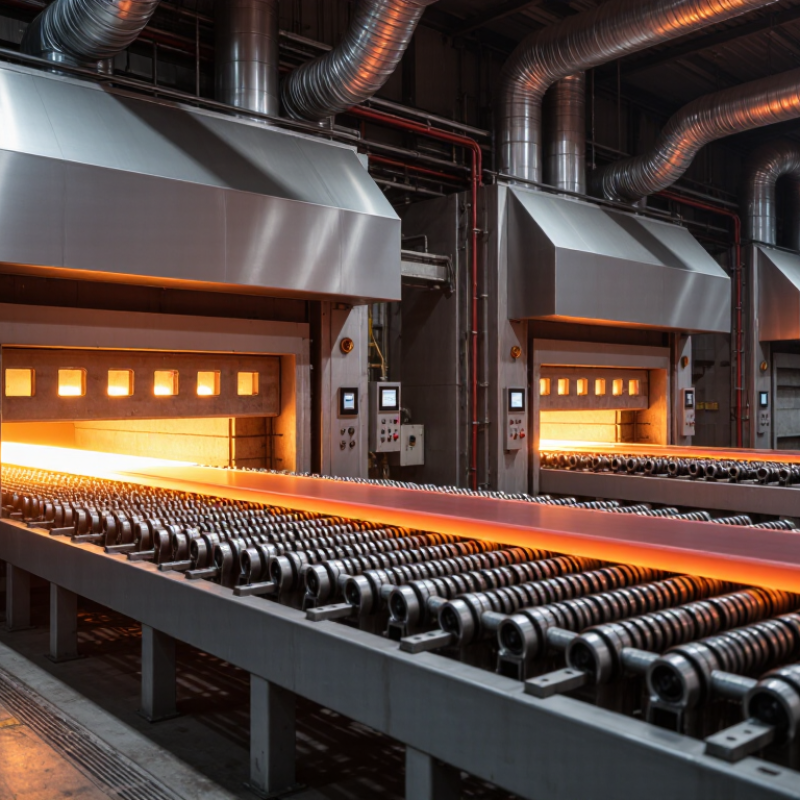
No ranking is flawless. Public reports rarely separate belt annealing furnaces from wider heat-treatment equipment categories, and supplier data can be selective. Therefore, this overview combines published industry evidence with practical manufacturing criteria. It considers how each manufacturer handles real production pressures, from thin stainless strip moving continuously through glowing furnace zones to operators monitoring alarms during a demanding night shift. Performance still depends on installation quality, material grade, and disciplined maintenance.
Belt Annealing Furnaces: Definition, Design, and Industrial Uses
Belt Annealing Furnaces: Definition, Design, and Industrial Uses
A belt annealing furnace continuously heats metal parts on a moving mesh belt. It softens materials, relieves internal stress, and improves ductility. Typical systems use preheating, heating, soaking, and controlled cooling zones. Temperature sensors and gas controls maintain stable conditions throughout the cycle. The atmosphere may contain nitrogen, hydrogen, or another protective gas, depending on the alloy and surface requirements.
Industrial applications include steel fasteners, copper connectors, brass components, aluminum parts, and precision stampings. The World Steel Association reported approximately 1.89 billion tonnes of crude steel production in 2023. That scale explains the demand for reliable heat treatment. However, furnace performance depends on more than throughput. Belt speed, load arrangement, dew point, and cooling uniformity can change the final hardness. IEA research also identifies iron and steel as responsible for roughly 7–9% of global carbon dioxide emissions. Energy efficiency is not a decorative feature.
Tips: Check temperature uniformity with calibrated instruments, not only the controller display. Record belt wear, gas flow, and product hardness each shift. Small gaps between parts improve circulation. They can reduce output, though. That trade-off needs testing.
A well-designed furnace combines insulated chambers, precise burners or electric heating, sealed atmosphere control, and accessible maintenance points. Operators should validate recipes with production data. A theoretical cycle may fail beside a real production load. The design is useful, but never foolproof. Sources: World Steel Association, World Steel in Figures 2024; International Energy Agency, Iron and Steel Technology Roadmap.
Top 10 Belt Annealing Furnace Manufacturers Worldwide
Belt Annealing Furnaces: Definition, Design, and Industrial Uses
A belt annealing furnace is a continuous heat-treatment system in which metal parts or strip products travel through controlled heating, soaking, and cooling zones on a moving belt. The representative temperature bands below show common industrial annealing ranges for widely processed metals and alloys.
Values are indicative industry ranges in °C. Actual schedules vary according to alloy grade, product thickness, atmosphere, belt speed, and required mechanical properties.
Key Criteria for Evaluating Global Furnace Manufacturers
When comparing the Top 10 Belt Annealing Furnace Manufacturers Worldwide, buyers should examine performance evidence, not catalog language. In factory audits, I check temperature uniformity across the strip width, atmosphere stability, and recovery after line speed changes. A furnace may claim ±3°C control, yet edge zones can behave differently. Requesting logged production data is essential.
Energy performance also deserves measurable attention. The International Energy Agency’s Energy Technology Perspectives 2024 identifies industrial heat as a major decarbonization challenge. Therefore, evaluate fuel consumption per tonne, heat recovery, insulation quality, and electrical load during standby. The U.S. Department of Energy reports that industrial systems often contain substantial efficiency opportunities, but savings depend on operating conditions. Ask for test boundaries.
Maintenance can decide the real cost. According to ISO 14224, consistent equipment data improves reliability analysis and failure reporting. Manufacturers should provide mean time between failures, spare-parts lead times, and remote diagnostic procedures. Inspect cooling sections, seals, rollers, and atmosphere-control components closely. Small leaks become expensive.
Do not trust price alone. A cheaper furnace may require more frequent roller replacement or longer commissioning. I would also compare installation references, operator training, cybersecurity controls, and compliance documentation. No scorecard is perfect. My own evaluation would reserve points for proven data, because polished demonstrations can hide unstable production results.
Top 10 Belt Annealing Furnace Manufacturers Worldwide - Key Criteria for Evaluating Global Furnace Manufacturers
Anonymized comparative benchmark based on commonly disclosed technical and service criteria
| Rank | Manufacturer ID | Primary Market Region | Typical Furnace Configuration | Typical Operating Temperature | Typical Belt Width | Atmosphere Control | Temperature Uniformity | Automation Level | Global Service Coverage | Indicative Lead Time | Evaluation Score |
| 1 | Manufacturer A | Western Europe | Continuous mesh-belt annealing line | 650–1,100°C | 300–1,500 mm | Nitrogen, hydrogen, nitrogen–hydrogen blends | ±5°C to ±8°C | Advanced PLC, recipe control, data logging | High; regional field support | 8–16 months | 92/100 |
| 2 | Manufacturer B | East Asia | Bright-annealing belt furnace | 700–1,200°C | 250–1,200 mm | Hydrogen, nitrogen, dissociated ammonia | ±6°C to ±10°C | Advanced PLC and SCADA integration | High; distributor-assisted | 6–14 months | 90/100 |
| 3 | Manufacturer C | North America | Modular continuous annealing furnace | 600–1,100°C | 300–1,800 mm | Nitrogen, hydrogen, argon | ±5°C to ±10°C | PLC control with remote diagnostics | High; direct technical support | 9–18 months | 88/100 |
| 4 | Manufacturer D | Central Europe | Precision roller-hearth belt furnace | 500–1,050°C | 200–1,000 mm | Nitrogen, argon, controlled vacuum options | ±4°C to ±8°C | Recipe-based control and historian | High; certified service partners | 10–18 months | 87/100 |
| 5 | Manufacturer E | South Korea and Japan | High-throughput mesh-belt system | 650–1,150°C | 300–1,400 mm | Hydrogen, nitrogen, exothermic gas | ±7°C to ±12°C | PLC automation with production monitoring | Medium-high; Asia-focused network | 7–15 months | 85/100 |
| 6 | Manufacturer F | China | Continuous bright-annealing line | 600–1,100°C | 250–1,500 mm | Nitrogen, hydrogen, nitrogen–hydrogen blends | ±8°C to ±12°C | PLC control; optional MES interface | Medium-high; export support available | 5–12 months | 83/100 |
| 7 | Manufacturer G | Italy and Southern Europe | Compact continuous belt furnace | 450–1,000°C | 150–900 mm | Nitrogen, argon, controlled air | ±8°C to ±15°C | PLC control with touchscreen HMI | Medium; regional service network | 6–14 months | 80/100 |
| 8 | Manufacturer H | India | Industrial mesh-belt heat-treatment furnace | 500–1,050°C | 200–1,200 mm | Nitrogen, hydrogen, endothermic gas | ±10°C to ±15°C | PLC control with standard reporting | Medium; strong domestic support | 5–11 months | 78/100 |
| 9 | Manufacturer I | Southeast Asia | Standard continuous annealing furnace | 450–950°C | 150–1,000 mm | Nitrogen, argon, controlled air | ±12°C to ±18°C | Basic PLC and HMI controls | Medium; partner-based support | 4–10 months | 75/100 |
| 10 | Manufacturer J | Turkey and Eastern Europe | Custom mesh-belt annealing furnace | 500–1,000°C | 200–1,100 mm | Nitrogen, hydrogen, argon | ±10°C to ±18°C | PLC control with optional data logging | Medium; regional support | 5–12 months | 73/100 |
Evaluation criteria: thermal performance, atmosphere capability, production flexibility, automation, service infrastructure, delivery timeframe, and suitability for continuous annealing applications. Temperature, width, and lead-time figures are indicative ranges and should be verified against the final technical proposal.
Profiles of the Top 10 Belt Annealing Furnace Manufacturers Worldwide
The leading ten belt annealing furnace manufacturers differ in engineering depth, production scale, and service reach.
One North American manufacturer focuses on modular furnaces for stainless steel strip. A German specialist is known for precise temperature zoning and low-oxygen control. A Japanese producer emphasizes compact lines for electronics materials. An Italian builder develops flexible systems for copper and brass processing. A South Korean manufacturer combines automated tension control with continuous monitoring.
Another profile features a Chinese supplier offering wide belt systems for high-volume steel production. A Swedish engineering group concentrates on energy recovery and durable insulation. A Taiwanese manufacturer serves small and medium plants with configurable furnace lengths. A French company designs atmosphere systems for demanding surface-finish requirements. An Indian producer provides practical solutions with regional installation support and replacement parts.
Experienced buyers should compare more than heating temperature. Belt material, cooling speed, gas control, maintenance access, and data recording affect daily performance. A reliable manufacturer should explain heating uniformity with test results, not broad promises. Factory acceptance testing can reveal weak airflow or uneven strip movement before shipment. It is an important checkpoint.
Some suppliers claim exceptional energy savings, but operating conditions vary. Product thickness, line speed, and furnace loading change the result. I would request reference projects and measured consumption data. Even strong equipment can underperform when operators receive limited training. That detail is easy to overlook.
How to Select the Right Belt Annealing Furnace Manufacturer
How to Select the Right Belt Annealing Furnace Manufacturer
Selecting among the top 10 belt annealing furnace manufacturers requires more than comparing prices. Start with your material, belt width, line speed, and target temperature. A supplier should explain how its furnace maintains temperature uniformity across the working zone. Ask for measured test data, not only catalog promises.
Check the heating method, protective atmosphere control, cooling design, and belt tension system. For stainless steel, copper, or specialty alloys, small oxygen leaks can affect surface quality. Request sample production trials using your actual material and thickness. Review energy consumption, heat-up time, and temperature records from similar installations. Factory references matter. Speak with operators who use the equipment daily.
After-sales support often separates a reliable manufacturer from a risky choice. Confirm commissioning services, operator training, spare-part availability, and remote troubleshooting. Ask how quickly critical components can be delivered to your region. A detailed maintenance schedule shows practical knowledge. It should include belt alignment, thermocouple checks, and furnace cleaning.
Do not ignore the control system. Clear alarms and accessible data logging can prevent expensive production mistakes. An impressive demonstration may still hide weak service coverage. I would also inspect weld quality and electrical cabinet organization during a factory visit. These details are easy to overlook. No manufacturer is perfect, and my early preference for advanced automation sometimes ignored repair complexity. Choose the supplier that explains limitations clearly and supports realistic production goals.