China Top Fixtures Jigs Suppliers and Manufacturers?
China Top Fixtures Jigs Suppliers and Manufacturers is a practical guide for buyers seeking dependable production partners. Fixtures Jigs influence accuracy, repeatability, setup time, and operator safety across machining, welding, assembly, and inspection operations. A poorly designed fixture can create misalignment within minutes. A well-built one can stabilize thousands of parts.
Edward G. Hoffman, a recognized author in jig and fixture design, stated, “The purpose of a jig or fixture is to locate, hold, and support the workpiece.” This principle remains highly relevant when evaluating Chinese suppliers. Reliable manufacturers should demonstrate their engineering process, material selection, tolerance control, heat-treatment capability, and inspection methods. Buyers should examine drawings, sample parts, CMM reports, surface finishes, and repeatability data before approving mass production. Photographs alone are not enough.
China offers a broad manufacturing base, from custom welding fixtures to precision CNC jigs and automated assembly tooling. Many suppliers combine CAD design, CNC machining, grinding, laser marking, and trial assembly under one roof. That can shorten communication cycles. However, low pricing does not always indicate strong value. Sometimes, it hides weaker steel, incomplete validation, or unclear maintenance support. This deserves attention.
The most suitable supplier should understand your process, not merely copy a drawing. Ask how the fixture handles thermal distortion, chip removal, clamping pressure, operator access, and replacement components. These details affect daily output. They also reveal practical experience. Even experienced buyers can miss small risks. Therefore, supplier audits, prototype testing, and written acceptance criteria should remain part of the selection process. Reliability is built gradually.
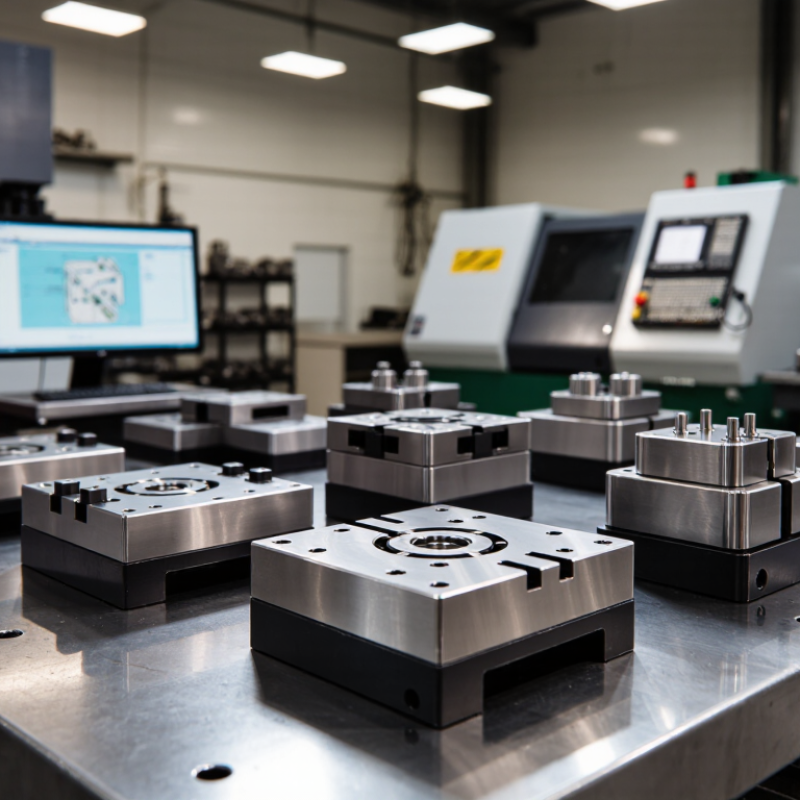
Types of Fixtures and Jigs Used in China’s Manufacturing Industry
China’s manufacturing industry uses fixtures and jigs to improve repeatability, speed, and workplace safety. Their designs vary with production volume, material, and required accuracy. A welding fixture holds steel parts at fixed angles during tacking and welding. Strong clamps reduce movement, but poor access can still create hidden weld defects.
Machining fixtures secure workpieces on milling, turning, or drilling equipment. Locator pins, soft jaws, and hydraulic clamps help maintain consistent positioning. For high-volume production, dedicated fixtures can shorten loading time significantly. Flexible modular fixtures suit smaller batches and frequent design changes. They cost less to modify, although setup time may increase.
Assembly jigs guide workers when installing fasteners, connectors, or pressed components. Drill jigs control hole locations with hardened bushes. Inspection fixtures support gauges, sensors, or coordinate measurements, especially for stamped and molded parts.
In practical factory use, fixture accuracy depends on more than its drawing. Wear, chips, thermal expansion, and operator handling matter too. Small errors accumulate. A fixture may perform well in testing but fail after months of production. Regular cleaning, calibration, and replaceable contact points improve reliability. Design reviews should include operators because they often notice awkward loading, sharp edges, or clamping delays before engineers do.
Key Applications Across China’s Major Industrial Sectors
China’s fixture and jig manufacturers support demanding production across automotive, electronics, machinery, rail, and renewable-energy plants. The automotive sector remains the largest user. According to the China Association of Automobile Manufacturers, China produced 30.16 million vehicles in 2023, including 9.59 million new-energy vehicles. Battery trays, welding nests, inspection gauges, and assembly fixtures must control repeatability during fast model changes.
Electronics factories need smaller, cleaner, and more precise tooling. Connector assembly, PCB testing, camera alignment, and semiconductor packaging often require micron-level positioning. The International Federation of Robotics reported 276,288 industrial robot installations in China during 2023. That scale increases demand for robot-end fixtures, pallet systems, and poka-yoke devices. A minor locating error can become thousands of rejected parts.
Heavy machinery and rail production use robust fixtures for frames, shafts, hydraulic components, and large welded structures. Renewable-energy factories also depend on fixtures for battery modules, motor housings, and photovoltaic equipment. Effective suppliers usually combine CNC machining, 3D inspection, material certificates, and documented process trials. However, a fixture that performs well in a supplier’s workshop may fail beside a hot welding line. Thermal distortion is easily underestimated. Engineers should test clamping force, operator access, changeover time, and maintenance needs under real production conditions. Data from the Ministry of Industry and Information Technology also shows China’s manufacturing sector continues to pursue intelligent transformation, making sensor-ready and traceable tooling increasingly practical.
How to Evaluate Chinese Fixture and Jig Suppliers
China Top Fixtures Jigs Suppliers and Manufacturers?
How to Evaluate Chinese Fixture and Jig Suppliers
A capable Chinese fixture and jig supplier should prove performance, not only display polished drawings. Request tolerance records, material certificates, calibration logs, and sample inspection reports. ISO’s 2022 Survey recorded more than 1.2 million ISO 9001 certificates worldwide. Certification helps, but it does not replace a factory audit.
Ask how the supplier controls critical dimensions during machining and assembly. A coordinate measuring machine report should identify datums, probe conditions, and actual deviations. For repeatability, review capability data such as Cpk, especially on locating pins, clamping surfaces, and interchangeable modules. A factory that cannot explain measurement uncertainty may create expensive surprises. Small details matter.
Production evidence is stronger than promises. Visit the workshop, or arrange a live video inspection of machining, grinding, assembly, and final testing. Check whether each jig carries a serial number and inspection status. The World Bank’s 2023 Logistics Performance Index rated China at 3.7 out of 5, showing strong logistics capability, but transport performance cannot correct poor packaging or late engineering changes. Request a control plan, spare-part list, and response procedure for dimensional failures. I would also test one pilot fixture before approving repeated orders. That step costs time. It can expose unclear tolerances, weak clamping force, or drawings that were never production-ready. Ask difficult questions early. Suppliers should welcome them.
Manufacturing Standards, Quality Control, and Customization Options
China Top Fixtures Jigs Suppliers and Manufacturers?
Reliable fixture and jig sourcing begins with manufacturing standards, not attractive quotations. Experienced suppliers should work from controlled drawings, clear tolerances, approved materials, and documented revision changes. Ask how they verify hardness, flatness, hole positions, and surface treatment. A coordinate measuring machine can confirm critical dimensions, while inspection records provide useful evidence. ISO-based procedures may support consistency, but certificates alone do not prove daily performance.
Quality control should cover more than final inspection. Incoming material checks, in-process measurements, trial assembly, and functional testing reduce production risks. Request a first-article inspection report with photos and measured values. Practical details matter: locating pins should seat smoothly, clamps should hold firmly, and operators should access the workpiece without awkward movement. A drawing can appear complete yet hide an unsuitable loading sequence. That mistake is easy to overlook.
Tips: Share sample parts, cycle targets, and working conditions early. Define acceptable tolerance ranges and inspection methods in writing. For customization, discuss modular bases, replaceable wear components, pneumatic or manual clamping, and future product changes. A capable manufacturer should explain design compromises instead of promising everything. I have seen projects lose time because a “simple” fixture lacked drainage, chip clearance, or maintenance access. Small oversights become expensive. Keep communication records, approve a prototype, and test it under realistic shop-floor conditions.
Leading Supplier Regions and Procurement Considerations in China
China’s fixture and jig manufacturing base is concentrated in several practical regions. Guangdong, especially Dongguan and Shenzhen, offers strong machining capacity and fast prototyping. Zhejiang is known for competitive tooling workshops and flexible production. Jiangsu and Shanghai provide reliable engineering support, automation resources, and access to mature industrial networks.
Regional choice should match your project, not only the quoted price. Ask suppliers about material certificates, machining tolerances, surface treatment, and inspection equipment. Request a sample fixture before approving batch production. A capable supplier should explain datum design, clamping force, repeatability, and maintenance access in clear language. Factory audits also reveal useful details, such as machine age, inspection routines, and how workers control daily changes. No sourcing plan is perfect. Drawings may contain unclear tolerances, and suppliers may interpret them differently.
Tips: Compare at least three qualified suppliers. Share complete 2D drawings, 3D files, target quantities, and delivery expectations. Confirm who owns design changes and how revisions are recorded. Use an independent inspection when the fixture affects critical assembly accuracy. Include packaging instructions, spare-part needs, and acceptance criteria in the purchase agreement. Build time for one correction cycle; even experienced teams can miss an awkward loading angle. Keep communication written and specific. A low initial quote may become expensive after revisions, freight changes, or repeated sampling.
China Fixture and Jig Sourcing: Regional Procurement Relevance
The chart compares major Chinese manufacturing regions using a 0–100 procurement relevance index. The index reflects commonly recognized strengths in precision machining, tooling, automation, industrial supply chains, export capability, and delivery flexibility. It is a planning benchmark rather than company-level market share data.
Guangdong is strong in electronics, automation, and export-oriented manufacturing. Jiangsu and Zhejiang offer broad precision-machining and industrial-tooling ecosystems, while Shanghai provides advanced engineering and high-end manufacturing capabilities. Shandong is a practical option for heavy-duty fixtures, machinery applications, and cost-sensitive projects. Buyers should still verify material certificates, inspection standards, tolerance capability, prototype procedures, intellectual-property controls, and after-sales support before placing an order.