
Cold rooms are essential infrastructure for food processing, pharmaceuticals, and other temperature-sensitive supply chains. Their performance depends on more than refrigeration capacity. Insulated panels, door seals, airflow, controls, and installation quality all influence temperature stability and operating costs.
The scale of demand is significant. The Global Cold Chain Alliance’s 2020 Global Cold Storage Capacity Report estimated worldwide refrigerated warehouse capacity at about 719 million cubic meters. The FAO’s 2023 report on food security estimated that 13.2% of food was lost after harvest and before retail in 2021. These figures do not measure the impact of any single Cold Room, but they underline why dependable storage matters.
China has a broad manufacturing base, yet buyers should compare suppliers carefully. A low quotation alone says little about long-term performance. Ask for project references, panel specifications, refrigeration-system details, temperature-range evidence, and clear warranty terms. Check how the manufacturer handles commissioning, spare parts, and service across your destination market. Small details matter. A poorly sealed door can undermine an otherwise capable system.
This guide introduces leading Cold Room manufacturers in China for global buyers, with attention to product scope, export experience, and practical evaluation points. It is not a substitute for technical due diligence. And supplier information can change, so verify current certifications and project records directly before purchasing.
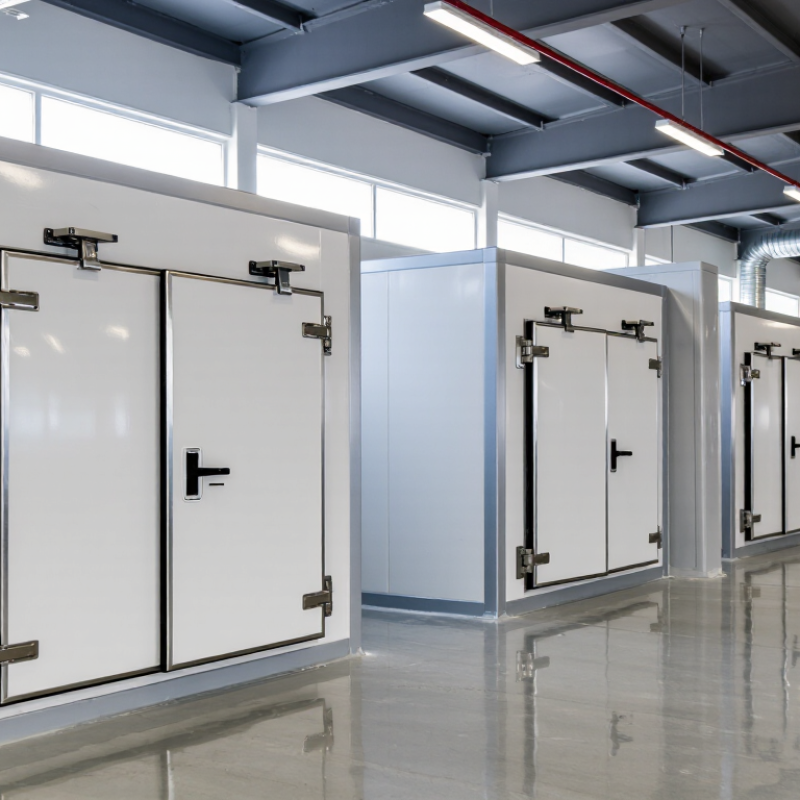
China’s cold-room manufacturing industry serves food processing, catering, pharmaceuticals, agriculture, and logistics. Manufacturers may supply insulated panels, refrigeration equipment, doors, controls, and installation support as a complete package or separate components. Product types include modular walk-in chillers, freezer rooms, temperature-controlled storage, and blast-chilling rooms. Each serves a different operating need. A produce room, for example, may need steady humidity control, while a freezer room needs low temperatures and effective door seals.
Capacity and temperature range are only part of the specification. Buyers should also consider room dimensions, daily product turnover, ambient climate, loading patterns, and available power. Panel thickness, floor insulation, drainage, and defrost settings affect daily performance. A well-designed room can still disappoint if forklifts repeatedly damage the door or warm, moist air enters during busy loading periods. Specifications can look tidy on paper; site conditions often do not.
Tips: Share a floor plan, target temperature, product load, and local climate before requesting a quotation. Ask for clear equipment schedules, insulation details, and commissioning procedures. Confirm who handles installation and after-sales support in your region. Keep the answers in writing. Compare complete system scopes, not just headline prices.
Chinese cold-room manufacturers typically begin with the building, not the panel. They check room dimensions, product type, loading frequency, local climate, and available power. These details shape the insulation thickness, refrigeration capacity, door design, and airflow plan.
The International Institute of Refrigeration’s 2023 report, The Role of Refrigeration in the Global Economy, estimates that refrigeration and air conditioning use about 20% of global electricity.
That figure makes system efficiency a design requirement, not a sales extra.
Factories usually cut and assemble insulated sandwich panels, then prepare floors, joints, and door frames for site installation. Inside the room, evaporators need clear airflow; blocked corners can create warm spots around stacked cartons. Engineers may use load calculations and temperature records to select compressors and controls.
Small details matter. A poorly sealed door can invite condensation, while frequent defrost cycles can raise energy use. Even a neat drawing can miss real loading habits.
UNEP’s 2023 Global Cooling Watch report projects that cooling capacity could more than triple by 2050 under current trends.
Buyers should therefore review insulation specifications, refrigeration performance data, temperature uniformity tests, and commissioning records—not just quoted capacity. Ask how the manufacturer verifies room temperature after installation, with doors opening and products being loaded. Those checks reveal more than a brochure. They can still be imperfect; site use changes, and designs sometimes need adjustment.
Selecting a cold room manufacturer requires evidence beyond a low quotation. The International Institute of Refrigeration’s 2020 Global Cold Chain Capacity Report estimated worldwide refrigerated warehouse capacity at 719 million cubic metres, up 16.7% from 2018. Growing capacity makes dependable performance more important. Ask for temperature-uniformity test results, insulation-panel specifications, and documented commissioning procedures. Numbers matter. Check whether quoted performance reflects your climate, door-opening frequency, stored products, and loading patterns. A room holding vaccines or fresh produce needs stable conditions, not simply a colder thermostat setting.
Energy use deserves equal scrutiny. The International Energy Agency’s The Future of Cooling projects that global energy demand for space cooling could more than triple by 2050. Cold rooms differ from air-conditioned buildings, but the projection highlights why buyers should request measured energy data. Ask manufacturers to explain compressor sizing, defrost controls, refrigerant leak checks, and monitoring alarms in plain language. Ask for proof. Review service coverage, spare-parts lead times, and references from comparable installations. A polished specification sheet is useful, but it cannot replace a site visit or a clear maintenance plan. Some details are easy to overlook. Door seals and floor insulation can undermine an otherwise capable system.
| Evaluation dimension | Practical benchmark or question | Evidence to request | Why it matters |
|---|---|---|---|
| Temperature range and application | Confirm the design temperature against the intended use. Chilled storage is commonly specified around +2°C to +8°C; frozen-food storage is commonly designed around −18°C. Setpoints depend on the product and local requirements. | Written design conditions, product-load assumptions, operating-temperature range, and a commissioning temperature test. | The required temperature affects insulation, refrigeration capacity, defrosting, and operating cost. |
| Insulated panel specification | Ask for the insulation-core type, tested thermal-conductivity value, panel thickness, facing material, and joint details. Panel thickness should be selected for the room temperature, dimensions, climate, and energy target—not by a single universal rule. | Technical datasheets, test methods and reports for thermal performance, panel drawings, and details of cam-locks or other joints. | Well-specified panels and tight joints help limit heat gain, condensation risk, and refrigeration demand. |
| Refrigeration system sizing | The capacity calculation should account for room dimensions, insulation, ambient conditions, door openings, product pull-down, lighting, people, and equipment heat loads. | A heat-load calculation, equipment schedule, refrigerant details, design ambient temperature, and stated operating conditions for rated capacity. | A capacity figure without its design assumptions is difficult to compare and may not reflect real site conditions. |
| Refrigerant and regulatory fit | Check that the proposed refrigerant and system design comply with the destination market’s current safety, environmental, and refrigerant rules. Requirements differ by country and application. | Refrigerant type and charge, safety documentation, applicable conformity documents, and confirmation of service availability in the destination market. | Regulatory compatibility and local service support affect installation, maintenance, and long-term operation. |
| Doors, seals, and floor design | Specify door type and clear opening, gasket design, threshold, opening frequency, and whether a heated threshold or insulated floor is required for the operating temperature and site conditions. | Door and floor drawings, material specifications, installation details, and a schedule of any heaters or safety-release features. | Air leakage and unsuitable floor details can contribute to frost, condensation, energy loss, or floor damage. |
| Controls, alarms, and monitoring | Confirm temperature sensors, controller functions, alarm limits, power-failure response, and whether remote monitoring or data logging is included. | Control-system description, alarm list, sample temperature log, wiring diagram, and instructions for alarm testing. | Monitoring and alarms help operators identify temperature excursions and diagnose faults promptly. |
| Quality management and traceability | Ask how materials, production inspections, final testing, and nonconformities are controlled. Quality-management certification can be useful, but verify its scope and validity. | Current certificate details where applicable, inspection and test plan, material records, and sample factory or final-inspection reports. | Documented controls make product consistency and project acceptance easier to assess. |
| Installation and commissioning | Clarify who is responsible for installation, refrigerant piping, electrical work, leak checks, evacuation, start-up, and operator training. | Installation scope, site-readiness checklist, commissioning procedure, acceptance criteria, and training materials. | Clear responsibility boundaries reduce delays and help ensure the assembled system performs as designed. |
| Export packaging and documentation | Confirm packaging is suitable for the transport route and that the delivery includes itemized packing information and installation documentation in an agreed language. | Packing plan, carton or component list, shipping marks, drawings, manuals, and agreed delivery terms and schedule. | Complete documentation and suitable packing support receiving, customs processing, and installation planning. |
| Warranty, spare parts, and service | Review warranty duration and exclusions, response arrangements, recommended spare parts, and the availability of qualified service near the installation site. | Written warranty terms, spare-parts list, service contact process, and stated response or support arrangements. | After-sales support can affect downtime and the total cost of ownership. |
Note: Temperature ranges and technical benchmarks above are common reference points, not universal specifications. Confirm the final design against the stored product, site conditions, destination-market regulations, and project requirements.
China’s cold room manufacturers range from large integrated factories to specialist panel and refrigeration suppliers. Their profiles differ in production depth, engineering support, and export experience. Some build insulated panels, doors, floors, and refrigeration systems in one facility. Others coordinate equipment from several suppliers. That distinction can affect delivery schedules and accountability.
Experienced manufacturers usually ask about the room’s purpose, operating temperature, daily door openings, and local climate. These details shape panel thickness, cooling capacity, and moisture control. A seafood store and a pharmaceutical warehouse need different designs. Look for clear drawings, material specifications, and commissioning procedures, not just attractive product photos. Details matter.
Export-ready suppliers may provide remote installation guidance, spare-parts lists, and temperature-control documentation. Ask for references from projects with similar dimensions and operating conditions. Compare warranty coverage and response times in writing. A polished brochure is not proof of consistent field performance. Some quotations also omit site preparation or electrical work, so the final cost may be less clear than expected. Review those gaps before comparing prices.
These indicative temperature bands illustrate common cold-room applications, not a comparison of manufacturers. Actual operating setpoints depend on the product, local requirements, and project design.
Top Cold Room Manufacturers in China for Global Buyers
For global buyers, a cold room purchase involves more than panel thickness and cooling capacity. Ask manufacturers for drawings that show room dimensions, door swing, drainage, and equipment placement. Confirm the operating temperature, ambient conditions, and intended goods in writing. These details help reduce costly changes after production. Details matter.
Export readiness deserves careful review. Request a packing list, commercial invoice, equipment specifications, and shipment schedule before confirming an order. Check whether electrical components match the destination site’s voltage and frequency. Ask which conformity documents are available, then verify requirements with qualified local advisers. Rules can vary by market and product type. A certificate alone may not answer every installation question.
Tips: Share site photos and a marked floor plan early. Ask for sample warranty terms, spare-parts availability, and a clear response process for service requests. Keep written records of agreed specifications and delivery milestones.
After-sales support should be specific, not just a promise of “technical assistance.” Clarify remote troubleshooting hours, expected response times, and whether replacement parts can be shipped separately. A video call may resolve a control-panel setting, but a damaged door seal needs a practical parts plan. Some details are easy to overlook, even with a careful checklist. Review the final drawings and service terms before production begins.

Sign up for our mailing list to stay informed and up to date with our latest news and products!
(905) 832 – 0600
2175-A Teston Road
Maple, Ontario
L6A 1T3
(780) 451 – 0238
24790 – 117 Avenue
Acheson, Alberta
T7X 6C2
(604) 882 – 1564
9511 – 194A Street
Surrey, British Columbia
V4N 4G4
(306) 955 – 6005
3926 Arthur Rose Avenue Saskatoon, Saskatchewan
S7P 0C9
(450) 687 – 2721
2750 Rue Bernard-Lefebvre
Laval, Quebec
H7C 0A5