Top 10 Types of SS Steel Water Tanks for Global Buyers
Choosing the right Ss Steel Water Tanks requires more than comparing prices, capacities, and product photos. Global buyers must examine water quality, climate, installation space, maintenance access, and applicable engineering standards. A tank placed beside a coastal factory faces different risks from one installed in a cold agricultural region. Chloride exposure, temperature changes, welding quality, and foundation movement can all affect long-term performance.
John C. Lippold, a recognized stainless-steel welding authority, has emphasized that “material selection and welding practice must be evaluated together.” This principle matters in every tank project. Stainless steel can offer strong corrosion resistance, clean surfaces, and dependable service life. However, poor weld finishing or unsuitable grades can weaken those advantages. The metal alone is not the complete solution.
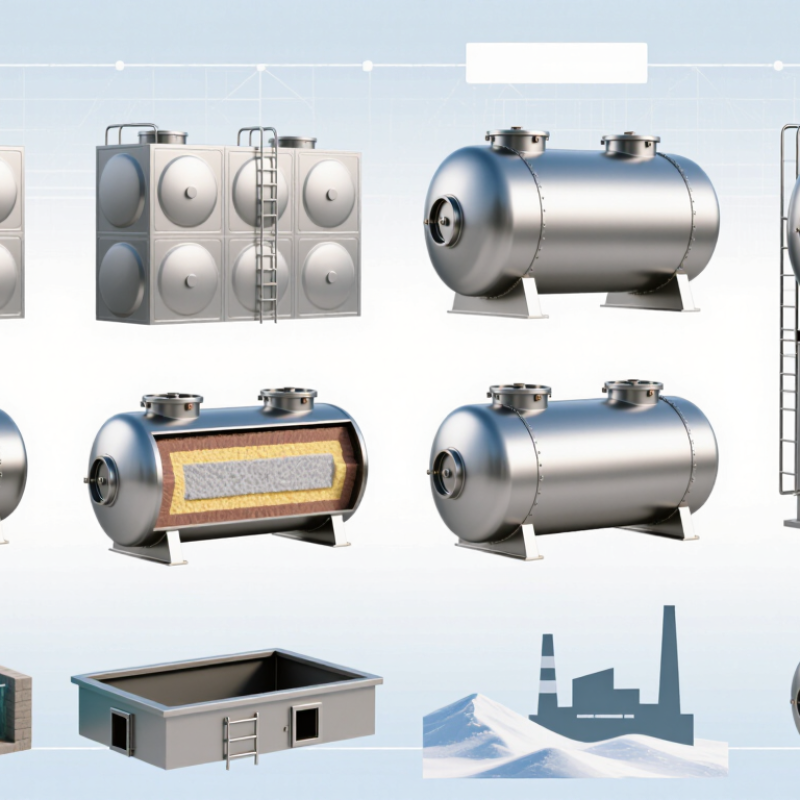
This guide introduces ten major types of Ss Steel Water Tanks for global buyers. It considers sectional tanks, panel tanks, cylindrical tanks, insulated tanks, underground units, and other practical designs. Each type serves a different purpose. Some suit modular construction and narrow sites. Others provide better thermal control or easier inspection. The details matter.
Small oversights become expensive later.
Buyers should also question assumptions. “304 stainless steel” is not automatically ideal for every water source. Local chloride levels, cleaning chemicals, sunlight, and operating temperatures may require a different specification. Supplier experience, documented testing, traceable materials, and clear warranty terms deserve equal attention. This comparison aims to support informed decisions, while recognizing that final selection should follow site-specific engineering review.
Stainless Steel Grades: 304 (18% Cr, 8% Ni) Versus 316 (2–3% Mo)
For global water-tank buyers, 304 and 316 stainless steel often look similar. Their performance is not identical. Grade 304 contains approximately 18% chromium and 8% nickel, as specified in ASTM A240/A240M. Chromium forms a passive surface film, while nickel supports toughness and corrosion resistance. It suits many indoor tanks, rainwater systems, and treated municipal supplies.
Grade 316 adds roughly 2–3% molybdenum. That small addition matters. Molybdenum improves resistance to chloride-related pitting, especially around welds, corners, and sediment lines. The Nickel Institute’s technical guidance places typical pitting resistance equivalent numbers near 18 for 304 and 24–26 for 316. These figures are useful comparisons, not guarantees. High salinity, warm water, poor cleaning, and stagnant zones can still damage either grade.
Details decide service life. I have seen a tank specified as 316, yet its weld finishing was careless. Corrosion appeared near the outlet first. That was an uncomfortable lesson. Grade selection cannot replace fabrication control. For coastal sites, brackish water, or frequent salt exposure, 316 is usually the more cautious choice. For low-chloride potable water, 304 may provide adequate value when design and maintenance are controlled. Chloride concentration should be tested before ordering. Supplier claims alone are not enough.
Ten SS Water Tank Types Classified by Capacity, Pressure, and Application
Top 10 Types of SS Steel Water Tanks for Global Buyers
The ten SS water tank types can be classified by capacity, pressure, and application. Compact domestic tanks usually hold 0.5–5 m³ for apartments and small buildings. Medium sectional tanks commonly range from 5–100 m³ for schools, hotels, and factories. Large bolted tanks may exceed 500 m³ for municipal storage. The capacity choice should follow daily demand, refill frequency, and emergency reserves. The WHO/UNICEF Joint Monitoring Programme reported that 2.2 billion people lacked safely managed drinking water in 2022. Storage planning remains practical, not decorative.
Pressure creates another useful division. Atmospheric tanks serve normal distribution systems and fire reserves. Low-pressure tanks support booster pumps and rooftop supply. Pressurized stainless tanks handle controlled water delivery, but require certified design, relief protection, and inspection.
Application creates four more types: potable-water tanks, process-water tanks, hot-water tanks, and rainwater-harvesting tanks. A fifth application type is wastewater-buffer storage, when material compatibility is verified. That makes ten categories overall, although real projects often overlap.
Food facilities should consider hygienic welds and cleanable interiors. Hospitals need stronger monitoring and maintenance records. UN-Water’s 2024 reporting indicates agriculture uses about 70% of global freshwater withdrawals, so irrigation tanks deserve careful sizing. A larger tank is not automatically safer. Poor turnover can still create stagnant zones, and this point is often underestimated.
Tank Design Data: Wall Thickness, Operating Pressure, and Thermal Range
Top 10 Types of SS Steel Water Tanks for Global Buyers
Tank Design Data: Wall Thickness, Operating Pressure, and Thermal Range
Stainless steel water tanks vary widely, including vertical, horizontal, sectional, jacketed, and insulated designs. Wall thickness cannot be selected by capacity alone. Engineers also assess tank diameter, liquid density, wind loads, seismic forces, corrosion allowance, and welding quality. EN 14015 provides design guidance for large, above-ground, vertical tanks, while ASME BPVC Section VIII applies when internal pressure requires pressure-vessel calculations.
Published ASTM A240 data lists minimum yield strength near 170 MPa for common 304L and 316L plate grades. That value is not the allowable design stress. Safety factors, temperature, weld efficiency, and forming methods reduce usable strength. A practical design review may find a small atmospheric tank needing 2–3 mm shell plate, while larger tanks often require thicker courses and reinforced openings. Local buckling remains easy to underestimate.
Operating pressure deserves careful definition. Many water tanks work near atmospheric pressure, with only slight positive pressure from pumping or thermal expansion. Pressurized vessels need formal calculations under ASME rules. Stainless steel also expands about 17.2 micrometres per metre per °C for 304 material, according to commonly published technical data. A 10-metre shell exposed to a 50°C change may expand roughly 8.6 mm. Insulation, flexible connections, and sliding supports should accommodate this movement. Thermal ranges below freezing or above 100°C demand additional gasket, weld, and fatigue checks. Small projects sometimes ignore these details. That is a costly assumption.
Global Compliance: NSF/ANSI 61, AWWA, EN, ISO, and WRAS Standards
Top 10 Types of SS Steel Water Tanks for Global Buyers
Global buyers often compare sectional, bolted, welded, insulated, jacketed, rooftop, underground, fire-water, process-water, and potable-water tanks. Each type creates different compliance risks. A potable tank may need certified internal surfaces, while a fire-water tank may follow separate local requirements. The tank shape alone does not prove suitability.
NSF/ANSI 61 evaluates materials that contact drinking water and helps control contaminant release. It may cover liners, gaskets, coatings, weld materials, and fittings. AWWA requirements can guide structural design, fabrication, inspection, and testing. However, the applicable specification depends on tank construction and project conditions. Buyers should verify the exact edition and acceptance scope.
EN compliance is not one universal certificate. Relevant requirements can change with location, pressure, installation method, and water application. ISO 9001 supports controlled manufacturing systems, but it does not automatically approve a tank for drinking water. WRAS approval is especially important for UK potable-water installations. It usually focuses on products and materials connected to public water systems.
Request material certificates, welding procedures, test records, and traceable component lists. Check stainless grade, weld finish, gasket composition, and cleaning methods. A certificate alone is not enough. In practice, documents sometimes cover only one component, not the complete tank assembly. This detail is easy to miss. Independent inspection may reveal gaps before shipment, although it can increase cost and lead time.