Top Thermoforming Mold Assembly Manufacturers Worldwide?

Choosing among the top Thermoforming Mold Assembly manufacturers worldwide requires more than comparing catalogs or production capacity. A reliable supplier must understand how mold design affects heating, forming, cooling, trimming, cycle time, and final part consistency. Small details matter. A blocked vent can leave a visible mark. Uneven cooling can distort a thin panel. Poor alignment may create flash around the flange.

James L. Throne, a recognized thermoforming researcher and author, described the process as “the process of heating a thermoplastic sheet to its softening point...” This principle remains central to modern Thermoforming Mold Assembly. Experienced manufacturers connect material behavior with practical tooling decisions. They select suitable aluminum grades, cooling channels, vacuum paths, surface finishes, and mounting systems. They also test assemblies under real production conditions, not only through attractive drawings.

This guide examines manufacturers through engineering capability, documented experience, quality control, customization, delivery reliability, and after-sales support. Production scale matters, but it is not everything. A smaller specialist may deliver better technical attention. A global supplier may provide stronger logistics and broader validation resources. No ranking is perfect. Buyer requirements change, and public information can be incomplete. Readers should verify certifications, sample quality, tolerance data, references, and service terms before making a decision. The strongest partner is the one that can explain each design choice clearly and repeat the result consistently. That is the real benchmark.

Top Thermoforming Mold Assembly Manufacturers Worldwide?

Thermoforming Mold Assembly: Definition, Structure, and Core Functions

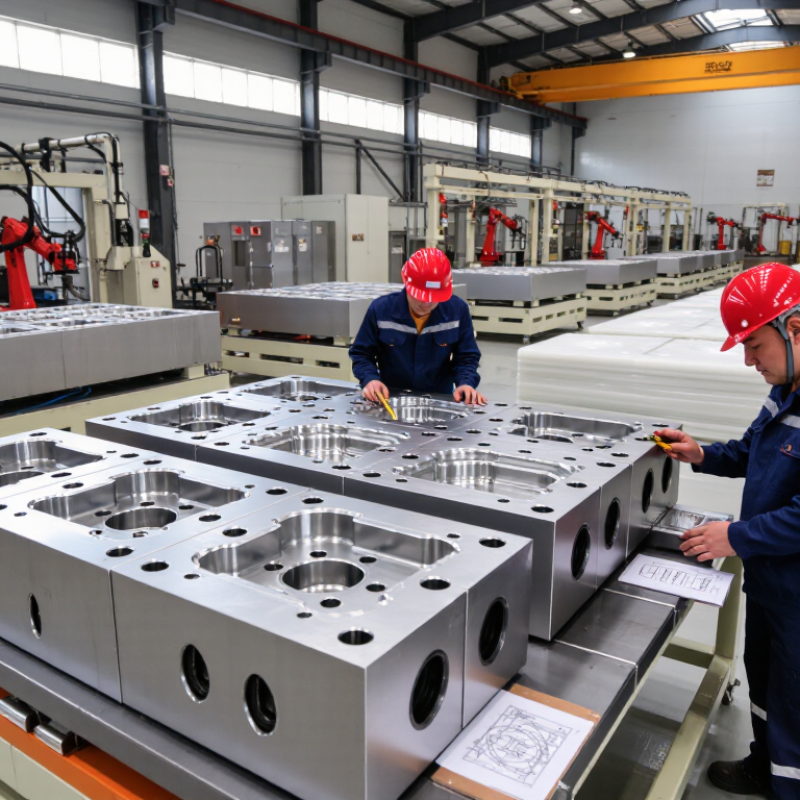
A thermoforming mold assembly is the complete tooling system that shapes heated plastic sheet into a finished part. It is more than a cavity or forming surface. The assembly usually includes a mold body, support frame, vacuum ports, cooling channels, seals, clamps, and alignment features. Some designs also use plug-assist components for deeper containers. The mold surface may be machined aluminum, cast resin, or another heat-resistant material. Each choice affects thermal control, surface quality, service life, and cost.

Its core function is controlled forming. Vacuum removes air between the sheet and mold surface, while cooling channels reduce cycle time and stabilize dimensions. The frame keeps the tooling rigid during repeated pressure changes. Proper vent placement prevents webbing, trapped air, and uneven corners. Release angles also matter. A small error can create sticking, distortion, or unnecessary trimming work. These details often decide whether a mold performs reliably on a busy production line.

When comparing thermoforming mold assembly manufacturers worldwide, buyers should inspect engineering records, material certificates, trial reports, and maintenance support. A capable supplier should explain cooling performance, expected tolerances, replacement parts, and inspection methods. Sample testing is essential, especially for thin walls or complex ribs. Not every polished presentation indicates strong production control. A mold can look accurate yet cool unevenly. That is an easy detail to miss. Experienced teams still review warpage data after trials, because early assumptions sometimes fail under real cycle conditions.

Key Criteria for Evaluating Global Mold Assembly Manufacturers

Choosing a global thermoforming mold assembly manufacturer requires more than comparing catalog prices. Grand View Research’s 2024 analysis estimates the thermoforming plastics market will grow at about 5% annually through 2030. That growth increases pressure on mold accuracy, delivery capacity, and technical support.

Ask for measurable evidence. Review dimensional inspection reports, material certificates, and documented trial results. For aluminum or steel assemblies, examine cavity tolerances, cooling-channel layouts, surface finish, and vent placement. A reliable supplier should explain how it controls warping after machining. It should also provide traceability from raw material to final inspection. Small details matter here.

They matter greatly.

Evaluate production capability through a witnessed sample run. Check cycle stability, sheet release, trimming alignment, and temperature uniformity across the mold. The Plastics Industry Association reported continuing volatility in U.S. plastics manufacturing shipments and operating costs in its 2024 industry outlook. Therefore, capacity claims deserve verification, especially during peak orders. ISO 9001 certification can support process discipline, but certification alone proves little about mold performance.

Request recent non-confidential case data, failure rates, corrective-action records, and references from comparable applications. A 2023 report from MarketsandMarkets identified automation and lightweight packaging as important thermoforming growth drivers. That suggests manufacturers should demonstrate repeatable assembly, not just attractive prototypes. I would still challenge every forecast. Supplier reviews can overlook maintenance delays, communication gaps, or costly design revisions. A factory tour, clear acceptance criteria, and a documented spare-parts plan often reveal more than a polished presentation.

Leading Thermoforming Mold Assembly Manufacturers by Region

Top Thermoforming Mold Assembly Manufacturers Worldwide?

Leading Thermoforming Mold Assembly Manufacturers by Region

Regional capability matters when selecting thermoforming mold assembly manufacturers. North American suppliers often emphasize rapid tooling, local service, and short production cycles. European manufacturers typically focus on tight tolerances, energy efficiency, and complex cooling channels. Asia-Pacific has expanded quickly, supported by strong packaging, automotive, and electronics production.

Grand View Research reported that the global thermoformed plastics market reached approximately USD 15.9 billion in 2024. The same report expects steady growth through 2030. This demand increases pressure on mold assembly suppliers to deliver stable cycle times and repeatable wall thickness. In practical audits, buyers should inspect machining accuracy, cooling performance, surface finishing, and replacement-part control. A polished cavity is not enough.

Tips: Compare regional suppliers using the same technical checklist. Request sample data for cycle time, dimensional deviation, and mold maintenance intervals. Check whether engineers can support production remotely and on site. Also review material compatibility, especially when using recycled or high-temperature polymers. One weakness in many comparisons is overreliance on price. A cheaper assembly may require more cleaning, adjustments, and unplanned downtime. That cost appears later.

Manufacturing Technologies, Materials, and Quality Standards

Top thermoforming mold assembly manufacturers are judged by more than delivery speed. Their manufacturing technologies reveal real capability. CNC five-axis machining supports complex cavities and tighter cooling channels. Electrical discharge machining improves sharp details, while additive manufacturing can test conformal cooling concepts before final tooling. According to Grand View Research, the thermoforming plastics market is projected to expand at roughly 5% annually through 2030. That growth increases pressure on moldmakers to shorten cycles without sacrificing repeatability.

Material selection affects every production hour. Aluminum molds offer faster heat transfer and easier handling, while tool steel provides longer service under abrasive materials and high-volume runs. Stainless steel can support demanding environments, but its machining cost is higher. PlasticsEurope reported global plastics production at about 414 million tonnes in 2023. Such scale makes scrap reduction a practical quality target, not a decorative claim. Mold assemblies should therefore be evaluated for cooling balance, vent placement, surface finish, and repair access.

Reliable suppliers normally work within ISO 9001 quality systems and document dimensional inspection with calibrated equipment. ASTM testing methods can verify polymer performance, including tensile strength and impact resistance. A coordinate measuring machine should confirm cavity geometry before trial production. Small deviations matter. A 0.2-millimeter mismatch may create uneven wall thickness or visible stress marks. However, certificates alone are insufficient. Factory audits, sample trials, and maintenance records often expose weaknesses that paperwork hides. This remains an uncomfortable gap. Even experienced teams can underestimate thermal distortion during final assembly.

Top Thermoforming Mold Assembly Manufacturers Worldwide? - Manufacturing Technologies, Materials, and Quality Standards
Manufacturing Technology Typical Mold Construction Common Mold Materials Typical Applications Key Technical Characteristics Typical Quality Controls Relevant Standards and Practices
CNC-Machined Aluminum Tooling Solid or semi-hollow mold assembled with vacuum ports, cooling passages, mounting plates, and interchangeable inserts. 6061-T6 or 6082 aluminum; cast aluminum for larger or more complex shapes. Automotive interior components, appliance housings, packaging tools, and medium-to-high production volumes. Good thermal conductivity, repeatable dimensional accuracy, fast heat transfer, and relatively low tool weight. CMM inspection, vacuum-port verification, surface-finish measurement, assembly alignment checks, and first-article inspection. ISO 9001 quality-management systems; ISO 1101 or ASME Y14.5 for geometric tolerancing; ISO 20457 for applicable molded-part tolerances.
Cast Aluminum Tooling Cast mold body followed by CNC finishing, drilling of vacuum holes, installation of fittings, and integration of cooling or heating components. Cast aluminum alloys selected for thermal stability and machinability. Large-format panels, vehicle trim, refrigerator liners, bath products, and tools with deep or irregular geometry. Cost-effective for large surfaces; supports integrated cooling channels and complex external contours. Material-certification review, X-ray or dye-penetrant inspection when specified, dimensional inspection, leak testing, and surface inspection. ISO 9001; documented casting traceability; ISO 1101 or ASME Y14.5 drawing controls; customer-defined acceptance criteria.
Epoxy or Composite Pattern Tooling Master pattern, composite mold shell, structural backing, vacuum fittings, and replaceable wear surfaces. Filled epoxy tooling board, epoxy resin, fiberglass reinforcement, carbon-fiber reinforcement, or hybrid composite systems. Prototype parts, low-volume production, design validation, and short lead-time tooling. Rapid production and lower initial cost; generally lower thermal conductivity and service life than aluminum tools. Pattern dimensional checks, resin-cure documentation, vacuum integrity testing, surface-finish checks, and trial-forming validation. ISO 9001 where applicable; resin supplier technical data sheets; controlled curing procedures; documented prototype acceptance criteria.
CNC-Machined Steel Tooling Steel cavity or insert system with hardened wear areas, guide features, vacuum passages, and replaceable components. P20-type pre-hardened mold steel, tool steel, or stainless steel for corrosion-sensitive environments. High-cycle production, abrasive sheet materials, precision components, and applications requiring extended tool life. High wear resistance and stiffness; slower heat transfer and higher machining cost than aluminum. Hardness verification, CMM inspection, surface roughness measurement, vacuum-flow checks, and assembly repeatability testing. ISO 9001; ISO 1101 or ASME Y14.5; material certificates; heat-treatment records; controlled tool-maintenance procedures.
Additive-Manufactured Tooling Printed mold body or insert with optimized internal channels, followed by sealing, machining, finishing, and hardware assembly. Aluminum, stainless steel, nickel alloys, high-temperature polymers, or reinforced polymer composites, depending on process and temperature. Prototype tools, conformal-cooling inserts, lightweight molds, and geometries difficult to machine conventionally. Enables complex internal cooling layouts and rapid design iteration; surface finishing and thermal durability require careful validation. Build-record review, CT or internal-channel inspection where required, dimensional scanning, pressure or vacuum testing, and thermal-cycle trials. ISO/ASTM 52900 terminology for additive manufacturing; ISO 9001; process-specific qualification and post-processing records.
Electroformed Nickel Tooling Nickel shell formed over a master pattern and supported by a rigid backing structure with vacuum and mounting hardware. Electroformed nickel with aluminum, steel, or composite backing materials. Detailed surfaces, thin-gauge packaging, textured finishes, and applications requiring accurate reproduction of a master pattern. Excellent surface replication and dimensional detail; shell thickness and backing design must be controlled for stiffness. Shell-thickness measurement, master-to-tool comparison, surface-profile inspection, vacuum testing, and thermal-cycle verification. ISO 9001; plating-process control; master-pattern traceability; drawing-based dimensional and surface-finish requirements.
Multi-Part Mold Assembly Separate cavity sections, inserts, clamping frames, alignment dowels, vacuum manifolds, and replaceable wear components. Aluminum, steel, stainless steel, engineering plastics, or combinations selected according to temperature and wear requirements. Large parts, undercut features, modular production tooling, and molds requiring frequent maintenance or design changes. Improves serviceability and changeover efficiency; joint alignment and sealing are critical to part quality. Datum and alignment checks, insert interchangeability tests, vacuum-leak testing, joint-gap inspection, and trial-part measurement. ISO 1101 or ASME Y14.5 for datums and geometric tolerances; ISO 20457 for applicable part-tolerance planning; documented assembly procedures.
Vacuum-Port and Airflow Integration Distributed vacuum holes, machined channels, manifolds, filters, fittings, and independently controlled vacuum zones. Usually integrated into aluminum, steel, cast aluminum, or composite mold structures. Deep-draw parts, fine-detail surfaces, thin-gauge sheet forming, and components requiring uniform material distribution. Port layout influences draw uniformity, webbing risk, corner definition, cycle time, and final wall-thickness distribution. Vacuum-flow measurement, leak-rate testing, blocked-port checks, port-diameter verification, and trial-forming analysis. Process specifications are normally customer- or application-defined; vacuum-system components should be selected for the forming temperature and pressure range.
Integrated Cooling and Heating Assemblies Internal cooling channels, external heaters, thermal sensors, manifolds, insulation, and controlled connection points. Aluminum or steel mold bodies; copper-alloy components may be used selectively for heat transfer. High-cycle production, thick-gauge forming, temperature-sensitive polymers, and parts requiring short cycle times. Improves thermal uniformity and cycle repeatability; channel placement must avoid distortion and weak sections. Pressure testing, flow-rate measurement, thermal mapping, sensor calibration, and cycle-to-cycle temperature verification. ISO 9001; calibrated measurement equipment under ISO 10012 principles; documented pressure, temperature, and maintenance records.
Surface Finishing and Texture Replication Machined cavity with polishing, bead blasting, chemical texturing, laser texturing, or applied surface treatment. Aluminum, steel, nickel, or coated tooling surfaces selected according to required texture and wear resistance. Visible automotive trim, consumer products, sanitary components, packaging, and parts requiring controlled gloss or grain. Surface texture affects appearance, release behavior, friction, cleaning, and the replication of the sheet surface. Gloss or roughness measurement, visual master comparison, texture-depth inspection, release testing, and sample-part approval. ISO 21920 for profile surface-texture specification and measurement; customer-approved visual standards; controlled sample retention.
Final Assembly and Validation Complete mold assembly including cavity, base, inserts, vacuum system, cooling or heating circuits, sensors, and mounting hardware. Material combination based on production temperature, wear, corrosion, thermal conductivity, and maintenance requirements. Production release, replacement tooling, engineering changes, and global transfer of thermoforming programs. Focuses on repeatability, safe operation, maintainability, dimensional conformity, and compatibility with the forming machine. Design review, FAI, CMM or 3D-scan report, vacuum and pressure tests, machine tryout, capability study, and corrective-action records. ISO 9001; ISO 19011 audit principles where applicable; ISO 1101 or ASME Y14.5; customer-specific PPAP or production-approval requirements when requested.

How to Select the Right Thermoforming Mold Assembly Supplier

How to Select the Right Thermoforming Mold Assembly Supplier

Choosing among top thermoforming mold assembly manufacturers requires more than comparing prices. A 2024 Grand View Research report valued the global thermoforming market at approximately US$16.3 billion in 2023. It also projected about 5% annual growth through 2030. This expansion increases pressure on suppliers to deliver repeatable cycles, stable dimensions, and faster tooling changes. Ask for cavity layouts, cooling-channel maps, steel specifications, and inspection records before approving a supplier.

Use a technical scorecard. Check dimensional tolerance, vent design, plug-assist alignment, heating uniformity, and mold-change time. Request trial data using your actual resin and sheet thickness. The wrong test material can hide warpage or weak corners. Require CMM reports, thermal images, and documented corrective actions. Small details matter.

Smithers’ thermoforming market analysis identifies packaging as a major demand sector, where high output makes downtime expensive. Therefore, evaluate machining capacity, spare-part support, repair response, and production traceability. Ask to review a completed project with similar wall thickness and cycle requirements. A polished presentation proves little. In practice, supplier selection can still be imperfect, because early samples may not represent long-run performance. A pilot run is safer.

How to Select the Right Thermoforming Mold Assembly Supplier

Recommended evaluation weighting based on practical thermoforming mold procurement priorities

Product quality and dimensional accuracy should receive the highest priority because mold performance directly affects wall thickness, part consistency, trimming accuracy, and production uptime. Compatibility with the required forming process, engineering capability, delivery reliability, and after-sales support should also be assessed before selecting a supplier.

Request Quote

Sign Up