
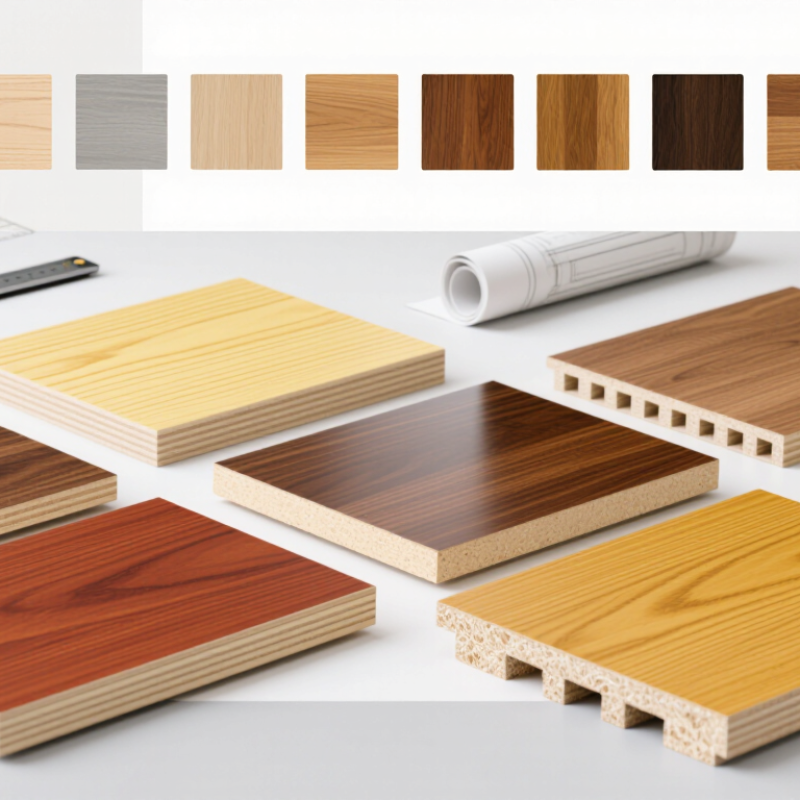
What Are the Top Veneered Plywood Types in 2026?

Veneered Plywood is not one uniform product. Its performance depends on the face species, core construction, adhesive, and finish. A pale birch face can look crisp under clear lacquer, while a walnut veneer brings warmer grain to cabinetry. Yet appearance alone does not determine suitability. A beautiful panel may still disappoint if its core is uneven or its grade does not match the project.

Industry data helps explain why careful comparison matters. FAOSTAT’s Forestry Production and Trade database tracks plywood production and trade, while the UNECE/FAO Forest Products Annual Market Review examines forest-product markets and supply trends. These sources provide useful context, but they do not replace product-level specifications. Grades and naming conventions can also vary by region and manufacturer. Check the technical sheet.

This guide compares leading veneered plywood types for 2026, including common face species, core options, and practical uses. It considers visual consistency, stability, finishing needs, and likely trade-offs. Some differences are subtle. Others show up clearly at a cabinet edge or beneath a bright finish. The right choice depends on the job, not a universal ranking. A small sample can reveal more than a polished product photo.

What Are the Top Veneered Plywood Types in 2026?

What Is Veneered Plywood? Core, Face Veneer, and Layer Construction

What Are the Top Veneered Plywood Types in 2026?

What Is Veneered Plywood? Core, Face Veneer, and Layer Construction

Veneered plywood combines a thin, decorative wood face with a layered panel beneath it. Its core is usually made from several wood veneers, bonded with alternating grain directions. This cross-layer construction helps limit warping and adds stability. The face veneer provides the visible grain and color, while the core affects weight, strength, and screw-holding performance. Small details matter.

Common options include veneer-core panels, lumber-core panels, and panels with MDF or particleboard cores. Veneer-core products suit many cabinets and interior fixtures. Lumber cores can offer a solid feel for shelves or doors, while MDF cores provide a smooth base for finishing. None is best for every job. Face species, veneer grade, panel thickness, and adhesive quality also influence appearance and performance. A lovely face can still hide a core that is unsuitable for the intended load.

Tips: Check the panel’s grade and technical data before choosing it. Inspect the edges for voids, and look at the face under natural light; grain and color can vary between sheets. Match the core to the project, especially for shelves that may carry weight. I have seen attractive panels disappoint when their thickness or support spacing was overlooked. Verify those details before cutting.


Which 2026 Types Feature Birch, Oak, Walnut, and Other Face Veneers?

In 2026, veneered plywood is commonly specified by its visible face species and core construction. Birch remains a practical choice for clean, pale surfaces, with a fine, even grain that suits cabinets, shelving, and painted interiors. Oak offers more pronounced grain and a warmer, textured look. Its pores can remain visible under clear finishes, so inspect a sample before choosing a coating. Walnut brings deeper brown tones and varied grain, often used for furniture fronts and feature panels.

Maple, ash, and cherry provide other face-veneer options. Maple is typically subtle and light; ash has a more open, lively grain; cherry can deepen in color with exposure. Species names alone do not guarantee a uniform appearance. Veneer cuts, matching methods, and natural color variation all affect the finished panel. Small differences matter.

For a reliable specification, check face grade, veneer thickness, panel thickness, and core type alongside the species. The face veneer shapes appearance, but the core largely determines stiffness and suitability for a particular use. Ask for a physical sample, ideally viewed in the room’s actual lighting. A small sample can still miss wider grain variation. That is worth remembering.

How Do EN 636’s 3 Service Classes Define Dry, Humid, and Exterior Use?

EN 636 groups plywood by its intended conditions: dry interiors, humid interiors, and exterior exposure. These categories are commonly associated with Service Classes 1, 2, and 3. Check the product declaration to confirm the panel’s stated use and relevant performance. The class is not a guarantee that its surface will stay unchanged. That distinction matters.

Class 1 suits protected indoor spaces with low moisture, such as a heated bedroom or office. Class 2 is intended for humid conditions, including some unheated interiors or sheltered areas where moisture may rise. Class 3 is for exterior conditions, where panels can face weather and repeated wetting. Short exposure is different from constant moisture.

The class helps guide selection, but it does not describe every property. A Class 3 panel still needs suitable detailing: seal exposed edges, prevent water from pooling, and allow drainage. I would not choose by the class alone. Check thickness, structural rating, veneer quality, and installation guidance for the job. A covered porch may seem dry, yet wind-driven rain can reach its edges.

What Are the Top Veneered Plywood Types in 2026? - How Do EN 636’s 3 Service Classes Define Dry, Humid, and Exterior Use?

Plywood type / common face veneer Typical characteristics Typical applications EN 636 service class to specify Key selection point
Birch-faced plywood Hard, fine-textured face; often made with multiple birch plies for a dense, stable panel. Cabinetry, furniture, interior joinery, and some structural panels. EN 636-1 for dry interiors; EN 636-2 or -3 only when the panel is specifically classified and documented for those conditions. A birch face describes appearance, not moisture resistance or bonding class.
Okoume-faced plywood Lightweight, pale-to-pinkish face veneer; commonly selected where low weight matters. Lightweight interior fit-outs, cabinetry, and certain boatbuilding or exterior projects when the complete panel is suitable. Choose the documented EN 636 class for the exposure; exterior use requires an appropriately classified panel and suitable protection. Do not infer exterior suitability from the species name or a “marine” description alone.
Poplar-faced plywood Lightweight, relatively soft, and easy to machine; face appearance and core construction vary by product. Interior furniture components, partitions, packaging, and other weight-sensitive uses. Often specified for EN 636-1 applications; use EN 636-2 or -3 only if the product documentation confirms that classification. Check strength, stiffness, and fixing requirements as well as the service class.
Eucalyptus-faced plywood Often has a relatively hard face and pronounced grain; properties depend on species and panel build-up. Furniture, joinery, decorative panels, and specified construction uses. EN 636-1, -2, or -3 according to the panel’s declared performance and intended exposure. The veneer species alone does not establish structural performance or durability.
Pine-faced plywood Softwood face with visible grain and possible knots; commonly used for practical, economical panel work. Interior linings, shelving, furniture, and construction applications where the panel specification permits. Use EN 636-1 for dry conditions, EN 636-2 for humid conditions, or EN 636-3 for exterior conditions, as declared for the product. For load-bearing use, verify the relevant structural classification and design data separately.
Decorative hardwood-faced plywood Thin hardwood face veneer selected for grain, colour, or finish; the core may use a different wood species. Furniture fronts, wall panels, doors, and interior architectural finishes. Usually EN 636-1 for dry interior settings; humid or exterior settings require a panel classified for that use. Protect exposed faces, edges, and cut-outs in line with the finish and installation requirements.
EN 636 service classes:
  • EN 636-1 — Dry conditions: For interior use where the panel is protected from wetting. The standard relates to service conditions, not a guarantee that the panel is waterproof.
  • EN 636-2 — Humid conditions: For conditions where moisture exposure may be higher, such as protected external situations or certain humid interior environments, subject to the product specification.
  • EN 636-3 — Exterior conditions: For exterior exposure as defined by the standard. Installation, edge sealing, surface protection, and maintenance still affect service life.

Important: EN 636 classifies plywood for intended conditions of use. It does not identify the face veneer species, and a veneer species or “marine plywood” label alone does not prove an EN 636 class. Confirm the product’s declared classification, bonding performance, structural properties where needed, and installation guidance.

What Do EN 314-2’s 3 Bonding Classes Mean for Panel Durability?

EN 314-2 classifies plywood bonding quality by how glue lines withstand moisture-related testing. It does not rank veneer species or guarantee a panel will last forever. A birch-faced sheet can have a different bonding class from another sheet with similar-looking veneers. Check the product declaration, not just the surface. Looks can deceive.

Class 1 is intended for dry interior conditions, such as heated rooms with limited moisture exposure.

Class 2 suits humid conditions where occasional moisture may occur, but not continuous weather exposure.

Class 3 is tested for exterior conditions and provides the highest moisture-resistant bond of the three. Not waterproof. Rain, standing water, damaged edges, and poor installation can still shorten service life.

A cabinet carcass may only need class 1; a humid utility area may call for class 2. Exposed outdoor components need class 3 and a panel specified for that use. EN 314-2 addresses bond performance, while durability also depends on veneer quality, panel construction, coatings, and detailing. Check the intended use and relevant panel specification, such as EN 636, before choosing. A higher bonding class cannot compensate for neglected edge sealing.

How to Compare Veneered Plywood by Core, Thickness, Emissions, and Certification

Veneered plywood is best compared by what sits beneath its face veneer. Hardwood cores are often dense and hold screws well, while poplar cores can reduce panel weight. Mixed-species cores may balance cost and strength, but construction varies. Inspect exposed edges for gaps, overlapping plies, or uneven glue lines. Small details matter.

Thickness affects stiffness, weight, and fit. Check the panel’s stated thickness against the actual measurement, especially when it must sit flush in a cabinet groove. A thicker sheet is not automatically better; support spacing and intended use matter too. Face veneer appearance does not reveal core quality.

For indoor projects, ask for emissions test documentation that identifies the product and test method. “Low emission” alone is not enough detail. Check whether any forest-management or chain-of-custody certification covers the exact product, and confirm its validity. Paperwork can be confusing, and a certificate does not guarantee every panel is identical. Comparing samples under good light, then checking their edges, can expose differences that a specification sheet misses.

Request Quote

Sign Up