
A Vehicle Battery Checker is a practical diagnostic tool for testing a vehicle’s electrical heart. It measures battery voltage, starting power, and charging performance. Some advanced models also assess internal resistance, temperature, and battery health. A small screen can reveal whether a battery is ready, weak, or nearing failure.
This matters because modern vehicles depend on stable electrical power. The U.S. Department of Energy’s Vehicle Technologies Office identifies the low-voltage battery as essential for starting, control systems, lighting, and accessories. AAA roadside service reports have also consistently listed dead or weak batteries among common causes of vehicle breakdowns. These findings support regular battery testing, especially before winter travel or long journeys.
The testing process is straightforward. The checker connects to the positive and negative terminals. It then sends a controlled electrical signal through the battery. The device compares the response with stored standards, often using cold-cranking amps and voltage readings. A healthy battery may show stable voltage and strong starting capacity. A failing one can display low reserve power, even when the engine still starts.
Not every result is perfect. Temperature, dirty terminals, incorrect ratings, and recent driving can affect accuracy. The checker is evidence, not a final verdict. A trained technician should confirm unusual readings with a load test and charging-system inspection. That small distinction matters. Used carefully, a Vehicle Battery Checker turns a hidden electrical problem into measurable information before a silent driveway becomes a roadside delay.
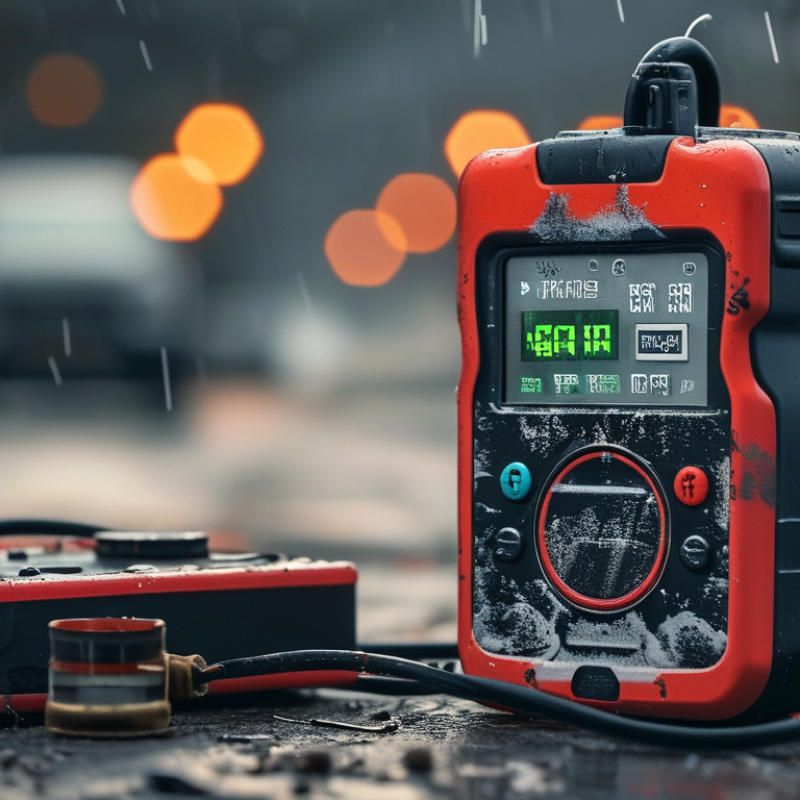
A vehicle battery checker is a diagnostic device that evaluates a battery’s electrical condition. It measures resting voltage, starting power, and sometimes charging performance. Basic models show voltage on a digital screen. Advanced testers apply a controlled load or analyze internal resistance. These measurements help indicate whether the battery is charged, weak, or nearing failure. It is not magic.
In practical use, the engine should usually be switched off before testing. A fully charged battery often shows about 12.6 volts at rest. A much lower reading may suggest discharge, aging, or an electrical drain. The checker can also estimate cranking ability by simulating the heavy demand of engine starting. A weak result may appear even when the lights still work. That difference is easy to miss. Temperature, dirty terminals, and loose cable connections can also affect the reading.
A battery checker cannot explain every starting problem. It may report low power when the real issue is poor charging or damaged wiring. For that reason, technicians compare the result with the vehicle’s symptoms and charging voltage. I would recheck an unusual reading after cleaning the terminals and allowing the battery to rest. No tester is perfect. Human judgment still matters. Even a good reading can change after several cold starts or repeated short trips.
What Is a Vehicle Battery Checker and How Does It Work?
A vehicle battery checker combines clamps, cables, a microprocessor, and a display. Some advanced models also include a temperature sensor. These components measure voltage, current response, and resistance inside the battery. The checker may compare results with the battery’s rated cold-cranking amps, or CCA. That rating indicates how much current the battery can deliver during a cold start.
A healthy battery usually shows about 12.6 volts after resting. Around 12.4 volts suggests partial charge, while readings near 12.0 volts require attention. A load test briefly demands current and observes voltage drop. Conductance testers use a smaller electrical signal to estimate internal resistance, state of charge, and state of health. Lower resistance often indicates stronger performance, but the estimate is not perfect. Temperature, loose terminals, and recent charging can distort results. That detail is easy to miss.
ADAC’s 2024 breakdown statistics attributed 44.1% of reported roadside failures to starter batteries. This figure reflects its regional vehicle population, not every market. Still, it shows why battery testing matters. A tester cannot inspect corrosion, damaged plates, or a weak ground connection by itself. Professional technicians should confirm unusual readings with a visual inspection and charging-system test.
Tips: Turn off the engine and accessories before testing. Let the battery rest when possible. Clean clamp contact matters. Record voltage, CCA, and temperature together. One reading can mislead.
What Is a Vehicle Battery Checker and How Does It Work?
A vehicle battery checker is a small diagnostic tool that measures battery condition. It does more than display voltage. A basic check begins with the engine switched off and the vehicle parked safely. The checker connects to the positive and negative terminals. Its clamps must touch clean metal. Poor contact can create a false reading.
The device measures resting voltage, then compares it with expected battery levels. Some advanced checkers apply a controlled electrical load. This imitates the heavy demand created when the engine starts. The tool observes how quickly the voltage drops. A healthy battery usually holds its voltage steadily. A weak battery may fall sharply. The screen can then show conditions such as good, weak, or replace soon. Results are useful, but not perfect.
Tips: Test after the vehicle has rested for several hours. A recent drive may raise the reading temporarily. Wipe dusty terminals before testing. Wear eye protection and avoid touching both terminals with metal objects. Check the battery temperature, too. Cold conditions can reduce performance. If the result seems unusual, repeat the test. One reading can mislead. A battery may pass today but struggle tomorrow, especially after repeated short trips. Record the voltage and test date. This simple habit helps reveal gradual decline and supports a more reliable maintenance decision.
| Step | What the Checker Does | Measurement or Input | Typical Result or Reference Value | Interpretation |
|---|---|---|---|---|
| 1 | Identifies the battery and test mode | Battery type, nominal voltage, and rated cold-cranking amps (CCA), when requested | Most passenger vehicles use a 12-volt lead-acid battery; common CCA ratings vary by vehicle | Correct settings help the tester compare the battery with the appropriate standard |
| 2 | Checks the battery terminals and connections | Terminal cleanliness, cable tightness, corrosion, and visible case damage | Terminals should be clean, secure, and free from cracks, swelling, or leakage | Poor connections can cause inaccurate readings and starting problems |
| 3 | Measures open-circuit voltage | Voltage with the engine off and electrical loads switched off | Approximately 12.6–12.8 V: fully charged; about 12.4 V: roughly 75% charged; about 12.2 V: roughly 50% charged; below 12.0 V: deeply discharged | Voltage mainly indicates state of charge, not complete battery health |
| 4 | Applies a controlled electronic load or conductance test | Internal conductance, estimated resistance, and voltage response under a calculated test load | A stronger battery maintains voltage and shows conductance close to its rated performance | The tester estimates available starting capability without cranking the engine for several seconds |
| 5 | Compares the measured value with the rated value | Measured CCA or conductance versus the battery’s stated CCA rating | A result near or above the rating generally indicates adequate starting performance | A substantially lower result suggests aging, sulfation, undercharging, or internal damage |
| 6 | Performs a starting-system check, when supported | Lowest battery voltage while the starter motor is cranking | A healthy 12-volt system commonly remains above approximately 9.6 V at about 20–25°C during cranking | A low cranking voltage may indicate a weak battery, poor cables, or excessive starter current |
| 7 | Checks the charging system, when selected | Voltage at the battery with the engine running and electrical loads operating | Many conventional 12-volt charging systems measure approximately 13.8–14.7 V, depending on temperature and vehicle design | Low voltage can suggest undercharging; unusually high voltage can indicate a regulation problem |
| 8 | Displays the diagnostic conclusion | Voltage, estimated CCA, state of charge, internal resistance, and test temperature | Common conclusions include “Good,” “Recharge and retest,” “Replace,” or “Check charging system” | The result is a decision aid and should be considered with battery age, symptoms, and vehicle specifications |
A vehicle battery checker measures voltage, starting strength, and sometimes internal resistance. Its screen may show “Good,” “Recharge,” or “Replace,” but these labels need context.
During engine cranking, voltage commonly should remain above 9.6 volts. These figures are practical guides, not absolute verdicts.
A “Good-Recharge” message often means the battery may still work, but its charge is low. A weak cold-cranking-amp result suggests difficulty starting in cold weather. Internal resistance can rise with age, heat, corrosion, or repeated short trips.

The U.S. Department of Energy reports that temperature extremes reduce battery performance and service life. The Battery Council International commonly places average automotive battery life near three to five years, although driving patterns can shorten it.
A tester can also misjudge a recently charged battery. That detail is easy to miss.
Tips:
Test after the vehicle rests for several hours. Clean corroded terminals first. Compare measured CCA with the battery’s rated CCA. If results conflict, repeat the test and inspect the charging system.
A healthy battery can still fail because of a faulty alternator or loose connection. My own cautious rule is simple: do not trust one number alone. Combine the tester result, battery age, starting behavior, and charging voltage before replacing anything.
A vehicle battery checker measures voltage, starting power, and sometimes battery health. Simple models show voltage. Advanced testers estimate cold-cranking performance and internal resistance. The test usually takes less than a minute. It does not replace a trained inspection.
Use a checker before a long trip, especially if the battery is more than three years old. Check it again before winter. Cold temperatures reduce available battery power, while engine oil becomes thicker. The U.S. Department of Energy notes that battery capacity can fall sharply in freezing conditions.
A checker is also useful after slow engine cranking, dim headlights, or repeated jump-starts. Test the battery after a vehicle has been parked for several weeks. The 2024 ADAC breakdown report recorded starter-battery problems in 44.1% of roadside failures. That figure makes routine testing practical, not excessive.
Test with the engine off, then compare the result with the battery’s rated specifications. A healthy reading can still hide a damaged cell. This is where many quick checks become misleading.
A second test after driving may reveal charging problems instead. If the voltage drops quickly, seek professional diagnosis.
My own caution is simple: one perfect reading should not create false confidence. Check the battery under realistic conditions, and record the date and result.

Sign up for our mailing list to stay informed and up to date with our latest news and products!
(905) 832 – 0600
2175-A Teston Road
Maple, Ontario
L6A 1T3
(780) 451 – 0238
24790 – 117 Avenue
Acheson, Alberta
T7X 6C2
(604) 882 – 1564
9511 – 194A Street
Surrey, British Columbia
V4N 4G4
(306) 955 – 6005
3926 Arthur Rose Avenue Saskatoon, Saskatchewan
S7P 0C9
(450) 687 – 2721
2750 Rue Bernard-Lefebvre
Laval, Quebec
H7C 0A5