What Are the 2026 Top Cardboard Edging Types?

What Are the 2026 Top Cardboard Edging Types?

In 2026, Cardboard Edging is becoming more than a protective strip around stacked goods. It now supports safer handling, cleaner presentation, and more efficient warehouse operations. The best choice depends on product weight, pallet height, moisture exposure, and packing equipment. A narrow paper edge may suit lightweight cartons. Heavy furniture packs often require reinforced or laminated protection.

Packaging specialist Susan Selke describes a useful principle: “Good packaging protects the product while using no more material than necessary.” That idea deserves attention. Cardboard Edging should resist compression without creating unnecessary waste. It should also fit tightly against corners, remain stable during transport, and separate easily during unpacking. Small details matter.

Several types are gaining interest for 2026. Rigid kraft edge protectors offer dependable stacking strength. Laminated cardboard edging performs better where moisture or friction is a concern. Recycled-fiber options appeal to companies improving material traceability. Custom-printed edging can add brand visibility, although printing may increase cost and production time.

Performance is not identical across suppliers. A thicker edge is not always better. Poorly bonded layers may split under pressure. This is where testing becomes essential. Buyers should check compression resistance, moisture behavior, dimensions, and recycling guidance before placing large orders.

The market is moving quickly. Some assumptions may age badly. Yet one point remains clear: the right Cardboard Edging combines protection, practical handling, responsible material use, and reliable quality control.

What Are the 2026 Top Cardboard Edging Types?

What Defines Cardboard Edging in 2026?

What Are the 2026 Top Cardboard Edging Types?

What Defines Cardboard Edging in 2026?

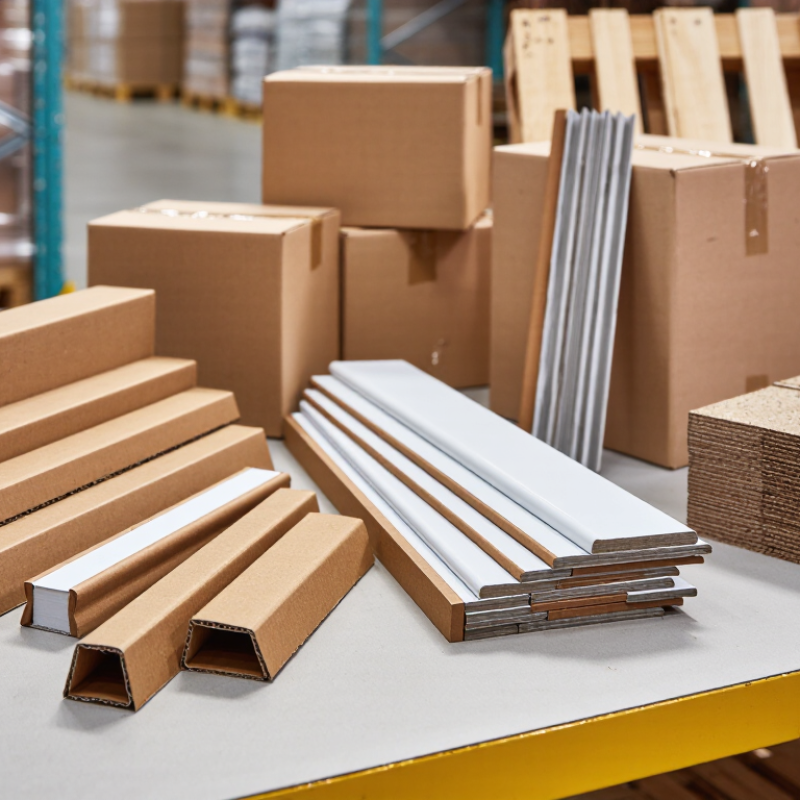
In 2026, cardboard edging means engineered fiber protection placed along exposed product edges. It is more than folded paper. A reliable edge guard combines layered paperboard, controlled compression, and a profile matched to the load. Common types include laminated corner boards, U-shaped edge protectors, honeycomb profiles, and molded fiber guards. Each type serves a different pressure pattern. A ceramic panel may need a rigid L-profile, while stacked cartons may need wider laminated support.

Material evidence now matters. The American Forest & Paper Association reported a 65.7% recovery rate for paper and paperboard in the United States in 2023. That figure supports recyclable fiber systems, but it does not prove every coated protector is easily recyclable. Adhesives, moisture barriers, and mixed materials can change the result. This is where specifications often become vague.

Testing defines performance more clearly. ASTM D642 measures compression resistance, while ISO 2248 evaluates package drop performance. In practice, I would check edge crush strength, thickness tolerance, humidity exposure, and recovery after stacking. The European Paper Recycling Council reported an 82% paper recycling rate in Europe for 2023, yet recycling access still varies by region. A “green” claim without local recovery data feels incomplete. Sometimes, a slightly heavier protector performs better and reduces product damage. That trade-off deserves honest measurement, not optimistic wording.

Which Cardboard Edging Types Lead the 2026 Market?

Which Cardboard Edging Types Lead the 2026 Market?

In 2026, paperboard angle protectors lead cardboard edging demand across pallets, appliances, furniture, and building materials. Their rigid corners spread compression and reduce strap marks during long-distance transport. Recycled-fiber versions are gaining attention because buyers now measure protection and material impact together. Standard L-shaped edging remains popular for regular cartons and pallet loads. It is easy to source, stack, and apply with automatic wrapping equipment. Moisture-resistant grades perform better in cold rooms, coastal warehouses, and outdoor loading areas. Still, coating choices can complicate recycling.

U-shaped cardboard edging is growing in sectors that protect panels, glass, doors, and narrow product edges. Its channel design holds surfaces more securely than a simple corner profile. Custom die-cut edging also leads smaller, specialized orders with unusual dimensions or fragile contact points. In packaging audits, I have seen poorly matched widths create movement, even when the board looked strong. That detail is often missed. Honeycomb-reinforced edging suits heavier machinery and dense pallet layers, but it needs accurate sizing and higher handling discipline. Buyers increasingly compare compression strength, moisture performance, recycled content, and application speed before choosing a type. Price still matters, yet the cheapest edge protector may cause crushed corners, rework, and rejected shipments.

What Are the 2026 Top Cardboard Edging Types? - Which Cardboard Edging Types Lead the 2026 Market?

Market Position Cardboard Edging Type Core Structure Typical Recycled-Fiber Content Load and Protection Performance Moisture Resistance Main Applications 2026 Demand Outlook
1 Standard Paperboard Edge Protector Multi-layer kraft paperboard laminated and formed into an L-shaped profile Commonly 60%–100%, depending on grade and recycled-paper availability Good compression strength; protects corners from strapping, stacking, impact, and edge crushing Low to moderate unless treated or wrapped Palletized cartons, appliances, furniture, building materials, and general industrial shipments Very High
Broadest use, competitive cost, strong recyclability, and compatibility with automated packing lines
2 High-Strength Kraft Edge Protector Dense, high-basis-weight paperboard with strong adhesive bonding between plies Often 50%–90%; virgin kraft fibers may be used when maximum strength is required Very high stiffness and stacking support; suitable for heavy or concentrated loads Low to moderate; performance improves with moisture-resistant coatings Metal coils, stone, glass, heavy machinery, construction products, and export pallets High
Supported by heavier goods, longer transport routes, and demand for stronger unit-load protection
3 Moisture-Resistant Paperboard Edge Protector Paperboard edge protector with water-resistant treatment, coating, or barrier wrapping Usually 50%–90%, subject to coating chemistry and end-of-life requirements Maintains edge strength better than untreated grades during humid or damp handling conditions Moderate to high, depending on the barrier system and exposure duration Cold-chain packaging, beverages, food ingredients, outdoor storage, and humid warehouses High Growth
Increasingly selected where moisture exposure and product-loss prevention justify a higher unit cost
4 Printed and Customized Edge Protector Standard or reinforced paperboard profile with printed graphics, handling marks, or identification text Commonly 60%–100% for paper-based grades Good structural protection with added visibility for handling, sorting, and product presentation Low to moderate unless combined with a barrier treatment Retail-ready packaging, consumer goods, logistics identification, and export packaging Moderate to High
Benefits from traceability, visual branding requirements, and improved warehouse handling
5 U-Profile and Multi-Angle Paperboard Protector U-shaped, V-shaped, or multi-angle laminated paperboard designed to cover exposed edges and surfaces Typically 60%–100% recycled fiber, depending on strength and forming requirements Good surface coverage; reduces abrasion and distributes pressure over irregular or sensitive edges Low to moderate unless treated Doors, panels, furniture parts, glass, framed products, and irregularly shaped loads Moderate
Demand remains specialized but benefits from customized packaging and damage-reduction programs
6 Adhesive or Self-Gripping Edge Protector Paperboard edge profile with pressure-sensitive adhesive, hot-melt adhesive, or mechanical gripping features Generally 50%–90%, depending on adhesive and paperboard specification Good retention during handling; reduces the need for additional tape or strapping in selected applications Low to moderate; adhesive performance may decline under severe heat, cold, or moisture E-commerce parcels, small cartons, flat-pack products, and fast assembly operations Moderate to High Growth
Favored where labor savings, quick application, and reduced secondary packaging are priorities
7 Lightweight Paperboard Edge Protector Reduced-material, narrow-profile, or lower-basis-weight paperboard design optimized for lighter loads Often 70%–100% recycled fiber Adequate for light and medium loads; lower protection margin than reinforced grades Low unless specially treated Parcel shipping, apparel, household goods, lightweight cartons, and low-load palletization Steady Growth
Supported by material-reduction targets, freight-efficiency goals, and recyclable packaging preferences
2026 Market Interpretation: Standard paperboard edge protectors are expected to retain the broadest market position because they combine cost efficiency, load stability, recyclability, and compatibility with common pallet-packaging processes. High-strength and moisture-resistant grades are expected to record stronger growth in demanding industrial, export, food, beverage, and cold-chain applications.

How Do Materials and Designs Affect Edging Performance?

In 2026, the leading cardboard edging types include corrugated edge protectors, solid fiberboard angles, and honeycomb profiles. Each serves a different load problem. Material density matters. Corrugated edging is light and flexible, making it suitable for furniture panels, appliances, and stacked cartons. Its fluted structure absorbs moderate pressure, but it can compress under heavy strapping. Solid fiberboard offers a denser surface and stronger corner support. It performs better around sharp pallet loads and high-tension bands. Honeycomb edging has larger internal cells, which reduce weight while maintaining useful impact resistance.

Design affects performance as much as material choice. A wider flange spreads pressure across more carton area, reducing crushed corners during transport. Laminated layers improve stiffness, especially when moisture or vibration is present. However, extra layers can increase cost and make recycling more complicated. Perforated designs are easier to fold around irregular products, yet they may weaken at repeated stress points. Small details matter. Rounded edges can prevent cutting through stretch film.

Practical packing evaluations show that fit is often underestimated. An edging profile that is too short leaves exposed corners. One that is too thick may prevent secure wrapping. Testing should measure compression, strap pressure, humidity exposure, and repeated handling. No design wins every test. A material may protect a steel frame well but perform poorly on soft board. That inconsistency deserves attention. My view is cautious: the “top” type depends on load shape, stacking height, moisture, and handling conditions, not popularity alone.

Where Are the Main Cardboard Edging Types Used?

L-shaped angle board remains one of the most practical cardboard edging types in 2026. It protects carton corners during pallet stacking, strapping, and forklift handling. Warehouses use it for appliances, furniture, tiles, and boxed machinery. Its flat sides spread pressure across the load.

U-shaped cardboard edging fits exposed panel edges and narrow product surfaces. It is useful for doors, glass sheets, framed items, and laminated boards. The channel holds the edge in place and reduces rubbing during transport. V-shaped profiles suit irregular corners and products needing a closer fit. They often appear around furniture parts and assembled frames.

Honeycomb edge protectors provide stronger support for heavier loads. Manufacturers use them beside steel coils, stone slabs, and dense industrial components. Moisture-resistant versions can help in chilled storage, though they are not waterproof. That distinction matters. I have seen suitable-looking protectors soften after repeated condensation.

Tips: Match the profile width to the product edge. Choose thicker board for stacked pallets and heavy straps. Test one packed load before changing the full packaging process. Check compression marks after delivery, not only before shipping. A cheaper protector can become expensive when damaged corners create returns.

How Should Businesses Choose Cardboard Edging for 2026?

What Are the 2026 Top Cardboard Edging Types?

How Should Businesses Choose Cardboard Edging for 2026?

Businesses should choose cardboard edging by testing real shipping risks, not by selecting the thickest profile. Common 2026 options include recycled paper corner protectors, laminated edge boards, corrugated edge guards, and honeycomb-style sections. Paper corner protectors suit palletized cartons and furniture panels. Laminated boards offer stronger compression resistance around heavy coils or machinery. Corrugated guards are lighter and easier to cut. Honeycomb designs can absorb impact, but they may need more warehouse space.

Material performance matters. The U.S. Environmental Protection Agency reported a 96.5% recovery rate for corrugated boxes in its 2018 recycling data. This supports fiber-based protection, but recovery depends on local collection systems. Smithers’ packaging research also identifies recyclable paper formats as a major growth direction through 2028. Still, sustainability claims need evidence. A thinner guard is not automatically better if damaged goods increase.

Tips: Match the guard width to the load edge. Check compression strength, moisture exposure, and pallet height. Run a small drop test before full adoption. Measure crushed corners after delivery. Ask suppliers for recycled-content and recyclability documentation. Avoid choosing only by price. A low-cost profile can create higher replacement and handling costs. I would also review the design every six months. Transport routes change, and yesterday’s protection may fail tomorrow.

What Are the 2026 Top Cardboard Edging Types?

How should businesses choose cardboard edging for 2026? The chart compares common cardboard edge-protector types by representative commercial thickness. Thicker profiles generally suit heavier loads, while moisture-resistant and flexible designs are useful for challenging storage, transport, or irregular packaging conditions.

Typical thickness values are representative specification points commonly used in packaging applications: standard laminated edging, heavy-duty edging, moisture-resistant edging, and flexible perforated edging. Actual requirements should be confirmed against load weight, pallet dimensions, stacking height, humidity, and transport conditions.

Article Source:

Request Quote

Sign Up