2026 Top 8 PVC Pipe Types for Global Buyers
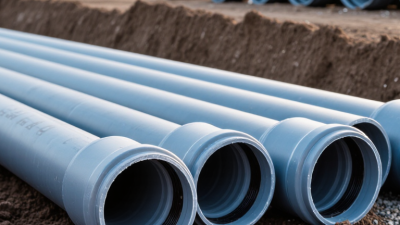
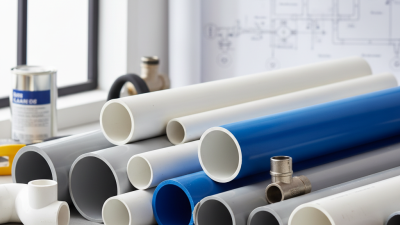
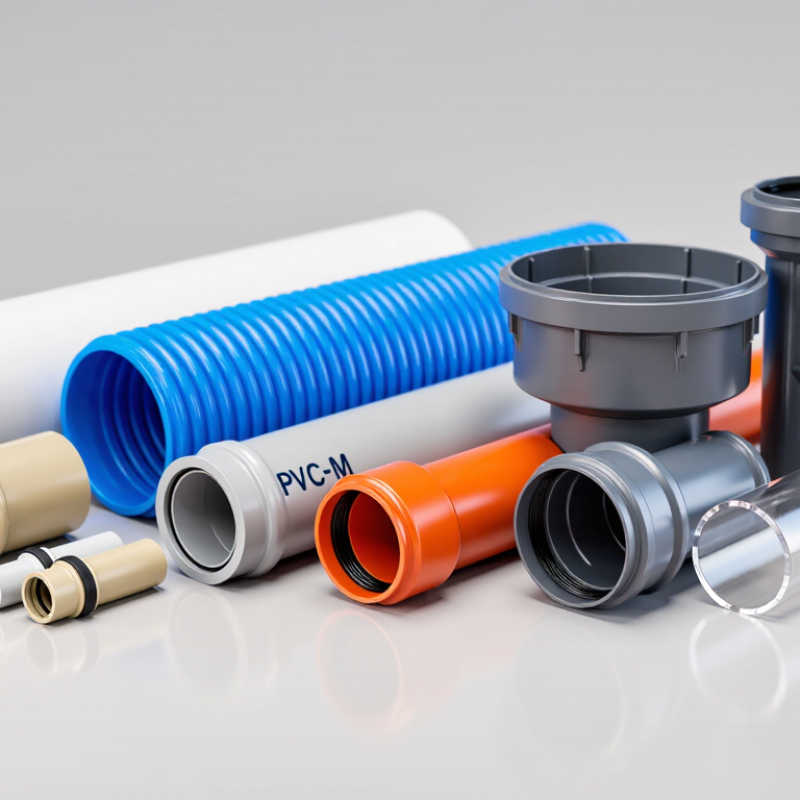
Choosing the right pipe begins with the project, not the product label. In 2026, global buyers will compare pressure ratings, temperature limits, joint systems, chemical resistance, and total installation cost. The phrase 8 pvc pipe covers several practical options, including uPVC, CPVC, PVC-O, PVC-M, conduit, drainage, pressure, and clear PVC pipes. Each type serves a different working environment.
Dr. Steven Folkman, a respected buried-pipe researcher, has emphasized, “PVC pipe performance depends on the soil, installation, and design—not the material alone.” This principle remains easy to overlook. A pipe may look strong on a warehouse floor. It can still fail after poor bedding, incorrect alignment, or excessive sunlight exposure. Buyers should examine product standards, test reports, wall thickness, connection methods, and supplier experience before placing large orders.
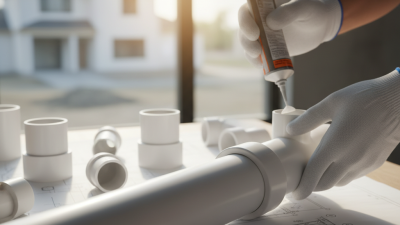
This guide compares the 2026 top eight PVC pipe types through a buyer’s practical lens. It considers water distribution, irrigation, electrical protection, industrial processing, drainage, and chemical service. Small details matter. A solvent-welded joint needs clean, dry surfaces. A buried pipe needs suitable backfill. CPVC may handle hotter fluids, while standard PVC often offers better cost control for ordinary cold-water systems.
The ranking is not absolute. That is important. Local standards, climate, shipping conditions, and installation skills can change the best choice. Some specifications also appear attractive but lack complete documentation. Careful buyers should ask harder questions, request samples, and verify performance claims independently.
PVC Pipe Basics and Selection Criteria for Global Buyers
PVC Pipe Basics and Selection Criteria for Global Buyers
In 2026, global buyers should compare PVC pipes by application, not appearance. The eight common categories include pressure pipe, drainage pipe, sewer pipe, conduit, irrigation pipe, potable-water pipe, foam-core pipe, and CPVC pipe. Each category has different temperature, pressure, and chemical limits. Start with the fluid, operating temperature, pressure, soil condition, and expected service life.
A bright surface proves little.
Standards matter.
Check ISO 1452 for water-pressure systems, ISO 4435 for underground drainage, and ASTM requirements where projects specify them. Confirm nominal diameter, wall thickness, pressure class, impact resistance, joint design, and dimensional tolerances.
For drinking-water projects, request verified test evidence for migration, taste, and odor. Certification should match the destination market, not merely the factory’s domestic approval.
Environmental data also deserves attention.
The PlasticsEurope Plastics—The Fast Facts 2024 report recorded 413.8 million tonnes of global plastics production in 2023. The OECD Global Plastics Outlook reported 353 million tonnes of plastic waste in 2019, with only 9% recycled. Buyers should therefore ask about recycled content, additives, packaging, and end-of-life options.
Recycled PVC can be useful in suitable applications, but it is not automatically appropriate for potable water or high-pressure service.
I have seen specifications fail because buyers selected by price alone. That mistake remains expensive.
Type 1–2: PVC-U and CPVC Pipes for General and Hot-Water Systems
2026 Top 8 PVC Pipe Types for Global Buyers
Type 1–2: PVC-U and CPVC Pipes for General and Hot-Water Systems
PVC-U, or unplasticized PVC, suits cold-water distribution, drainage, irrigation, and many industrial lines. It is rigid, lightweight, corrosion-resistant, and relatively simple to install. In project inspections, clean cuts and properly prepared joints often matter as much as pipe quality. However, PVC-U is generally unsuitable for continuous hot-water service. Buyers should check pressure ratings, wall thickness, UV exposure, and local compliance requirements before ordering.
CPVC is designed for higher-temperature water systems, including domestic hot-water distribution. Its chlorine-modified structure provides better heat resistance than standard PVC-U. Yet temperature ratings can change with pressure, fitting design, and installation conditions. Thermal expansion also needs attention, especially across long indoor runs. A pipe that performs well in a test room may behave differently near boilers, sunlight, or poorly supported bends.
Tips: Confirm the operating temperature first. Check both pipe and fitting ratings. Use compatible joining materials. Protect outdoor PVC-U from prolonged sunlight. Do not assume one specification fits every market. A small oversight can become a costly leak.
Type 3–5: PVC-O, Flexible PVC, and Drainage Pipes
PVC-O, flexible PVC, and drainage pipes serve different purchasing problems. PVC-O uses molecular orientation to improve strength, impact resistance, and hydraulic efficiency. ISO 16422 specifies requirements for oriented PVC pressure pipes. Buyers should verify pressure class, operating temperature, joint design, and installation records. A pipe can look advanced yet fail when fittings are mismatched.
Flexible PVC suits irrigation connections, protective sleeves, low-pressure lines, and applications requiring repeated bending. Check Shore hardness, tensile strength, elongation, plasticiser migration, and ultraviolet resistance. The 2024 PVC pipes assessment by Grand View Research valued the global market at about USD 53.7 billion in 2023, with projected growth near 4.7% annually through 2030. Growth does not remove quality gaps. Some suppliers still provide incomplete test data.
Drainage pipes usually depend on gravity, not pressure. Buyers should compare ring stiffness, wall structure, chemical resistance, socket tolerance, and bedding requirements. EN 1401 covers underground non-pressure drainage and sewerage pipes made from unplasticised PVC. MarketsandMarkets estimates the PVC pipes market could grow from roughly USD 56 billion in 2025 to USD 70 billion by 2030. Estimates differ. That matters. For a real project, soil loading, rainfall intensity, pipe diameter, and maintenance access deserve more attention than a catalogue’s cheapest price.
2026 Top 8 PVC Pipe Types for Global Buyers — Types 3–5
This chart compares indicative tensile-strength ranges for PVC-O, flexible PVC, and drainage pipes. PVC-O and rigid drainage pipes generally provide higher mechanical strength, while flexible PVC prioritizes bendability and impact absorption. Actual performance depends on formulation, temperature, wall thickness, orientation, and applicable standards.
Data shown in MPa and intended for general global-buyer orientation, not as a product specification.
Type 6–8: Electrical Conduit, Pressure, and Sewer PVC Pipes
2026 Top 8 PVC Pipe Types for Global Buyers
Type 6–8: Electrical Conduit, Pressure, and Sewer PVC Pipes
Type 6: Electrical Conduit PVC Pipe
Electrical conduit PVC protects cables from moisture, impact, and soil chemicals. It is lightweight, cuts cleanly, and resists corrosion near coastal sites. Buyers should check wall thickness, bending behavior, flame performance, and fitting compatibility. A conduit can look strong enough. Short answer: not always. Heat and careless backfilling may cause deformation. Measure cable fill before ordering, not after installation. Local electrical codes and project specifications remain decisive.
Type 7: Pressure PVC Pipe
Pressure PVC carries treated water, irrigation water, and selected industrial fluids. Its smooth inner surface reduces friction losses, but joint quality controls performance. Confirm pressure class, temperature limits, diameter system, and gasket material. Solvent cement needs clean, dry surfaces. Dirt inside one socket can create a slow leak. Field inspections sometimes find pressure tests passing briefly, then failing after thermal movement. That detail is easy to underestimate.
Type 8: Sewer PVC Pipe
Sewer PVC is designed for gravity drainage, not every pressurized application. Its smooth bore helps move wastewater and limits sediment buildup. Buyers should review stiffness class, ring stiffness, diameter, joint deflection, and bedding requirements. Poor trench support remains a common failure source. A strong pipe cannot correct weak installation. Inspect socket cleanliness and line grade before covering the trench. Fit matters. Request test reports, dimensional tolerances, and traceable batch records for reliable comparisons.