Choosing 10 CPVC fittings suppliers is not a simple price comparison. For global buyers, material consistency, pressure ratings, dimensional accuracy, and export documentation can shape project performance. Grand View Research’s CPVC market analysis estimated the market at USD 4.15 billion in 2023 and projected further growth through 2030. Market forecasts vary by scope, so treat them as context, not a purchasing guarantee. The U.S. EPA’s 2023 Drinking Water Infrastructure Needs Survey estimated USD 625 billion in U.S. drinking-water infrastructure needs over 20 years. That investment highlights the practical importance of dependable piping components. Details matter.
This guide examines suppliers through factors buyers can verify: product range, technical documentation, manufacturing capability, quality controls, and support across regions. For each candidate, buyers should check whether product specifications align with the relevant project requirements, including applicable standards such as ISO 15877 or ASTM D2846. A standard reference alone does not prove that every product or shipment complies. Request current test reports, traceability details, and clear fitting dimensions before comparing quotations. Also consider lead times, packaging, replacement availability, and communication across time zones. A low unit price may not account for delays or inconsistent batches. There is no perfect shortlist. Supplier claims deserve scrutiny, and some details remain difficult to compare publicly. The following 10 suppliers offer global buyers a starting point for careful evaluation of cpvc fittings, not a substitute for project-specific technical review.

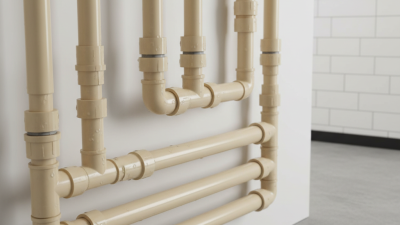
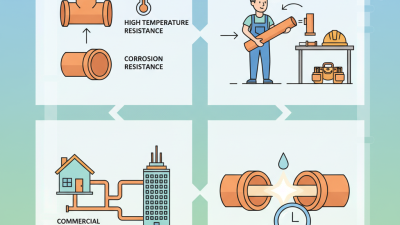
CPVC fittings connect pipes used in hot- and cold-water systems, commercial buildings, and selected industrial processes. CPVC is a thermoplastic material made more heat-resistant than standard PVC through chlorination. Its useful temperature and pressure limits still depend on the system design, fitting dimensions, and operating conditions. Check the manufacturer’s published data rather than relying on a general rule.
Applications vary by region. In a residential plant room, elbows and tees may route warm water around a boiler and through narrow service spaces. In an industrial facility, CPVC components may carry compatible chemicals, but compatibility must be verified for the exact fluid, concentration, and temperature. One material does not suit every process. That detail is easy to overlook.
Installation quality matters. Cut pipe ends square, remove burrs, and use solvent cement specified for the pipe system. Allow the joint to cure for the stated time before pressure testing; rushing this step can cause leaks. Buyers should also compare pressure ratings, dimensions, documentation, and local project requirements. Standards and accepted installation practices differ across markets, so confirm them with qualified engineers or local authorities. A fitting can look right and still be unsuitable. Check the markings and records.
A supplier’s catalogue can look convincing; the harder test is whether every fitting matches the job’s pressure, temperature, and installation conditions.
Grand View Research estimated the global CPVC market at USD 5.2 billion in 2023 and projected an 8.2% compound annual growth rate through 2030. That growth makes supplier comparisons more important, not less.
Ask for current technical data sheets, batch-level traceability, and test records—not just a general certificate. Small details matter.
Check that product specifications align with relevant standards, such as ASTM D2846/D2846M for CPVC hot- and cold-water distribution systems. For potable-water applications, confirm applicable NSF/ANSI/CAN 61 certification and its scope.
Request documented pressure and temperature limits, dimensional tolerances, and compatibility guidance for solvent cement. A polished certificate is not enough.
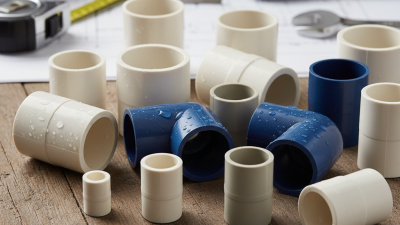
Compare sample fittings for cleanly formed sockets, consistent wall thickness, and readable markings. Also assess how the supplier handles nonconforming batches, replacement parts, and shipping delays.
Those answers can be revealing. I would still verify documents with the issuing body; supplier paperwork alone leaves room for doubt.
Global CPVC fitting suppliers differ more in capability than catalogue size. North American manufacturers often emphasize pressure-rated systems and technical documentation. European producers tend to foreground material traceability and test records. High-volume Asian factories may offer broad mold ranges and competitive lead times. These are useful patterns, not guarantees; verify each supplier’s actual plant and product scope.

Grand View Research valued the global plastic pipes market at USD 61.2 billion in 2023 and forecast 5.5% annual growth from 2024 to 2030. UN DESA’s World Urbanization Prospects projects that 68% of the global population will live in urban areas by 2050. These figures indicate sustained infrastructure demand, but they do not prove that any supplier can meet a project’s CPVC specifications.
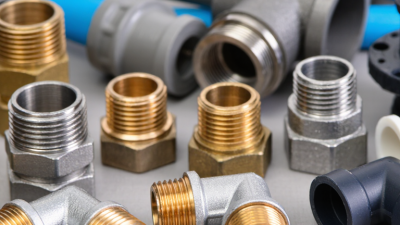
For global buyers, compare socket dimensions, pressure ratings, temperature limits, and compatibility with the specified pipe system. Ask for current test reports, batch traceability, and sample fittings; inspect molded surfaces for flash, uneven sockets, or visible defects. A distributor with regional stock can shorten delivery, while a factory-direct supplier may provide more production detail. Neither route is automatically safer. One weakness in many supplier profiles is vague claims about standards: request the exact standard and test evidence before placing a large order.
A material-level reference for global buyers comparing CPVC fittings with standard PVC fittings.
CPVC is commonly rated for continuous service up to about 93°C (200°F), compared with about 60°C (140°F) for standard PVC. Actual allowable temperatures depend on the specific fitting, pressure, application, and manufacturer specifications.
A useful comparison starts with the fitting itself. Check whether suppliers offer the sizes, pressure ratings, and transition fittings your project needs. For hot- and cold-water systems, ask for conformity records against the relevant CPVC product standards, such as ASTM D2846, and verify potable-water approvals where required.
Product certificates matter. A catalogue alone does not prove performance.
Certification claims need careful reading. The ISO Survey 2022 recorded 1,265,216 valid ISO 9001 certificates across 189 countries and economies. This indicates broad adoption of quality-management systems, not that every fitting is independently certified.
Request current test reports, traceability details, and the scope of each certificate. It is easy to miss that distinction.
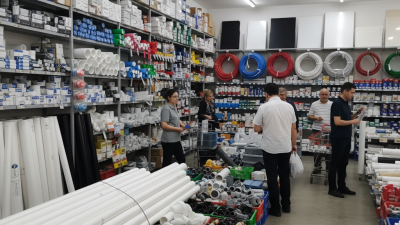
Market reach is more than a list of export destinations. The World Bank’s Logistics Performance Index 2023 assessed 139 economies, including customs, shipment timing, and logistics competence. Ask suppliers for delivery records to your region, local stock locations, and clear lead times for replacement parts.
A supplier may serve many markets yet still struggle with one remote port. That deserves a closer look.
Compare packaging protection, technical support across time zones, and whether documents match the destination’s project requirements. Be cautious: published reach figures rarely show how reliably small orders arrive.
Global buyers should compare CPVC fittings suppliers on documented performance, not polished catalogs alone. Start with the operating conditions: fluid type, temperature, pressure, and installation environment. Then check whether fittings match the pipe dimensions and joining method used on site. A mismatch in socket depth or wall thickness can slow installation and create costly rework.
Ask for evidence. Request current test reports, material traceability, and clear product specifications. Confirm that stated standards and certifications apply to your destination market and exact fitting range. A sample order can reveal details a datasheet misses, such as molding consistency, clean socket edges, and readable markings. Small details matter. Check how the supplier handles batch records and product changes, too.
Reliability includes communication and delivery. Ask for realistic lead times, minimum order quantities, packaging details, and contingency plans for delayed shipments. For a large project, verify production capacity against your schedule rather than relying on a broad promise. Compare responses to the same technical questions; vague answers deserve follow-up. Price still counts, but the lowest quote may exclude testing, suitable packaging, or dependable after-sales support. No supplier is perfect, and one overlooked assumption can affect the whole order. A written specification helps both sides catch those gaps early.

Sign up for our mailing list to stay informed and up to date with our latest news and products!
(905) 832 – 0600
2175-A Teston Road
Maple, Ontario
L6A 1T3
(780) 451 – 0238
24790 – 117 Avenue
Acheson, Alberta
T7X 6C2
(604) 882 – 1564
9511 – 194A Street
Surrey, British Columbia
V4N 4G4
(306) 955 – 6005
3926 Arthur Rose Avenue Saskatoon, Saskatchewan
S7P 0C9
(450) 687 – 2721
2750 Rue Bernard-Lefebvre
Laval, Quebec
H7C 0A5