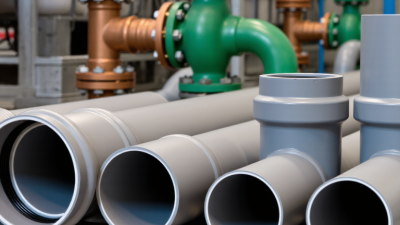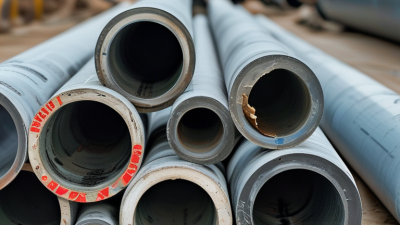
Choosing a reliable supplier for schedule 80 pvc pipe takes more than comparing prices or catalog photos. Wall thickness, pressure ratings, dimensions, and material specifications all affect whether a product suits a particular system. A pipe that looks substantial on a warehouse floor may still be wrong for the fluid, temperature, or installation conditions. Details matter.
This guide introduces ten manufacturers in China and offers practical points for evaluating their products and capabilities. It is a starting point, not a universal ranking. Manufacturer names and product claims should be checked against current company records, technical data sheets, and project requirements. Look for clear information on dimensions, applicable standards, quality-control procedures, batch traceability, and available test reports. Ask how the supplier handles samples, custom specifications, packaging, and delivery schedules. These answers can reveal more than a polished brochure.
Comparisons also need context. A low quotation may exclude testing, fittings, or export packaging, while a short lead time may depend on stock availability. Confirm compatibility with the intended application and consult qualified engineering professionals where needed. Even a careful shortlist has limits. We should acknowledge that. Product ranges and manufacturing capabilities can change, so verify important details directly before placing an order.
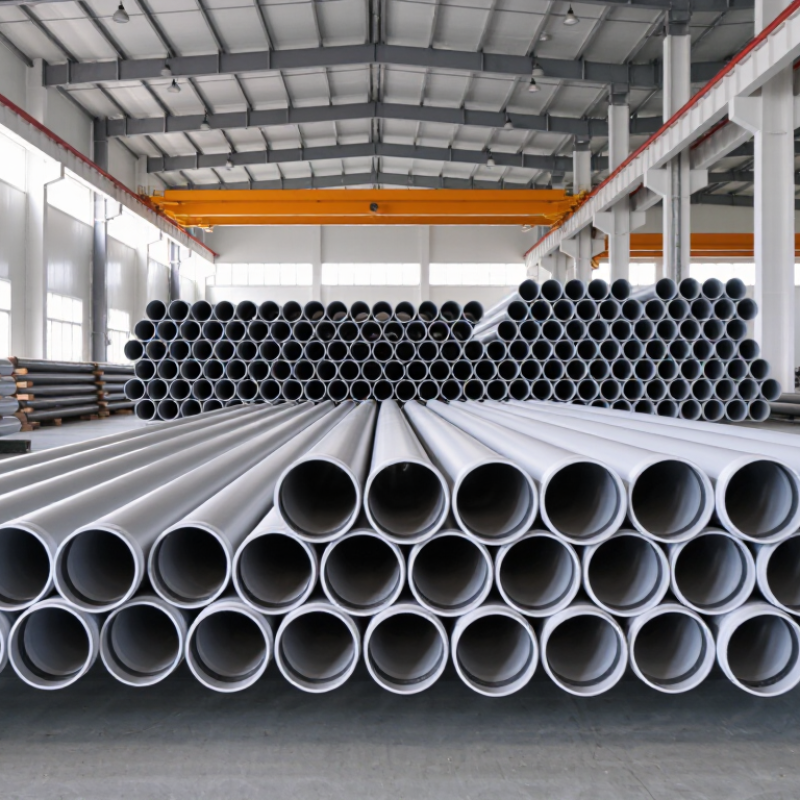
For a nominal 1-inch Schedule 80 PVC pipe, ASTM D1785 lists a 1.315-inch outside diameter and a 0.179-inch minimum wall dimension. Subtracting twice the wall thickness gives a nominal inside diameter of about 0.957 inch. That difference matters: the pipe is not one inch wide inside. A caliper at a cut end can make the size concrete, though production tolerances mean a single measurement should not replace the standard.
The thicker wall helps distinguish Schedule 80 from thinner-walled schedules, but it also leaves less room for flow. The Plastics Pipe Institute’s Handbook of PVC Pipe discusses how pipe dimensions and operating conditions affect design; pressure capacity must be checked for the specific temperature, fittings, and service conditions. Small details count. A rough cut or a poorly prepared joint can undermine an otherwise sound installation. I would also verify the current ASTM table before ordering: a familiar nominal size can hide an inconvenient inside diameter.
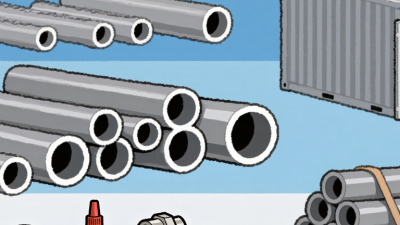
When comparing China’s top Schedule 80 PVC pipe manufacturers, look beyond catalog size. Check whether each supplier offers a consistent range of diameters, pressure ratings, fittings, and compatible valves. Ask for wall-thickness records and recent test reports, not just a product sheet. Capacity claims need context: confirm monthly output, production lines, and lead times for the exact sizes you need. Numbers need context.
Export reach is more than a list of destination countries. Review shipment history, packaging details, and the supplier’s experience preparing export documents. UN Comtrade data under HS code 391723 can help buyers examine trade in rigid plastic pipes, though the code covers more than Schedule 80 PVC. OECD’s Global Plastics Outlook (2022) estimates global plastics production reached 460 million tonnes in 2019. That figure describes the wider plastics industry, not PVC pipe alone. A neat spreadsheet can still mislead.
Tips: Request a sample, dimensional inspection results, and a trial order before scaling up. Compare like with like: pipe diameter, length, test conditions, and delivery terms. If a supplier’s capacity sounds unusually high, ask how it is calculated. I would not rely on one impressive factory visit.
A credible ranking of China’s Schedule 80 PVC pipe manufacturers should begin with evidence, not catalog claims. Check whether the offered pipe is specified to ASTM D1785, including nominal size, schedule, dimensions, and applicable pressure ratings. Ask for current product data and confirm that markings on sample pipe match the documents. Details matter.
Quality systems deserve equal attention. Review the manufacturer’s documented inspection process, equipment calibration records, and procedures for handling nonconforming products. A certificate alone is not enough; verify its issuing body, validity dates, and scope. Look for batch traceability from resin and production date to finished-pipe inspection. Small gaps can reveal bigger problems.
Test records make the comparison more practical. Request recent reports tied to identifiable production lots, and check that methods, results, and acceptance limits are clearly stated. Where possible, compare report details with samples and purchase specifications. A ranking should reward consistent, traceable evidence over polished presentations. No checklist is perfect. Records may be incomplete, and a single sample cannot represent every shipment, so note uncertainties rather than hiding them.
This is a manufacturer-evaluation framework, not a verified ranking of specific companies. No manufacturer-specific claims are made. Rank candidates only after reviewing current, product-specific documentation. ASTM D1785 covers PVC plastic pipe in Schedule 40, 80, and 120; it is a product standard, not a manufacturer certification.
| No. | Ranking criterion | Weight | Evidence to verify | Evaluation rule |
|---|---|---|---|---|
| 1 | ASTM D1785 product conformity | 20% | Current product data sheet, applicable standard edition, and product-specific declaration or test documentation. | Confirm the offered pipe is Schedule 80 PVC and that the claimed scope and documentation match the supplied product. |
| 2 | Test-record completeness and validity | 15% | Dated reports identifying the sample, pipe size, test method, results, laboratory, and report number. | Give credit for traceable, relevant reports; treat missing, expired, or unidentifiable records as unverified. |
| 3 | Dimensions and dimensional control | 12% | Published Schedule 80 dimensions and inspection records for outside diameter, wall thickness, and length. | Compare measurements and tolerances with the applicable standard edition and purchase specification. |
| 4 | Pressure-performance testing | 12% | Applicable pressure or burst-test results, test conditions, sample details, and acceptance criteria. | Check results against the relevant requirements; do not infer a pressure rating from the Schedule designation alone. |
| 5 | Quality-management system | 10% | Valid quality-system certificate, its scope, issuing or accreditation details, and the certified site. | Verify certificate status and scope independently; an ISO 9001 certificate does not by itself prove pipe conformity. |
| 6 | Batch traceability and production records | 10% | Lot or batch identifiers linked to production dates, material records, inspections, and shipment documents. | Confirm that a delivered pipe can be traced back to its production and quality records. |
| 7 | PVC compound and material controls | 6% | Material specifications, incoming-material checks, and records demonstrating control of the compound used. | Assess documented controls and consistency with the product’s intended application and applicable requirements. |
| 8 | Pipe marking and product identification | 5% | Product samples or photographs showing required identification, manufacturer traceability, size, and standard markings as applicable. | Check markings against the applicable standard and purchase requirements. |
| 9 | Application-specific third-party certification | 5% | Current certification or listing for the exact product and intended use, where required by the project or market. | Apply only when relevant. For drinking-water applications, verify the applicable health-effects requirements; do not treat certification as universally required. |
| 10 | Nonconformance and corrective-action controls | 5% | Documented inspection procedures, nonconformance handling, corrective-action records, and audit evidence. | Evaluate whether issues are documented, investigated, corrected, and followed up systematically. |
| Total weighting | 100% | Use a consistent scoring scale and retain the evidence reviewed for each candidate. | ||
Ranking note: Verify documents with the issuing organization or testing laboratory where practicable. Confirm the applicable ASTM edition, product size, intended service, and local regulatory requirements before purchase.
For a 2-inch Schedule 80 PVC pipe, the specified wall thickness is 0.218 inch. The nominal size does not equal the pipe’s outside diameter: it is typically 2.375 inches. Subtracting both wall sections gives an approximate inside diameter of 1.939 inches. That smaller opening matters when estimating flow or checking clearance. Small differences can affect fit.
Schedule 80 walls are thicker than Schedule 40 walls of the same nominal size. This can provide greater pressure capacity under specified conditions, but the actual rating depends on temperature, pipe material, and applicable standards. Do not choose a pipe by schedule alone. Check the product’s technical data and confirm that fittings are designed for the same nominal size and schedule. I have seen dimensions treated as interchangeable; they are not always a safe assumption.
Tips: Use calipers to check sample dimensions when fit is critical, and compare them with the supplier’s specification. Allow for measurement tolerances. Keep the pipe end square, remove burrs, and follow the cement manufacturer’s instructions. A rushed joint can undermine careful dimension checks.
For buyers comparing China’s top Schedule 80 PVC pipe manufacturers, start with the intended service, not the catalogue headline. Schedule 80 is commonly selected for industrial water, chemical handling, and exposed piping where a thicker wall is useful. But “Schedule 80” alone does not confirm suitability. Check the pressure table for the exact diameter, operating temperature, and fluid. PVC pressure capacity decreases as temperature rises. Confirm joint type and installation method, too.
Ask suppliers for test reports tied to production batches, dimensional records, and traceable resin and pipe markings. ASTM D1785 defines requirements for Schedule 40, 80, and 120 PVC pipe; it does not replace local approval. For drinking-water use, verify applicable NSF/ANSI/CAN 61 certification and the project’s own code requirements. A certificate should match the product and factory being offered. A tidy certificate is not proof of a tidy batch.
Local rules can affect permitted applications, burial depth, supports, fire protection, and inspection. Confirm these details with the local engineer or authority before purchase, especially for cross-border projects. The U.S. EPA’s 2023 Drinking Water Infrastructure Needs Survey estimated $625 billion in needs over 20 years. That figure signals substantial infrastructure work, not a specific forecast for Schedule 80 PVC. It does make careful specification and sourcing more important. Small paperwork gaps can become costly delays.
Typical pressure ratings at 73°F (23°C), in psi, for unthreaded Schedule 80 PVC pipe. Ratings generally decrease as pipe size increases. Actual allowable pressure depends on the specific product, temperature, fittings, installation, and applicable local codes; verify the manufacturer’s data and required certifications before sourcing.

Sign up for our mailing list to stay informed and up to date with our latest news and products!
(905) 832 – 0600
2175-A Teston Road
Maple, Ontario
L6A 1T3
(780) 451 – 0238
24790 – 117 Avenue
Acheson, Alberta
T7X 6C2
(604) 882 – 1564
9511 – 194A Street
Surrey, British Columbia
V4N 4G4
(306) 955 – 6005
3926 Arthur Rose Avenue Saskatoon, Saskatchewan
S7P 0C9
(450) 687 – 2721
2750 Rue Bernard-Lefebvre
Laval, Quebec
H7C 0A5