China’s plastic pipe fittings industry serves residential water systems, irrigation projects, drainage networks, and industrial facilities worldwide. This guide introduces ten notable Chinese suppliers, but it does not treat popularity as proof of quality. A polished website can hide weak documentation. That matters.
Tony Radoszewski, a former president of the Plastics Pipe Institute, has stated, “Proper design and installation are essential to long-term performance.” His point applies directly to supplier selection. Even a well-made elbow can fail when dimensions, pressure ratings, or joining methods are ignored.
The companies discussed here are assessed through practical signals. These include product range, material consistency, factory experience, export records, quality systems, and technical support. We also consider certifications, such as ISO 9001, NSF, WRAS, CE, or project-specific approvals, where relevant. Certification alone is not enough. It should match the destination market and the intended application.
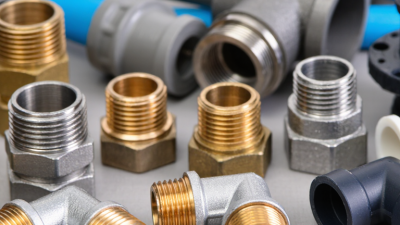
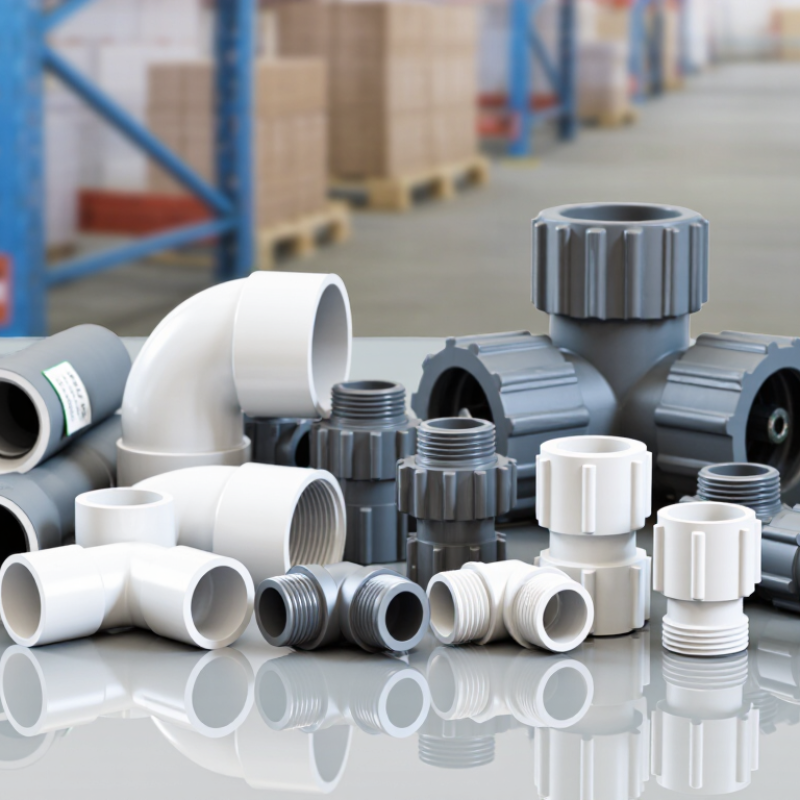
A dependable supplier should explain resin grades, temperature limits, pressure classes, wall thickness, and connection standards. Product samples deserve close inspection. Look for clean molding, sharp threads, uniform color, and accurate socket depth. Small defects can become expensive leaks underground.
The ranking remains partly subjective. Public information is uneven. Some manufacturers disclose testing data clearly, while others provide only attractive photographs. Buyers should request recent inspection reports, batch traceability, sample testing, and references from comparable projects. Price deserves attention, but not worship.
This overview is designed as a starting point, not a final verdict. Conditions differ. A supplier suitable for agricultural irrigation may not fit a chemical-processing project. Careful verification still belongs to the buyer.
China Top 10 Plastic Pipe Fittings Suppliers?
China’s plastic pipe fittings industry remains closely tied to construction, municipal water systems, irrigation, and industrial upgrades. Industry reports estimate China’s plastic pipe market at roughly USD 20–25 billion in 2024, depending on product coverage and exchange rates. Research and Markets reports continued demand for PVC, PE, and PPR systems, while China’s infrastructure investment supports replacement projects and new networks.
Demand is shifting from basic volume toward stronger, safer, and more traceable fittings. Large drainage projects need corrosion resistance and stable joint performance. Rural water improvement also creates demand for lightweight fittings with simple installation. The China Plastics Processing Industry Association has repeatedly highlighted capacity adjustment and quality improvement as industry priorities. However, published figures are not perfectly comparable. Some reports include pipes, fittings, and valves together. This makes supplier rankings less objective than they appear.
Tips: When evaluating the top ten suppliers, check pressure ratings, material certificates, batch traceability, and independent test reports. Ask for samples. Inspect socket depth, thread accuracy, and surface uniformity. A low quotation may hide higher installation costs. Buyers should also verify production capacity during peak seasons, because delivery promises can become less reliable. I would not judge a supplier by export volume alone. After-sales response and mold consistency often matter more on a real construction site.
China’s plastic pipe production remained broadly stable from 2020 to 2024. Total pipe output is used as an industry-level proxy for demand because public statistics generally combine pipes and fittings rather than reporting fittings separately.
Unit: million tonnes. Figures are rounded industry estimates based on publicly reported China plastic pipe industry statistics and are intended for market trend analysis, not company-level ranking.
When comparing China’s top ten plastic pipe fittings suppliers, product classification should come before price. GB/T 13663 mainly applies to polyethylene piping systems for water supply. Relevant products include PE pipes, electrofusion fittings, and butt-fusion fittings. Check the material grade, nominal pressure, SDR value, and connection method.
GB/T 18742 covers polypropylene random copolymer systems for hot and cold water. Suppliers should clearly separate PP-R pipes, socket fittings, threaded transition fittings, and valves. Wall thickness and temperature resistance matter here. A fitting for indoor hot water should not be treated like a buried PE fitting.
ISO 4427 also covers polyethylene systems for water supply, including pipes and fittings. It is useful when projects require international documentation. Ask for standard editions, dimensional records, raw material certificates, and batch traceability. Factory audits should include injection molding, fusion testing, pressure testing, and storage conditions.
Look closely.
In procurement work, a clean catalog is not enough. Some product pages mix PE and PP-R classifications, which creates avoidable installation errors. This comparison method is not flawless, because supplier testing capacity can change between batches. Independent reports and sample inspections provide stronger evidence than certificates alone. Reliable suppliers explain limitations instead of promising universal compliance.
A credible ranking needs more than website claims. For 2023 revenue, audited financial statements should carry the greatest weight. Public filings also reveal sales composition, operating margins, and dependence on construction demand. Capacity requires evidence, such as disclosed annual tonnage, extrusion lines, warehouse footage, and utilization rates. Industry statistics from the China Plastics Processing Industry Association placed national plastic-pipe output at roughly 16 million tonnes in 2023. That figure provides useful market context, but it does not prove supplier quality.
Certification review should examine scope, expiry dates, and testing laboratories. ISO 9001 supports process control, while ISO 14001 indicates environmental management. Product standards such as ISO 1452, ISO 4427, and relevant ASTM specifications should match the intended application. Export performance can be checked against China Customs and UN Comtrade records, especially HS 3917.40 for plastic pipe fittings. Shipment value, destination diversity, and three-year stability matter more than one unusually large order.
The method is not perfect. Private-company revenue may be difficult to verify, and customs codes can mix different product categories. Buyers should request factory audits, batch test reports, pressure-test records, and recent certificates before accepting any top-ten position.
China’s top 10 plastic pipe fittings suppliers differ in scale, materials, and certification depth. A 2024 Grand View Research assessment valued the global plastic pipes market at approximately USD 49 billion in 2023. It also projects steady growth through 2030. Demand remains strong for PVC, PE, and PP systems in water, drainage, and industrial projects.
The ten leading supplier profiles should compare measurable details, not promotional claims. Several operate extrusion and injection-moulding lines exceeding 10,000 tonnes annually. Some specialize in PVC drainage fittings, while others focus on PE electrofusion and PP-R hot-water systems. Key checks include ISO 9001 quality systems, ISO 14001 environmental management, pressure testing records, and compliance with GB, ASTM, EN, or ISO standards. China Plastics Processing Industry Association reports indicate that national plastic pipe production has remained above 15 million tonnes in recent years, creating a broad and competitive supplier base.
Export experience separates stronger candidates. The best-performing factories typically provide batch traceability, dimensional inspection reports, and third-party test results. Their usual metrics include 20–45 day lead times, mould ownership terms, annual defect rates, and container-loading accuracy. Some suppliers offer impressive capacity but weak technical documentation. That gap matters. A factory visit can reveal uneven storage, mixed resin batches, or unclear inspection controls. Buyers should request recent project references, pressure-test samples, and written warranty conditions. Rankings are never perfect. Product consistency still depends on the specific fitting, mould, resin grade, and production shift.
| Rank | Supplier Code | Manufacturing Cluster | Primary Materials | Fitting Categories | Typical Size Range | Applicable Standards | Main Applications | Private-Label Capability | Export Focus | Public-Metric Availability |
|---|---|---|---|---|---|---|---|---|---|---|
| 1 | Supplier 01 | Zhejiang | PVC-U, CPVC, PP-R | Elbows, tees, couplings, unions, valves | 20–630 mm | ISO 1452, ISO 15874, GB/T 18742 | Potable water, plumbing, irrigation | Available | High | Product-level data generally available |
| 2 | Supplier 02 | Jiangsu | HDPE, MDPE, PP | Electrofusion fittings, butt-fusion fittings, saddles | 20–1,200 mm | ISO 4427, ISO 4437, GB/T 13663 | Water distribution, gas, drainage | Available | High | Standards and size data commonly published |
| 3 | Supplier 03 | Fujian | PVC-U, PP-R, ABS | Threaded adapters, reducers, elbows, tees | 20–315 mm | ISO 1452, ISO 15874, GB/T 18742 | Building services, residential plumbing | Available | Medium | Basic product information available |
| 4 | Supplier 04 | Guangdong | CPVC, PVC-U, ABS | Industrial elbows, flanges, valves, unions | 15–400 mm | ISO 1452, ASTM D2466, ASTM D2846 | Chemical handling, industrial piping | Available | High | Technical specifications usually available |
| 5 | Supplier 05 | Shandong | HDPE, PE-RT, PEX | Compression fittings, transition fittings, manifolds | 16–630 mm | ISO 4427, ISO 15875, ISO 22391 | Heating, water supply, agricultural irrigation | Available | Medium | Selected technical data available |
| 6 | Supplier 06 | Hebei | HDPE, PVC-U | Drainage fittings, inspection chambers, couplers | 50–1,000 mm | ISO 4427, ISO 16138, GB/T 19472 | Municipal drainage, stormwater, wastewater | Available | Medium | Size and application data generally available |
| 7 | Supplier 07 | Anhui | PP-R, PP-RCT, PVC-U | Socket fittings, threaded fittings, repair couplings | 20–160 mm | ISO 15874, DIN 8077/8078, GB/T 18742 | Hot and cold water, indoor plumbing | Available | Medium | Core product data generally available |
| 8 | Supplier 08 | Hubei | PVC-U, HDPE, PP | Agricultural fittings, valves, filters, connectors | 20–500 mm | ISO 1452, ISO 4427, relevant GB/T standards | Irrigation, greenhouse systems, water transfer | Available | Medium | Application data available by product line |
| 9 | Supplier 09 | Sichuan | HDPE, PVC-U, CPVC | Large-diameter fittings, fabricated bends, flanges | 63–1,600 mm | ISO 4427, ISO 1452, GB/T 13663 | Infrastructure, mining, water treatment | Project-based | Low to Medium | Project specifications available on request |
| 10 | Supplier 10 | Jiangxi | PVC-U, PP-R, HDPE | Elbows, tees, reducers, caps, drainage fittings | 20–800 mm | ISO 1452, ISO 15874, ISO 4427 | Construction, irrigation, utility networks | Available | Medium | Standard product information available |
Note: Supplier codes are used to present an anonymized comparison. Size ranges and standards indicate commonly documented product capabilities for the relevant Chinese plastic pipe-fittings manufacturing clusters; supplier-specific certifications, production capacity, and commercial terms should be verified directly before procurement.
A practical comparison of China’s top ten plastic pipe fitting suppliers should begin with material selection. PVC fittings suit cold-water and drainage systems, while PP-R handles hot and cold water. HDPE is often preferred for flexible buried networks and chemical resistance. Material certificates should state resin grade, additives, and production batch. Some supplier pages remain vague here, which deserves careful questioning.
Pressure ratings need more than a PN16 label. Ask whether the rating applies at 20°C, and check how heat changes service life. For example, a PP-R fitting rated PN20 may require a lower working pressure at elevated temperatures. Reliable suppliers provide dimensional checks, hydrostatic pressure tests, leakage tests, and burst-test records. Factory audits can also reveal uneven socket depth, rough cuts, or poor storage practices. Small defects matter.
Price benchmarks vary with size, resin, tooling, and order volume. Standard PVC or PP-R fittings may cost about $0.20–$3 each in common sizes. Larger HDPE or electrofusion fittings can range from $5 to over $40. These figures exclude molds, packaging, inspection, and inland freight. A low quotation may hide thinner walls or incomplete testing. I would compare at least three like-for-like samples, because catalog prices often look cleaner than actual purchasing costs. Supplier reliability also depends on traceability, response speed, and consistent test documentation. Mistakes happen. The comparison should record them, not quietly erase them.

Sign up for our mailing list to stay informed and up to date with our latest news and products!
(905) 832 – 0600
2175-A Teston Road
Maple, Ontario
L6A 1T3
(780) 451 – 0238
24790 – 117 Avenue
Acheson, Alberta
T7X 6C2
(604) 882 – 1564
9511 – 194A Street
Surrey, British Columbia
V4N 4G4
(306) 955 – 6005
3926 Arthur Rose Avenue Saskatoon, Saskatchewan
S7P 0C9
(450) 687 – 2721
2750 Rue Bernard-Lefebvre
Laval, Quebec
H7C 0A5