China Best HDPE Pipe Manufacturers for Global Buyers?
Choosing the right China hdpe pipe manufacturer requires more than comparing unit prices. Global buyers need reliable production, clear technical data, and evidence of consistent quality. A capable supplier should explain resin grades, pressure ratings, pipe dimensions, and application limits without using vague marketing claims. Factory experience matters, especially when projects involve drinking water, irrigation, mining, or industrial pipelines.
Look closely at practical details. Are pipes produced with verified PE100 material? Can the manufacturer provide wall-thickness records, batch numbers, and pressure-test reports? Does the facility maintain extrusion temperature controls and calibrated inspection tools? These details reveal more than a polished website. They also help buyers compare suppliers fairly across different regions and standards.
Site audits can provide useful evidence.
A serious manufacturer should support sample approval, product traceability, and independent testing when required. Ask how the company handles color consistency, ovality, packaging, and damage during container loading. A pipe may look perfect in photographs but fail expectations after long-distance transport. That possibility deserves attention.
Still, no supplier is automatically the best for every project. A factory with strong export experience may have limited customization capability. Another may offer excellent engineering support but longer lead times. Buyers should review certifications, production capacity, customer references, and after-sales communication together. This guide examines leading Chinese manufacturers through those practical criteria, while recognizing that supplier claims should be verified before any commercial decision. Reliability is demonstrated over time, not promised in one brochure.

Understanding HDPE Pipes and Their Global Applications
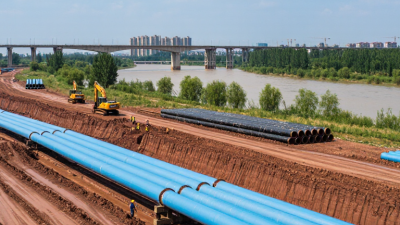
HDPE pipes are made from high-density polyethylene, a tough thermoplastic valued for flexibility and corrosion resistance. Their smooth inner walls help water flow with relatively little friction, while fused joints can create a continuous pipeline with fewer leak points. In field projects, crews often find the lighter sections easier to move than many metal alternatives. That matters on uneven ground. HDPE is used in water supply, irrigation, drainage, and some industrial systems, but suitability depends on the fluid, pressure, temperature, and pipe specification.
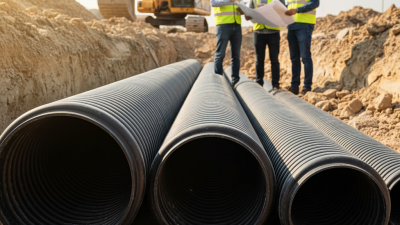
Global applications vary with terrain and climate. A buried irrigation line in a dry region faces different demands from a municipal water main exposed to shifting soil. Designers commonly check pressure ratings, diameter, wall thickness, and the required joining method. Installation quality matters, too. Poorly prepared fusion surfaces can weaken a joint, even when the pipe itself meets its specification. Details count.
Tips: Match the pipe’s pressure rating to expected operating conditions, and confirm compatibility with the conveyed material. Store pipes away from sharp objects and prolonged direct sunlight when the product guidance calls for it. Keep records of inspection and installation. A small oversight can be costly. No single pipe choice fits every project, and local soil or temperature data may still be incomplete.
Key Standards and Quality Certifications for HDPE Pipe Manufacturers
For global buyers, an HDPE pipe certificate matters only when its scope matches the intended use. ISO 4427 covers polyethylene piping for water supply and related applications; ASTM F714 specifies dimensions for PE pressure pipe. ISO 9080 provides a method for estimating long-term hydrostatic strength from test data, while ISO 12162 classifies materials by resistance to internal pressure. Check the standard edition, pipe diameter range, pressure class, and manufacturing site listed on each document. Small mismatches matter.
For drinking-water projects, NSF/ANSI/CAN 61 addresses health effects from materials contacting potable water. It does not replace pressure or dimensional testing. The Plastics Pipe Institute’s Handbook of Polyethylene Pipe discusses service-life expectations exceeding 100 years under defined design and operating conditions. That figure is not a universal warranty; temperature, pressure, installation, and handling all affect performance. Not a guarantee.
Ask for batch-level test records, resin identification, dimensional results, and evidence of hydrostatic pressure testing. Confirm that an independent certification body audits the actual production facility, not merely a similar product. A certificate may look reassuring, yet omit the exact pipe grade being purchased. I would also review how the supplier handles failed tests and traceability gaps. Paperwork is useful, but the production records reveal more.
How to Evaluate Chinese HDPE Pipe Manufacturers
Evaluating Chinese HDPE pipe manufacturers starts with the intended application, not a catalogue photo. Specify the medium, operating pressure, temperature range, diameter, and installation method. Then check whether the proposed resin grade and pipe dimensions match those conditions. Ask for the applicable standard and test records, including hydrostatic pressure results and dimensional checks. Look closely at wall thickness and ovality. Small variations can complicate jointing on site.
Request production records linking resin batches to finished pipes. A factory visit or independent inspection can help verify equipment, calibration, and routine quality checks. Ask how samples are selected and whether test results represent regular production. One polished sample proves little. Confirm fusion compatibility, marking details, protective end caps, and export packaging. Check lead times against actual production capacity, not just a sales estimate. Clear answers matter. Yet a detailed checklist cannot replace sound engineering judgment; specifications can still leave gaps. Compare quotations line by line, especially testing scope, delivery terms, and replacement procedures. Keep the questions in writing, and resolve unclear points before approving a production run.
How to Evaluate Chinese HDPE Pipe Manufacturers
Suggested evaluation weights for comparing suppliers. These are buyer-planning priorities, not survey results or ratings of specific manufacturers.
Review relevant product standards and certificates for your destination market, verify test reports and material traceability, and assess production capacity, export experience, and after-sales support before making a purchasing decision.
Leading Chinese HDPE Pipe Manufacturers for International Buyers
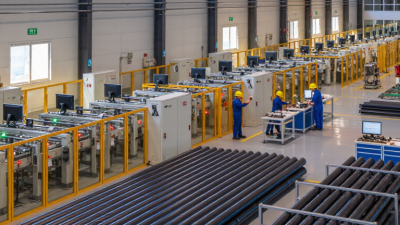
For international buyers, selecting a Chinese HDPE pipe manufacturer means checking production evidence, not just comparing prices. Ask for current ISO 4427 test records, resin batch traceability, dimensional inspection results, and pressure-test procedures. A useful factory audit follows a pipe from resin storage to extrusion, cooling, marking, and packing. Look closely at wall thickness readings and the clarity of printed product markings. Small details matter.
Water-network losses make dependable pipe systems especially important. The World Bank report The Challenge of Reducing Non-Revenue Water in Developing Countries estimates that water losses can reach 40–50% of water supplied in some developing-country systems. HDPE pipe alone cannot solve leakage, but consistent dimensions and sound jointing practices can support reliable networks. Buyers should also confirm export packaging, shipment schedules, and which documents accompany each batch. Not every supplier is equal. A polished brochure is not proof of consistent production, and a strong factory can still miss a delivery window. I would request recent inspection records and clarify who handles corrective action before placing a large order.