Why Choose HDPE Pipe for Global Water Projects?

Global water infrastructure is under pressure from population growth, climate variability, and aging networks. The WHO/UNICEF Joint Monitoring Programme reported that 2.2 billion people lacked safely managed drinking water in 2022. UNESCO’s World Water Development Report 2023 also warns that global water demand may rise by 20% to 30% by 2050. These figures turn pipeline selection into a public health and long-term investment decision. A buried pipe is not merely a product. It is a quiet promise that water will arrive safely, day after day.

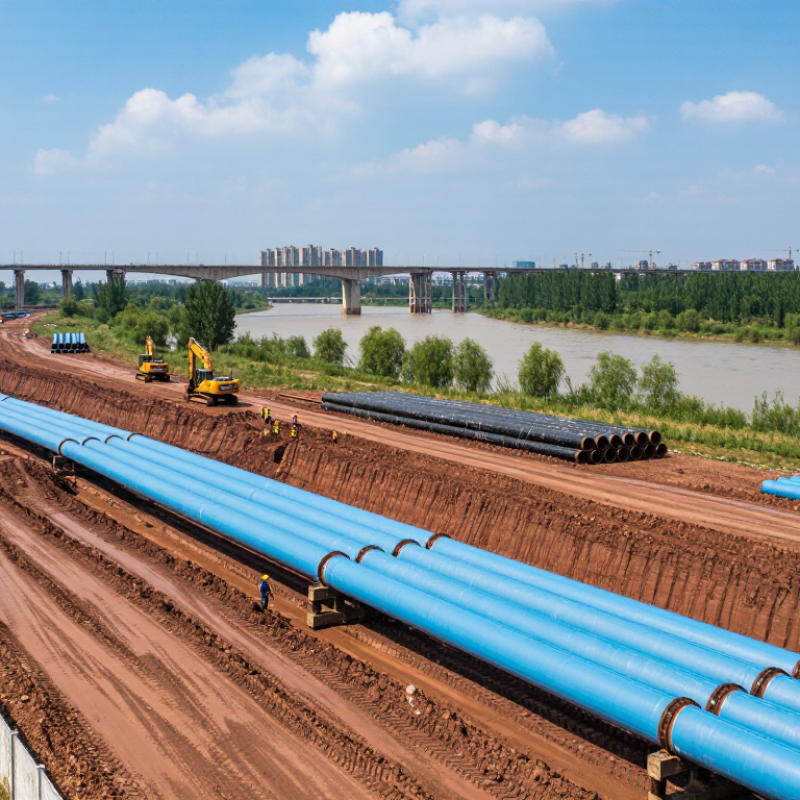
This is where hdpe pipe offers a practical option for many transmission and distribution systems. The Plastic Pipe Institute’s Handbook of PE Pipe documents its flexibility, corrosion resistance, and suitability for heat-fused joints. Fusion can create a continuous pipeline with fewer mechanical connections. That matters beside muddy excavations, river crossings, and uneven coastal ground. AWWA C906 also provides recognized requirements for polyethylene pressure pipe and fittings. Engineers still need correct calculations.

HDPE systems can tolerate ground movement better than many rigid alternatives, while their smooth internal surface may support efficient flow. The PE100+ Association highlights the importance of verified material performance, installation quality, and pressure design. However, no pipe material is universally best. Temperature, surge pressure, soil conditions, ultraviolet exposure, and contractor skill can change the outcome. This article examines why HDPE pipe is increasingly considered for global water projects, while acknowledging a less comfortable truth: excellent material cannot repair weak planning, poor fusion practice, or neglected inspection. Performance begins long before the trench is closed.

Why Choose HDPE Pipe for Global Water Projects?

HDPE Pipe Basics and Key Material Properties

Why Choose HDPE Pipe for Global Water Projects?

HDPE Pipe Basics and Key Material Properties

HDPE pipe, or high-density polyethylene pipe, is a thermoplastic system used for drinking water, irrigation, and wastewater networks. Its low density makes long sections easier to transport and position than many rigid alternatives. This can reduce lifting equipment and support faster installation in remote areas. That distinction matters. HDPE also resists corrosion from soil, moisture, and many common water conditions. Its smooth internal surface can reduce friction losses and help maintain steady flow.

Material flexibility is one of its practical strengths. A pipe can tolerate controlled bending around gentle curves, reducing the need for extra fittings. Heat fusion joins prepared pipe ends into a continuous connection. When technicians control temperature, pressure, alignment, and cooling time, the joint can become highly reliable. Small details matter, especially during windy or dusty site work. Scratched surfaces, poor cleaning, or rushed cooling can weaken confidence in the installation.

HDPE is not maintenance-free, and that assumption needs challenging. Ultraviolet exposure, operating temperature, pressure, and ground movement still require careful design. Engineers should verify the pressure rating, wall thickness, chemical compatibility, and required service life. Local standards and project specifications must guide testing and inspection. In practice, crews should record fusion parameters, inspect pipe surfaces, and protect open ends from dirt. The material is forgiving, but it is not careless-proof.

How HDPE Pipes Support Global Water Infrastructure

Global water projects need pipes that tolerate difficult ground, changing climates, and demanding installation schedules. The WHO/UNICEF Joint Monitoring Programme reported that 2.2 billion people lacked safely managed drinking water in 2022. HDPE pipe can support these projects through corrosion resistance, low weight, and flexible handling. A 12-meter section can often be moved with smaller equipment than rigid alternatives. That matters underground.

HDPE also supports reliable water infrastructure through heat-fused joints. When trained crews follow approved procedures, the connection forms a continuous section with fewer gasket-related leakage risks. The Plastic Pipe Institute’s Handbook of Polyethylene Pipe describes HDPE as resistant to corrosion and many common soil chemicals. UNESCO’s 2024 World Water Development Report states that agriculture accounts for roughly 70% of global freshwater withdrawals. For irrigation networks, reduced leakage can protect both water supplies and operating budgets.

The caveat is real. HDPE is not a universal answer. Designers must check pressure class, temperature, surge conditions, soil movement, and ultraviolet exposure. Fusion quality depends on clean surfaces, correct heating, and careful alignment. On one site, a small surface scratch may look harmless but deserve inspection before burial. Global infrastructure succeeds through disciplined details, not material selection alone. Field records, pressure testing, and traceable installation data make HDPE systems more dependable. Mistakes still happen. Good engineering leaves room to find them early.

Installation Methods for Different Project Conditions

Why Choose HDPE Pipe for Global Water Projects?

Installation Methods for Different Project Conditions

HDPE pipe suits varied water projects because installation can adapt to terrain, traffic, and soil. The 2024 WHO and UNICEF Joint Monitoring Programme reported that 2.2 billion people lacked safely managed drinking water in 2022. Fast, low-disruption installation matters.

Open-cut trenching remains practical in spacious, accessible sites. Crews place the pipe on a prepared bedding layer, control alignment, and backfill in compacted lifts. AWWA M55 explains that properly fused polyethylene joints can match the pipe’s structural performance. Fewer mechanical connections also reduce potential leak points. Field conditions still control results. Poor scraping, contamination, or incorrect heating can weaken a joint.

Tight urban corridors may require horizontal directional drilling or pipe bursting. These methods reduce road excavation and surface disruption. The Plastic Pipe Institute’s Handbook of PE Pipe identifies polyethylene as suitable for trenchless installation because it tolerates bending and has strong joint continuity. In unstable soil, above-ground temporary lines can support emergency supply before permanent burial. Rocky ground needs careful pull-force control and protective padding. Wet sites need buoyancy checks, especially before backfilling.

Do not overtrust the material.

Fusion records, operator training, and pressure testing remain essential. The World Bank’s Utility of the Future reports repeatedly link reliable water services with stronger asset management, not pipe selection alone. That is easy to overlook. A successful installation combines material flexibility with disciplined site supervision, accurate design loads, and honest inspection records.

Performance, Durability, and Environmental Benefits

Why Choose HDPE Pipe for Global Water Projects?

Performance, Durability, and Environmental Benefits

HDPE pipe supports reliable water delivery across cities, farms, and remote communities. Its smooth inner surface helps maintain steady flow with lower friction. Flexible sections can follow gentle ground movement without frequent joint failures. On difficult sites, this flexibility can reduce excavation and installation time. I have seen crews value this advantage when roads, rocks, and narrow trenches complicate construction. Still, pipe sizing must match pressure, flow, temperature, and local soil conditions.

Durability is another practical strength. Fusion-joined sections create continuous connections with fewer leak points than many mechanical systems. HDPE resists corrosion, moisture, and several common chemicals. It also handles repeated pressure changes better when engineers design the system correctly. No material is perfect. Poor storage, overheating, weak joining procedures, or careless backfilling can shorten service life. Environmental planning matters too. The pipe is lightweight, requires fewer transport loads, and can be recycled in suitable facilities. Longer service can also reduce replacement waste and emergency repair emissions.

Tips: Check project standards, water quality, and pressure records before selecting a grade. Train joining crews and inspect every fusion area. Protect pipe from sharp stones during backfilling. Keep installation records, because small details often explain future performance. A local engineer should review unusual soil, seismic, or temperature conditions.

Selection Factors for Water Project Applications

Why Choose HDPE Pipe for Global Water Projects?

Selection Factors for Water Project Applications

Choosing HDPE pipe requires more than comparing purchase prices. Project engineers should check pressure class, pipe diameter, SDR, water temperature, soil movement, and installation access. AWWA C906 and ISO 4427 provide widely used requirements for polyethylene pressure pipe. They also support consistent testing across international projects. HDPE’s fused joints create a continuous pipeline with fewer mechanical connections. This matters where ground settlement or seismic movement is possible. Yet fusion quality depends on trained crews, clean surfaces, and controlled heating. Small mistakes can become expensive leaks.

Hydraulic performance also deserves attention. The Plastics Pipe Institute’s PE Handbook identifies a 100-year design basis for polyethylene systems under suitable service conditions. That is not a promise for every site. Ultraviolet exposure, temperature, surge pressure, and chemical conditions still require review. The World Bank has reported global non-revenue water near 32% of production. Reducing leakage therefore has practical value, especially in long transmission networks. HDPE can help, but poor design cannot be repaired by material choice alone.

Tips: Request pressure and surge calculations before approval. Confirm local standards and drinking-water certification. Inspect fusion records, bead appearance, and test pressures. Consider trenchless installation where roads, rivers, or dense urban areas make excavation disruptive. Include thermal expansion and contraction in the design. No material is perfect. A careful selection may still need revision after field data, soil testing, and operator feedback.

Why Choose HDPE Pipe for Global Water Projects? — Selection Factors for Water Project Applications
Selection Factor HDPE Reference Data Project Value Application Check Before Specification
Service Life Typical design basis: 50 years or more
Properly selected polyethylene pressure pipe can provide a long service life when operating temperature, pressure, soil conditions, and installation quality are controlled.
Supports long-term water infrastructure planning and can reduce the frequency of replacement works compared with shorter-life solutions. Confirm the design life using the applicable national standard, pressure class, operating temperature, surge conditions, and projected demand.
Corrosion and Chemical Resistance HDPE is non-metallic and generally resistant to external soil corrosion, electrochemical corrosion, and many water-treatment chemicals. Reduces the need for internal or external corrosion protection in aggressive soils and helps maintain hydraulic performance over time. Review compatibility with disinfectants, hydrocarbons, solvents, concentrated chemicals, and any unusual contaminants. Use a project-specific chemical-resistance assessment where required.
Hydraulic Efficiency A commonly used Hazen–Williams coefficient for new HDPE is approximately C = 150. The smooth internal surface typically has low friction compared with many rougher pipe materials. May reduce pumping energy, pressure loss, and pipe diameter requirements for a given flow rate, subject to the complete hydraulic design. Calculate head loss using the selected design method and account for fittings, valves, aging assumptions, flow variation, and transient conditions.
Flexibility and Ground Movement HDPE has a relatively low elastic modulus and can accommodate controlled deflection and modest ground movement better than many rigid pipe materials. Useful for seismic areas, settlement-prone ground, uneven terrain, river crossings, and applications requiring long continuous sections. Verify allowable deflection, bend radius, trench geometry, embedment, soil stiffness, and seismic or settlement design requirements.
Joint Integrity Butt fusion and electrofusion can create joints that are continuous and leak-tight when performed by qualified personnel using controlled procedures. Reduces the number of mechanical joints and potential leak paths, particularly on long transmission mains and buried networks. Specify fusion procedures, operator qualifications, equipment calibration, bead inspection, joint traceability, and field testing requirements.
Pressure Capability Pressure rating depends on resin classification, minimum required strength, pipe outside diameter, wall thickness, and dimension ratio. Common pressure classes include approximately 5–25 bar at 20°C, depending on the selected standard and product class. Provides options for distribution mains, transmission pipelines, rising mains, service connections, and low-pressure applications. Select the pressure class using normal pressure, maximum operating pressure, water hammer, vacuum risk, temperature derating, and surge-control measures.
Temperature Range Cold-water pressure ratings are commonly based on a reference temperature of approximately 20°C. Continuous service near the upper practical range, often around 60°C, requires significant pressure derating and manufacturer or standard guidance. Suitable for most municipal and industrial cold-water systems when the operating temperature is within the selected material and pressure-rating limits. Confirm minimum and maximum water temperature, ambient conditions, solar exposure, thermal expansion, contraction, and pressure-rating reduction at elevated temperature.
Installation and Transport HDPE pipe is lightweight compared with many rigid alternatives and is available in straight lengths or, for smaller diameters and suitable pressure classes, coils. Can reduce the number of joints, lifting requirements, transport movements, and installation time in remote or difficult-access locations. Plan reel or straight-length logistics, unloading equipment, minimum bending radius, fusion working space, road access, and protection from damage during handling.
Trenchless and Special Crossings Flexibility and fusion-jointed continuous strings make HDPE suitable for selected horizontal directional drilling, sliplining, river crossing, and marine applications. May limit road closures, surface disruption, dewatering, and environmental disturbance compared with fully open-cut construction. Complete pullback, buckling, flotation, tensile-load, bend-radius, drilling-fluid, buoyancy, and entry/exit design checks.
Leakage and Water Conservation Fusion-jointed systems can achieve leak-tight connections when joint preparation, alignment, heating, pressure, cooling, and inspection are properly controlled. Helps reduce non-revenue water, soil erosion near leaking joints, contamination pathways, and operational water losses. Define hydrostatic or pressure testing, leakage acceptance criteria, disinfecting, flushing, sampling, and commissioning procedures.
UV and Weather Exposure Black HDPE pipe containing suitable carbon-black stabilization generally has improved resistance to outdoor ultraviolet exposure compared with unprotected natural-colored polyethylene. Supports temporary above-ground storage and selected permanent outdoor installations when the pipe formulation and project conditions are appropriate. Confirm UV stabilization, storage duration, surface temperature, support spacing, thermal movement, and whether burial or additional protection is required.
Water Quality and Regulatory Compliance HDPE can be used for potable-water systems when the specific pipe, resin, additives, jointing materials, and manufacturing process comply with the applicable drinking-water requirements. Provides a non-metallic option for water conveyance without internal corrosion products from the pipe wall. Require certification to the destination country’s potable-water regulations, migration limits, pressure-pipe standard, and approved disinfectant exposure conditions.
Environmental and Sustainability Considerations HDPE has a relatively low density, can be produced in long lengths, and is technically recyclable where suitable collection and processing systems exist. Potentially lowers transport weight, joint count, construction disruption, and material waste over the project lifecycle. Compare whole-life carbon, transport distance, installation method, energy use, recycled-content rules, end-of-life routes, and local recycling capability.
Main Limitations HDPE is sensitive to temperature-related pressure derating, excessive point loading, prolonged uncontrolled deformation, and damage from poor handling or installation. Identifying limitations early helps prevent unsuitable material selection and protects the long-term performance of the water system. Do not select HDPE solely by nominal diameter. Verify pressure, temperature, surge, external loads, soil conditions, installation method, fire exposure, and local code requirements.
Important: The values shown are general engineering reference ranges, not a substitute for project-specific design. Final selection should follow the applicable edition of standards such as ISO 4427, EN 12201, AWWA C906, ASTM F714, or the relevant national water-pipe standard.
Reference basis: Common requirements and design principles published in international and national polyethylene pressure-pipe standards, hydraulic design practice, and polyethylene pipe engineering guidance. Actual ratings and allowable conditions depend on the selected standard, pipe classification, resin properties, dimensions, installation, and operating environment.

Request Quote

Sign Up