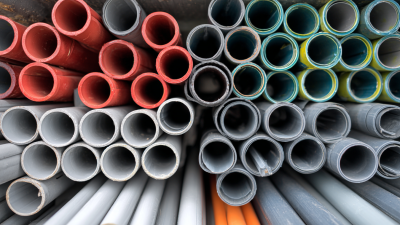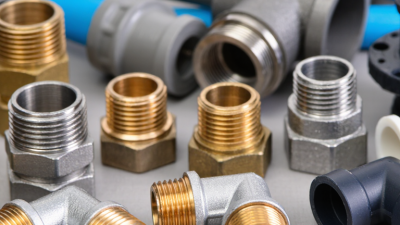
What Is ABS Pipe and Why Do Global Buyers Choose It?

When buyers compare piping materials, they often look beyond the lowest quoted price. They want dependable performance, predictable installation, and fewer problems after delivery. This is where abs pipe deserves careful attention. Made from acrylonitrile butadiene styrene, it is valued for its light weight, impact resistance, and practical handling. A two-meter length can be carried across a jobsite without lifting equipment. That simple advantage can reduce labor pressure during installation.

Global buyers choose abs pipe for many drainage, waste, vent, and low-pressure applications. Its smooth internal surface supports efficient flow and may help limit material buildup. The material also resists several common household chemicals and does not rust like metal. However, “chemical resistant” does not mean suitable for every fluid. Buyers must check temperature limits, pressure ratings, wall thickness, jointing methods, and local requirements before approving an order. Specifications matter.

Reliable sourcing requires more than attractive product photos. Experienced purchasers request technical datasheets, batch information, dimensional tolerances, and relevant test reports. They also confirm packaging quality, because cracked sockets or distorted pipe ends can create expensive delays. In practice, even a well-made product can fail when storage is poor or installation instructions are ignored. That point is easy to overlook. This guide examines what abs pipe is, where it performs well, and why distributors, contractors, and project buyers continue to select it. The goal is not to present it as a universal solution, but to provide a clear basis for practical, evidence-informed decisions.
What Is ABS Pipe and Why Do Global Buyers Choose It?

What Is ABS Pipe?

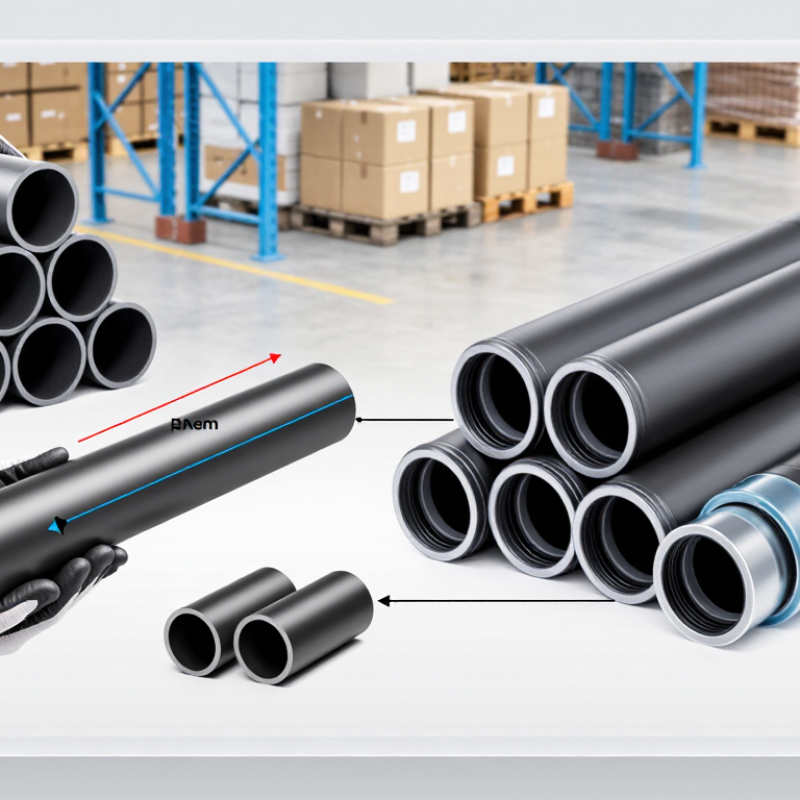
ABS pipe is a lightweight thermoplastic pipe made from acrylonitrile, butadiene, and styrene. Each component contributes a practical benefit. Acrylonitrile improves chemical resistance, butadiene adds toughness, and styrene supports rigidity and smooth processing. The result is a black pipe often used for drainage, waste, and vent systems.

It is easy to handle.

ABS pipe can be cut with common tools and joined with solvent cement designed for ABS materials. Its smooth inner wall helps wastewater move with limited friction. It also resists impacts better than some brittle piping materials, especially during transport or installation in cooler conditions. Global buyers often consider it because it is lightweight, workable, and available in several wall thicknesses and diameters. However, product selection must follow local plumbing codes and project requirements. A pipe suitable for wastewater may not be approved for drinking water or pressurized service.

ABS is not perfect. Long exposure to strong sunlight can weaken its surface, so outdoor installations may need protection or approved UV-resistant products. High temperatures and certain chemicals can also reduce service life. That detail is sometimes overlooked. In practice, a reliable purchase depends on checking pressure limits, temperature ratings, joint compatibility, dimensional standards, and inspection documents. Material certificates and batch records add confidence, although paperwork alone cannot replace installation quality. Test the system properly. A small jointing mistake can cause leaks months later.

How ABS Pipe Is Manufactured and Structured

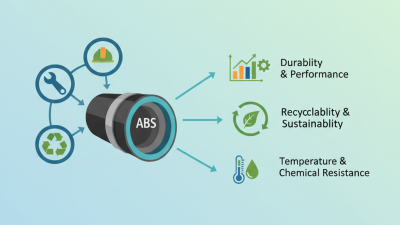
ABS pipe is made from acrylonitrile butadiene styrene, a thermoplastic valued for toughness and light weight. Its structure begins with carefully blended polymer pellets and approved additives. The mixture is heated inside an extruder until it becomes a consistent melt. A shaped die then forms the hollow pipe. Cooling follows quickly.

Water usually calibrates the outside diameter through a sizing sleeve. This step controls roundness and wall thickness. Pulling equipment keeps the pipe moving at a measured speed. Cutting machines produce standard lengths with clean, square ends. During inspection, buyers should check diameter, thickness, surface finish, and socket fit. Small variations can affect installation.

ABS pipe normally has a smooth inner bore and a dense outer wall. The smooth bore helps reduce flow resistance and limits areas where residue may collect. Its layered-looking appearance can be misleading. Standard solid-wall pipe is not always truly multilayered. Some products use different materials or foamed cores, so technical documents matter. They are not optional.

In practical sourcing, global buyers often select ABS because it is easy to handle and resists impact in many service conditions. However, it is not suitable for every temperature or chemical environment. Pressure ratings depend on size, wall design, operating temperature, and local requirements. A reliable supplier should provide test data, dimensional records, and applicable compliance documents. I have seen specifications treated as suggestions, which creates avoidable risk. Even a neat-looking pipe needs verification before shipment.

Why Global Buyers Choose ABS Pipe

Representative material density comparison used to illustrate ABS pipe’s lightweight structure.

ABS has a typical density of about 1.03–1.07 g/cm³, far below steel and copper. This helps reduce handling and transportation effort. ABS pipe is generally produced by melting ABS resin, forcing it through an extrusion die, sizing and cooling the tube, then cutting it to length. Its cross-section is a homogeneous thermoplastic wall rather than a layered metal structure, providing corrosion resistance and practical installation flexibility.

What Performance Features Define ABS Pipe?

What Is ABS Pipe and Why Do Global Buyers Choose It?

ABS pipe is a lightweight thermoplastic used mainly for drain, waste, and vent systems. Its performance comes from a practical balance of impact strength, low weight, and simple installation. ASTM D2661 specifies requirements for ABS DWV pipe, including dimensions, physical properties, and quality testing. This standard gives buyers a clearer basis for comparing products across countries.

What Performance Features Define ABS Pipe?

ABS remains tough in cold handling conditions, where some rigid plastics can become more brittle. The Plastic Pipe Institute’s Handbook of Thermoplastic Piping lists ABS density near 1.04 g/cm³, making it close to water in weight and easy to carry on crowded job sites. That difference matters when workers move six-meter lengths through narrow corridors. ABS also resists many household chemicals and does not rust, which supports long service in drainage applications.

Thermal movement requires attention. The coefficient of expansion is commonly reported near 0.00009 inch per inch per °F for ABS. A 10-meter run can therefore move several millimeters during temperature changes. Installers need suitable supports, clearances, and properly designed joints. This detail is sometimes underestimated. ABS is not a universal material, either; its temperature limits and fire performance must be checked against local codes. ASTM D3965 and ISO 15493 provide useful testing and system references, but project conditions still control the final specification.

Where Is ABS Pipe Commonly Used?

ABS pipe is a thermoplastic pipe valued for its light weight, impact resistance, and simple installation. It is often selected where crews need to move long sections through narrow building spaces. Solvent cement joints can be completed quickly, although proper surface preparation still matters.

Where is ABS pipe commonly used? Its most familiar application is residential and commercial drainage, waste, and vent systems. It carries wastewater from sinks, showers, toilets, and floor drains. In multi-story buildings, its smooth interior supports reliable flow when the system has correct slope and ventilation. Contractors also use ABS pipe for underground building drains, where its toughness helps handle ordinary job-site impacts and soil movement.

Some agricultural and industrial facilities use ABS for non-pressure drainage, process discharge, or protective conduit. It can suit cooler wastewater applications, but temperature and chemical exposure require careful review. ABS is not a universal replacement for pressure pipe. It may become less suitable under prolonged sunlight, high heat, or demanding chemical conditions. This point is sometimes overlooked.

Check local plumbing codes.

Global buyers often prefer ABS because it reduces handling effort and installation time. A worker can carry several sections without heavy lifting equipment. However, material quality, wall thickness, jointing methods, and dimensional standards can vary between markets. Buyers should verify test documentation and compatibility before ordering. A cheaper pipe may create expensive corrections later.

Why Do Global Buyers Choose ABS Pipe?

What Is ABS Pipe and Why Do Global Buyers Choose It?

ABS pipe is a thermoplastic piping product made from acrylonitrile butadiene styrene. Its black surface is familiar in drainage, waste, and vent systems. Buyers value its low weight, simple cutting, and solvent-cement joining. A worker can carry several lengths without mechanical lifting equipment. That matters when projects face high labor and transport costs.

According to Grand View Research’s 2024 acrylonitrile butadiene styrene market report, the global ABS market was valued at about USD 20.6 billion in 2023. The report forecasts approximately 6.5% annual growth from 2024 to 2030. This broader resin data does not measure ABS pipe alone. Still, it shows strong material availability and established processing capacity. Global buyers often prefer products supported by familiar supply chains.

ABS also resists many household chemicals and does not rust like metal. That makes it practical for indoor drainage and industrial applications with suitable chemical review. Standards such as ASTM D2661, ASTM D1527, and ISO 15493 help buyers compare dimensions and performance. However, ABS is not a universal solution. Prolonged sunlight can damage unprotected pipe, and high temperatures may reduce service life. Fire codes and local installation rules also differ. Buyers sometimes focus on the low purchase price and overlook fittings, insulation, and compliance checks. That is where careful engineering still matters.

What Is ABS Pipe and Why Do Global Buyers Choose It?

Technical characteristics, standards, applications, and purchasing considerations

Data Dimension Typical ABS Pipe Information Why It Matters to Global Buyers Reference or Qualification
Material Definition ABS pipe is manufactured from acrylonitrile-butadiene-styrene thermoplastic resin. The material combines rigidity with impact resistance. Buyers can select a lightweight thermoplastic system for drainage, waste, vent, and selected industrial applications. Material composition and performance depend on the applicable product standard and formulation.
Primary Applications Common uses include sanitary drainage, waste, vent systems, underground drainage, condensate lines, and selected low-pressure process services. A broad application range helps distributors and contractors serve residential, commercial, and light-industrial projects with one material family. Application suitability must be verified against local plumbing codes, chemical compatibility, temperature, and pressure requirements.
Relevant Product Standard ABS DWV pipe is commonly specified to ASTM D2661 in North American projects. Other markets may use national or regional standards. Standard-based purchasing improves dimensional consistency, inspection, documentation, and project approval. ASTM D2661 covers ABS plastic drain, waste, and vent pipe and fittings for solvent-cement-joint systems.
Joining Method ABS systems are typically joined with solvent cement and compatible fittings; mechanical or gasketed joints may be used where the design standard permits. Solvent-cement joining can reduce installation complexity and does not require hot work or welding equipment. The solvent cement and jointing procedure must be compatible with ABS and comply with the applicable installation code.
Impact Resistance ABS is known for good impact resistance, including useful performance in relatively cold handling and installation conditions. Improved resistance to handling damage can reduce breakage risk during transport, site storage, and installation. Actual impact performance varies with pipe class, wall thickness, temperature, and test method.
Weight and Handling ABS pipe is generally lighter than metallic piping of comparable nominal size and service purpose. Lower handling effort can support faster installation and reduce the need for lifting equipment on many projects. Actual weight depends on nominal diameter, wall thickness, pressure class, and pipe length.
Corrosion and Chemical Resistance ABS does not rust or corrode like carbon steel. Its resistance to chemicals is useful but not universal. The absence of metallic corrosion can support long service in damp environments and reduce coating or corrosion-control requirements. Chemical compatibility must be checked for each fluid, concentration, temperature, and exposure duration.
Temperature Considerations ABS is commonly used for ambient-temperature drainage and waste services. Continuous high-temperature service requires specific design verification. Clear temperature limits help buyers avoid selecting ABS for services where another material is required. Do not use a general temperature value as a universal rating; follow the manufacturer’s data and applicable code.
Pressure-Service Limitation Standard ABS DWV pipe is intended primarily for gravity drainage and venting, not automatically for pressurized water systems. Confirming the service type prevents costly specification errors and non-compliance with local regulations. Pressure-rated ABS products, where available, must be identified by their specific standard and pressure classification.
Installation Environment ABS may be installed above ground or underground when the pipe, bedding, support, and installation method meet the relevant requirements. Project flexibility supports use across different building layouts and site conditions. Protection from prolonged direct sunlight and correct trench or support design may be required.
Buyer Selection Checklist Verify nominal size, wall thickness or schedule, standard, dimensional tolerances, fitting compatibility, pipe length, color, packaging, and inspection documents. A complete specification reduces customs, installation, quality-control, and project-approval risks. Requirements should be matched to the destination country’s plumbing code and project specification.

Request Quote

Sign Up