2026 Best PVC Pipe Types for Global Buyers

Choosing the right pvc pipe in 2026 requires more than comparing price, diameter, or wall thickness. Global buyers now assess pressure ratings, temperature resistance, joint reliability, recycled content, and documented service life. Grand View Research estimates that the global PVC pipes market reached approximately USD 22 billion in 2023. Its forecast also indicates steady growth through 2030, supported by water infrastructure, irrigation, construction, and utility upgrades.

Different projects demand different pipe types. uPVC suits many cold-water and drainage systems because it offers low corrosion risk and easy installation. CPVC performs better in hotter water applications. Oriented PVC, or PVC-O, can provide higher hydraulic efficiency and strength with reduced material use. However, these advantages depend on correct manufacturing and field installation. A premium pipe can still fail beside a poorly prepared joint.

Dr. George Wypych, a recognized polymer scientist and author of PVC technical references, emphasizes: “PVC performance depends on formulation, processing, and service conditions.” That principle should guide every international purchase. ISO 1452 and ASTM standards can support product comparison, but certificates alone do not reveal every practical risk. Buyers should inspect impact testing, batch traceability, gasket quality, and actual climate exposure. The World Bank’s infrastructure research also highlights the continuing need for resilient water systems, especially in rapidly urbanizing regions. Yet market forecasts are not guarantees. They may overlook shipping delays, local installation skill, or unstable soil. This guide examines the leading pvc pipe types, their realistic strengths, and the compromises global buyers should consider before signing a purchase order.
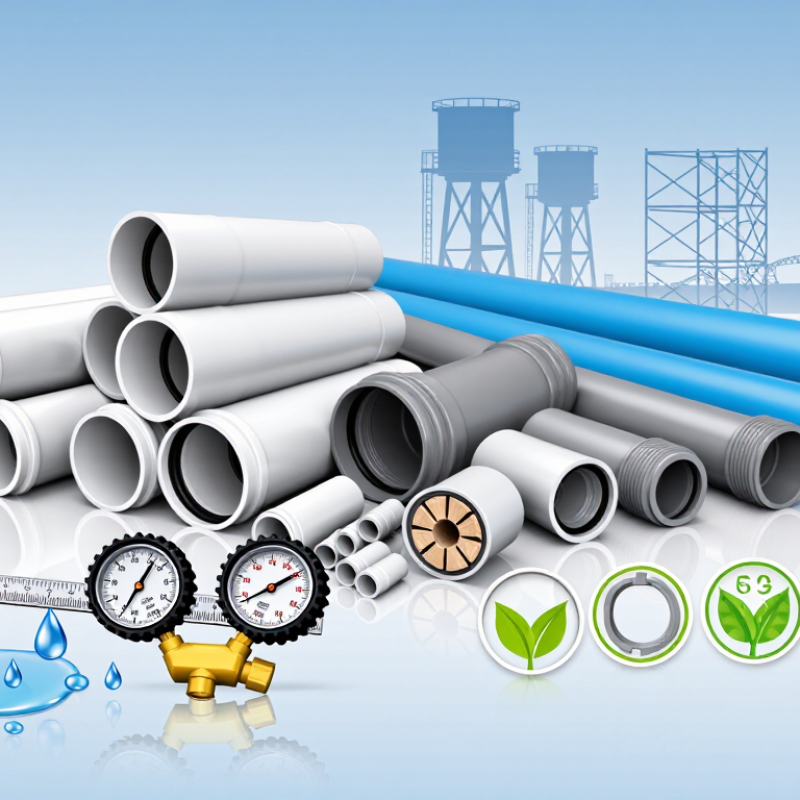
2026 Best PVC Pipe Types for Global Buyers

PVC Pipe Basics: Materials, Standards, and Global Applications

PVC pipes begin with material selection, not color or price. PVC-U suits cold-water networks, drainage, irrigation, and electrical conduits. CPVC tolerates higher service temperatures and supports selected hot-water systems. PVC-O uses molecular orientation to improve pressure performance with less material. The difference matters at the trench, where heat, soil movement, and joint quality affect service life.

The International Organization for Standardization lists ISO 1452 for PVC-U water supply systems. ISO 4437 covers PVC-U piping for gas infrastructure. In North America, ASTM D1785 addresses PVC pressure pipe, while ASTM D2241 covers certain non-pressure applications. Buyers should compare pressure ratings, dimensions, testing rules, and certification scope. A pipe marked “PVC” is not automatically suitable for drinking water or buried gas service. Standards are technical boundaries.

Global demand is also substantial. A 2024 market assessment by Mordor Intelligence valued the PVC pipes market above USD 55 billion and forecast continued growth through 2029. Population growth, irrigation upgrades, and urban drainage projects support this expansion. Yet market forecasts are not installation guarantees. A practical inspection checks wall thickness, socket cleanliness, gasket seating, and ultraviolet exposure. One neglected joint can undermine an excellent pipe. I would not treat a familiar standard as universal; local authorities may require different testing, fire, or potable-water approvals. That is the uncomfortable detail global buyers often discover late.
Main PVC Pipe Types and Their Performance Differences

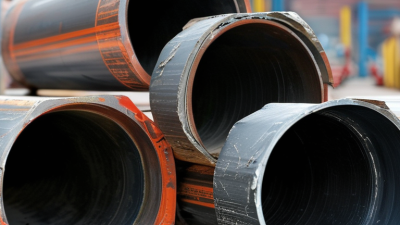
For global buyers in 2026, PVC pipe selection starts with service conditions, not price. The main options are PVC-U, CPVC, and PVC-O. PVC-U, or unplasticized PVC, is widely used for cold-water distribution, drainage, and irrigation. It resists corrosion and stays relatively light during installation. However, it can become brittle in severe cold or after long ultraviolet exposure. That weakness is easy to overlook.

CPVC tolerates higher temperatures than standard PVC-U, making it suitable for hot and cold water systems. Its thermal expansion is greater, so supports and joint spacing need careful planning.

PVC-O uses molecular orientation to improve impact strength and pressure performance while reducing material use. It can offer easier handling, but availability, joining procedures, and local standards vary.

Buyers should not treat a higher pressure class as proof of better value. A pipe may pass testing and still fail after poor storage or incorrect installation.

For buried drainage, solid-wall PVC often provides predictable stiffness when bedding is properly prepared. Foam-core PVC is lighter and can reduce handling effort, yet its structural limits require closer checking.

In my project reviews, failures usually began with mismatched fittings, weak trench support, or unclear temperature assumptions.

Ask for pressure ratings, dimensional standards, test reports, and installation instructions. Also inspect samples: uneven sockets, damaged edges, or inconsistent wall thickness deserve questions. A careful specification may cost more today. It can prevent a much larger repair later.

How to Match PVC Pipes with Pressure, Drainage, and Industrial Needs

2026 Best PVC Pipe Types for Global Buyers

How to Match PVC Pipes with Pressure, Drainage, and Industrial Needs

Choosing the right PVC pipe starts with the fluid, pressure, and installation environment. For clean water systems, pressure-rated PVC pipes should match the required working pressure, temperature, and pipe diameter. Check the pressure class, wall thickness, and connection method before ordering. A thicker wall usually improves strength, but it may increase cost and reduce internal flow.

Drainage needs a different approach. Non-pressure PVC pipes suit wastewater, rainwater, and underground gravity systems. Their smooth inner walls help reduce blockages, while proper slope supports steady flow. Do not use drainage pipe in a pressurized line. That mistake can cause leaks or sudden failure. Industrial applications require closer review. Chemicals, heat, vibration, and abrasion can affect service life. PVC may handle many corrosive liquids, but compatibility must be confirmed for each chemical and temperature.

Tips: Ask for test reports, dimensional data, and pressure ratings. Confirm local standards before shipment. Inspect socket surfaces and seals at delivery. I would also request a small sample for difficult projects. Product tables can look reliable, yet real installation conditions are often less predictable. Avoid selecting by price alone. A lower-cost pipe may need thicker supports, more repairs, or earlier replacement. Work with qualified engineers when pressure surges, high temperatures, or hazardous fluids are involved.

Global Buying Factors: Sizes, Certifications, and Supplier Evaluation

2026 Best PVC Pipe Types for Global Buyers

Global pipe buying starts with the application, not the lowest quotation. The 2024 United Nations World Water Development Report states that 2.2 billion people lacked safely managed drinking water in 2022. This pressure makes dependable water infrastructure essential. Buyers should compare potable-water PVC, drainage PVC, conduit, and industrial grades separately. Each category needs different dimensions, additives, and testing.

Check nominal diameter, outside diameter, wall thickness, SDR, and pressure rating. DN 50 does not always equal the same outside diameter across standards. ISO 4427 covers polyethylene water systems, while ISO 1452 addresses PVC-U pressure piping. ASTM D1785 is commonly used for PVC schedule pipe. Confirm the standard printed on every technical drawing. Small differences can disrupt fittings and installation.

Certifications require careful reading. NSF/ANSI/CAN 61 supports evaluation for drinking-water system components, but it does not replace dimensional testing. Request recent test reports, batch numbers, hydrostatic pressure results, and third-party laboratory evidence. ISO 9001 certification can show controlled processes, yet it does not prove every pipe meets the promised pressure class. A neat certificate folder can still hide weak traceability. That is an uncomfortable gap in many procurement checklists.

Supplier evaluation should include factory audits, resin-source disclosure, sample inspection, and complaint-response records. Ask how rejected batches are isolated. Ask for production photos with visible date references. The Plastics Industry Association reports that PVC remains one of the major thermoplastics used in construction, but broad market demand does not guarantee equal manufacturing quality. Price is only one variable. Consistency matters more.

2026 Best PVC Pipe Types for Global Buyers

Typical maximum continuous service temperatures for major PVC pipe categories. Actual limits depend on pressure, chemical exposure, wall thickness, and the applicable standard.

PVC-U and DWV PVC are commonly selected for cold-water, drainage, and sewer systems. PVC-O is mainly used for pressurized water distribution, while CPVC and PVC-C are preferred where higher temperature resistance is required. Buyers should verify nominal sizes, pressure classes, ISO or ASTM certification, test reports, and supplier quality-control procedures before purchasing.

PVC Pipe Selection Guide for Cost, Durability, and Installation Efficiency

2026 Best PVC Pipe Types for Global Buyers

PVC Pipe Selection Guide for Cost, Durability, and Installation Efficiency

Choosing PVC pipe starts with service conditions, not the lowest quotation. Pressure-rated PVC suits potable water, irrigation, and process lines. Drainage PVC handles gravity flow, where stiffness and joint security matter more than pressure resistance. For buried networks, match wall thickness, soil loading, temperature, and installation depth.

AWWA Manual M23 commonly applies a Hazen-Williams roughness coefficient of 150 for PVC. This supports efficient flow and can reduce pumping energy when designs are correctly sized. However, fittings, elevation changes, and poor alignment can erase those gains. Real projects are rarely as clean as the spreadsheet.

Installation efficiency depends on the jointing system and local skills. Solvent-welded joints can be fast, but surfaces must be clean, dry, and properly prepared. Rubber-ring joints may simplify long pipelines and allow controlled movement. ISO 1452 and ASTM D1785 provide useful benchmarks for dimensions, pressure performance, and testing. Buyers should request third-party test records, batch traceability, and pressure-test procedures.

A 2024 report from the International Energy Agency highlights rising attention to material efficiency and infrastructure resilience. That makes lifecycle cost more important than purchase price alone. Thin-wall pipe may look economical. It may also need deeper analysis under traffic loads, hot climates, or unstable soil. Small specification errors become expensive after installation.

Request Quote

Sign Up