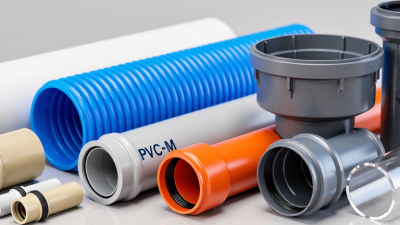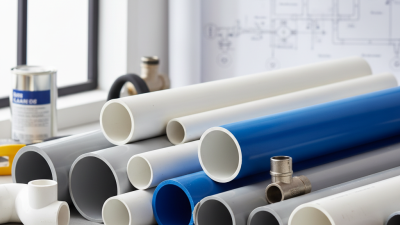
An 8 pvc pipe is a large-diameter plastic pipe used in applications where substantial water flow matters. You may see it in municipal water mains, storm-drain systems, irrigation networks, and some wastewater projects. Its smooth interior helps water move with relatively little friction, while its low weight can make handling easier than with heavier materials. But “8-inch” does not describe one universal inside diameter. Wall thickness and pressure rating affect the bore, so engineers check the product specification before sizing a system.
The need for dependable water infrastructure is significant. The U.S. Environmental Protection Agency’s 2023 Seventh Drinking Water Infrastructure Needs Survey and Assessment estimated $625 billion in drinking-water investment needs over 20 years. That figure covers many kinds of infrastructure, not PVC pipe alone. It does, however, show why material selection and long-term performance deserve careful attention. The American Water Works Association’s PVC pipe guidance also emphasizes choosing pipe to match operating pressure, installation conditions, and applicable standards.
A useful engineering reminder is: “The right pipe is the one that fits the system—not simply the one with the largest diameter.” Treat that as a practical design principle, not a substitute for a project engineer’s review. Soil conditions, burial depth, joints, temperature, and pressure can change what works. An 8 pvc pipe may be a sensible option, but it is not automatically the best one. That distinction is easy to overlook.
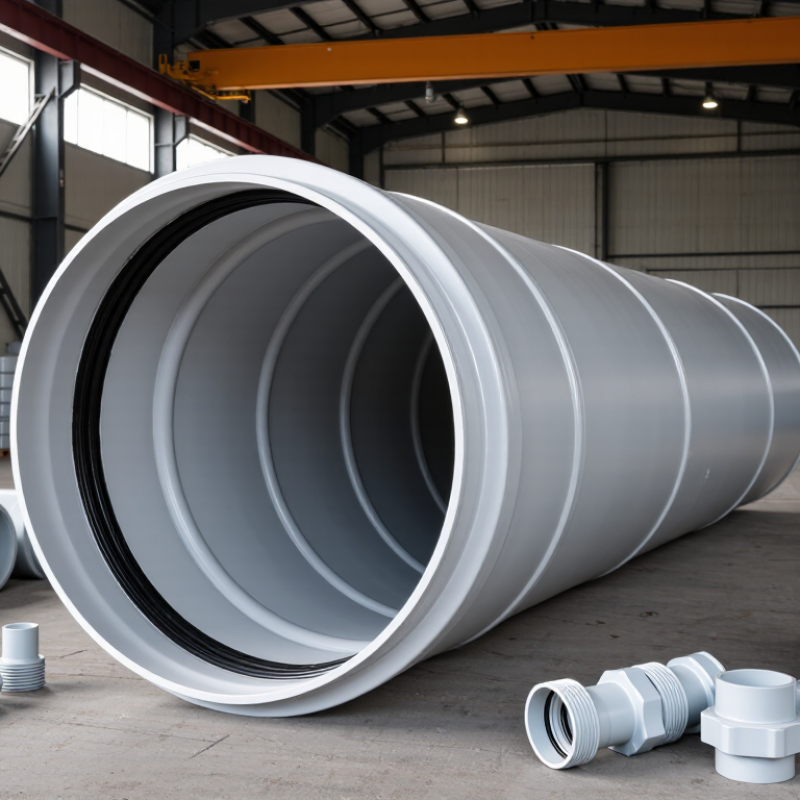
An 8-inch PVC pipe is commonly used in gravity-flow sewer and drainage systems. The size refers to its nominal designation, not its exact outside width. Under ASTM D3034, an 8-inch pipe has an outside diameter of 8.625 inches. That measurement matters when selecting compatible couplings, fittings, and connection details. A tape measure around the pipe can confirm the outside diameter, but it cannot identify the pipe’s wall thickness or pressure rating.
ASTM D3034 covers PVC sewer pipe intended for suitable drainage applications. The pipe’s actual inside diameter depends on its wall thickness, which can vary by product class. So, do not estimate flow capacity from the nominal size alone. A contractor or designer should check the applicable standard, product markings, and project plans before installation. This detail is easy to overlook. An 8-inch pipe is not automatically suitable for pressurized water service.
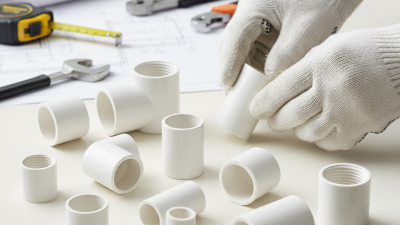
Tips: Check the printed markings before buying or joining pipe. Match fittings to the 8.625-inch outside diameter and the specified pipe class. Also confirm slope, bedding, and local project requirements; a correct fit alone does not guarantee reliable drainage.
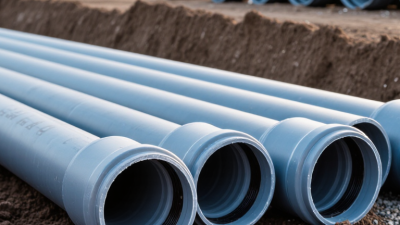
An 8-inch PVC pipe is commonly used in gravity sewer systems, where wastewater flows through the pipe without continuous pumping. ASTM D3034 covers sewer pipe in nominal sizes from 4 to 15 inches, including 8-inch pipe. “Nominal” describes a size category, not the pipe’s exact measured diameter. Check the product dimensions and project specifications before selecting fittings.
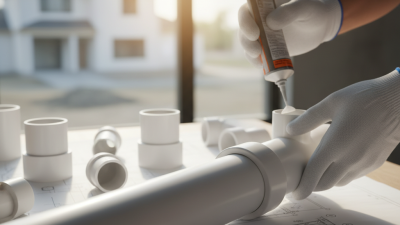
On a typical site, an 8-inch line may collect flow from smaller sewer laterals and carry it toward a larger main. Proper performance depends on more than pipe size. Designers and installers consider expected flow, slope, burial depth, soil conditions, and connection details. The pipe must be supported by suitable bedding, with joints assembled carefully to limit leaks and root entry. It is intended for gravity sewer service, not automatically for pressurized water lines. Details matter.
Tips: Confirm that the specified pipe meets ASTM D3034 requirements, and check local project standards. Keep the trench grade consistent; small dips can hold wastewater and sediment. Inspect joints before backfilling, and verify alignment along the full run. Even a sound pipe can perform poorly if the installation is rushed.
What Is 8 Inch PVC Pipe Used For?
Stormwater Drainage: How 8-Inch PVC Carries Runoff by Gravity
An 8-inch PVC pipe can carry stormwater from roof drains, yard inlets, or roadside catch basins toward an approved discharge point. Its wide interior helps move substantial runoff without a pump when the route has a steady downward slope. Gravity does the work. During heavy rain, water enters through grates, flows through the pipe, and exits at a lower elevation. The actual capacity depends on slope, pipe condition, fittings, and incoming flow—not diameter alone.
Installation details matter. A shallow or uneven trench can create low spots where sediment settles and water lingers. Too many sharp bends may also slow flow. A properly prepared bedding layer supports the pipe and helps maintain alignment as soil settles. Connections should be secure, and the outlet should be protected from erosion. Local drainage requirements and site conditions should guide the design.
Tips: Check the planned route with a level, and keep cleanouts accessible for inspection. After a strong storm, look for standing water near inlets or unusual soil washout at the outlet. Small problems can be easy to miss. Even a well-sized pipe may struggle if leaves, grit, or a blocked inlet restricts the flow.
| Dimension | Typical information | Practical significance |
|---|---|---|
| Primary use | Collecting and conveying stormwater runoff in gravity-drainage systems. | Commonly used between catch basins, area drains, culverts, and approved outfalls where local codes permit. |
| How gravity flow works | The pipe is laid at a continuous downward grade so water flows toward a lower outlet. | Correct elevations, a consistent grade, and a suitable outlet help avoid standing water and unintended backflow. |
| Illustrative full-flow capacity | About 550, 780, and 1,110 US gallons per minute at assumed slopes of 0.5%, 1%, and 2%, respectively. | Estimates use an assumed 8.0-inch inside diameter and Manning roughness coefficient n = 0.009. Actual capacity varies with pipe dimensions, fittings, inlet conditions, and downstream water levels. |
| Runoff sources | Roof leaders, paved areas, landscaped areas, and smaller drainage branches. | The connected drainage area and local design rainfall determine how much runoff the system must carry. |
| Pipe size consideration | “8 inch” is a nominal size; actual inside diameter depends on the pipe standard and wall thickness. | Use the product’s published dimensions and hydraulic data rather than assuming every 8-inch pipe has the same capacity. |
| Installation and protection | Requires appropriate bedding, jointing, cover, and support for the site and pipe specification. | Traffic loads, soil conditions, burial depth, and installation requirements should be checked against applicable standards and manufacturer instructions. |
| Design checks | Confirm rainfall intensity, drainage area, slope, inlet capacity, outlet conditions, and local stormwater requirements. | The illustrative flow figures are not a design guarantee; a qualified designer should size the system for the specific site. |
Note: Flow values are approximate Manning full-flow calculations for a circular pipe with an assumed 8.0-inch inside diameter. They are provided for comparison, not as a substitute for project-specific hydraulic design.
An 8-inch PVC pipe can serve as a pressure water main, carrying treated water between treatment facilities, storage tanks, and neighborhood distribution lines. Its diameter offers useful capacity for many municipal systems, while remaining manageable to install in typical utility trenches. AWWA C905 covers PVC pressure pipe from 4 to 48 inches, placing 8-inch pipe within its specified size range. The standard addresses pipe for water transmission and distribution, but the correct pressure class and design depend on operating conditions.
Sizing is only part of the decision. Engineers also consider surge pressure, burial depth, soil conditions, temperature, and the loads expected at fittings. Joints must be properly assembled, and bends or tees may need restraint against water pressure. Small installation details matter. AWWA’s C905 requirements provide a technical basis, not a substitute for project-specific design. The U.S. EPA’s 2023 Drinking Water Infrastructure Needs Survey and Assessment estimated $625 billion in nationwide drinking-water infrastructure needs over 20 years. That scale makes durable, maintainable water-main design important. Still, an 8-inch pipe is not automatically right for every street; flow demand and network modeling should guide the choice.
An 8-inch PVC pipe can carry stormwater, wastewater, or irrigation flows, but its outside diameter alone does not determine whether it suits a project. Pipe class matters. SDR describes the relationship between a pipe’s outside diameter and wall thickness: a lower SDR generally means a thicker wall. That can improve resistance to internal pressure, though it may also increase weight and cost. Check the pipe’s stated pressure rating and the fluid temperature before choosing.
Pressure is only part of the decision. A gravity sewer line may need a different class from a pressurized water main, even when both use 8-inch pipe. Confirm that the pipe and fittings are rated for the intended service, and review local engineering requirements. In the trench, soil support, burial depth, groundwater, and traffic loads all affect performance. A poorly compacted section can become a weak spot. Small details matter.
Installation conditions deserve a close look. Bedding should support the pipe evenly, without sharp rocks pressing against its wall. Keep joints clean, align them carefully, and follow the specified joining method. If the route crosses a driveway or lies in unstable soil, ask a qualified designer to verify the pipe class and installation details. It is easy to focus on pressure numbers and overlook the trench. I have seen that assumption cause trouble. The exact choice depends on the project’s drawings, site conditions, and applicable specifications.

Sign up for our mailing list to stay informed and up to date with our latest news and products!
(905) 832 – 0600
2175-A Teston Road
Maple, Ontario
L6A 1T3
(780) 451 – 0238
24790 – 117 Avenue
Acheson, Alberta
T7X 6C2
(604) 882 – 1564
9511 – 194A Street
Surrey, British Columbia
V4N 4G4
(306) 955 – 6005
3926 Arthur Rose Avenue Saskatoon, Saskatchewan
S7P 0C9
(450) 687 – 2721
2750 Rue Bernard-Lefebvre
Laval, Quebec
H7C 0A5